Detailed Guide to Prosecco vs Moscato Differences


Introduction to Italian Bubbles
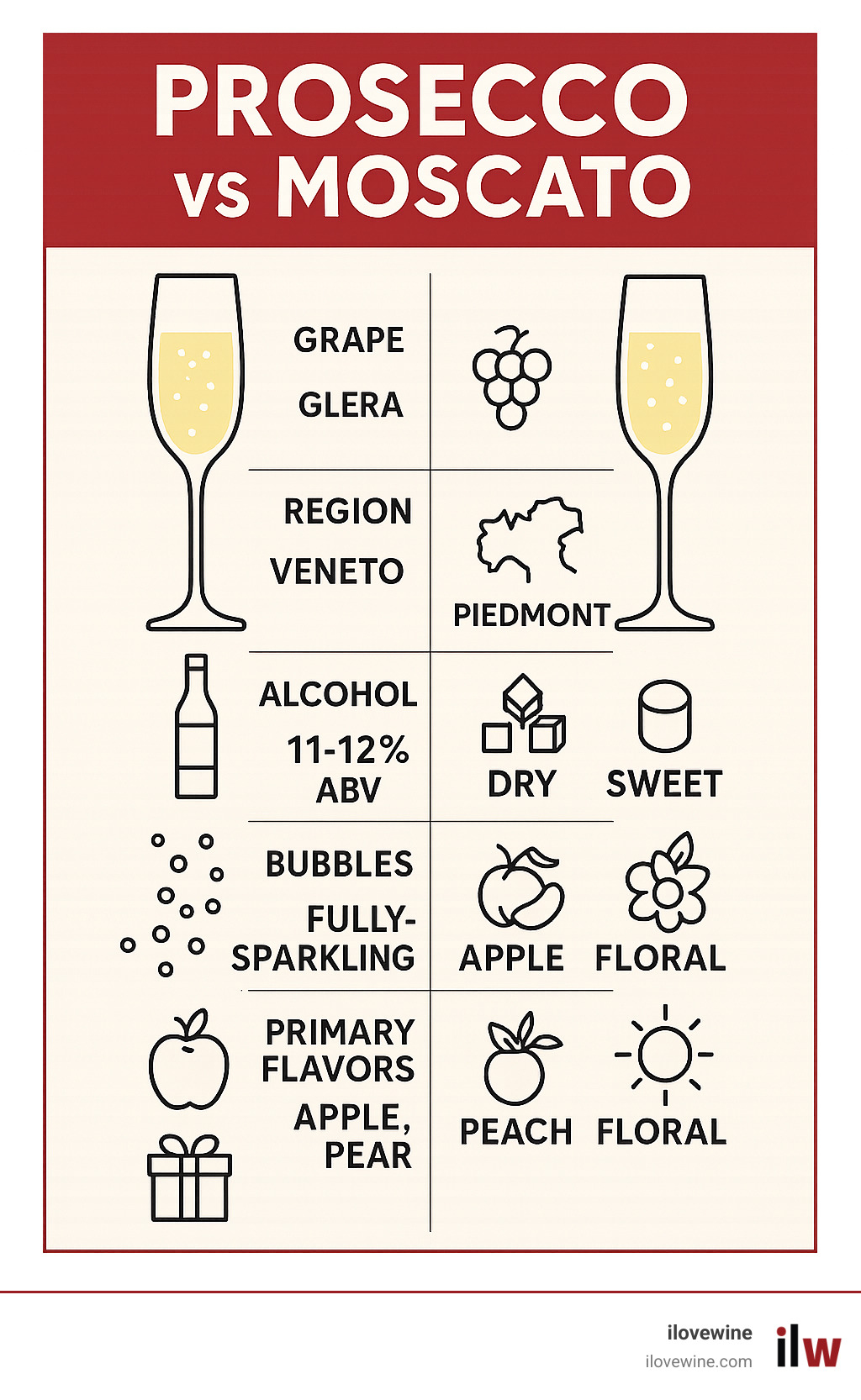
When comparing prosecco vs moscato, you’re looking at two distinctly different Italian sparkling wines. Here are the key differences:
| Aspect | Prosecco | Moscato |
|---|---|---|
| Grape | Glera | Muscat/Moscato Bianco |
| Origin | Veneto/Friuli regions, Italy | Piedmont, Italy (+ worldwide) |
| Sweetness | Dry to off-dry | Sweet |
| Alcohol | 11-12% ABV | 5-7% ABV |
| Bubbles | Fully sparkling | Semi-sparkling or still |
| Flavor | Green apple, pear, citrus | Peach, orange blossom, honeysuckle |
Both wines offer unique experiences for different occasions. Prosecco delivers crisp, dry bubbles perfect for celebrations and aperitifs. Moscato provides sweet, aromatic sips ideal for dessert pairings or casual enjoyment.
The choice between these Italian favorites comes down to your taste preferences and the occasion. Whether you’re planning a sophisticated dinner party or seeking a relaxing wine for warm afternoons, understanding their differences helps you pick the perfect bottle.
As Jonas Muthoni ILW, I’ve tasted countless bottles of both styles during my travels through Italy’s wine regions, from the hills of Valdobbiadene to the vineyards of Piedmont. My experience exploring prosecco vs moscato in their native terroir has shown me how dramatically these wines differ in character and purpose.
Similar topics to prosecco vs moscato:
The Ultimate Prosecco vs Moscato Comparison
When exploring Italian sparkling wines, understanding prosecco vs moscato reveals two completely different wine experiences. While both bring joy and celebration to any gathering, they come from different grapes, regions, and winemaking traditions that create wines for entirely different moments and moods.
Origins and Grapes: The Foundation of Flavor
Every great wine starts with its grape and homeland, and this is where prosecco vs moscato begins to diverge dramatically. Prosecco’s story is intimately tied to the Glera grape and the rolling hills of northeastern Italy’s Veneto and Friuli Venezia Giulia regions.
Interestingly, the grape itself was once called Prosecco, but winemakers changed its name to Glera to protect the wine’s identity. This legal protection ensures that authentic Prosecco can only come from these specific Italian regions, similar to how Champagne must come from France’s Champagne region.
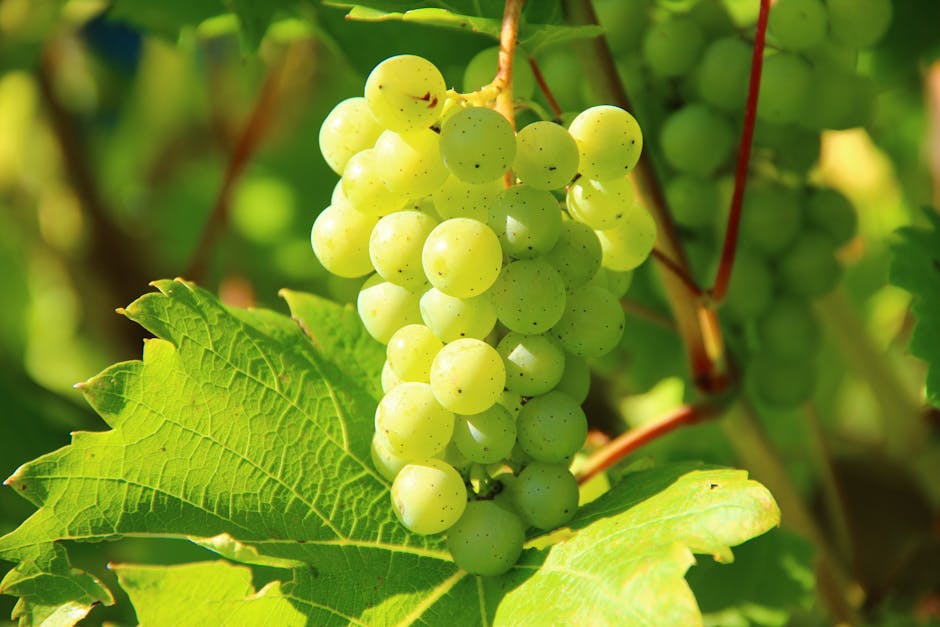
The most prestigious Prosecco comes from areas like Conegliano Valdobbiadene, which hold DOCG status – Italy’s highest quality classification. These “Prosecco Superiore” wines represent the pinnacle of production, with some even aging beautifully in the cellar.
Moscato tells a different story entirely. It comes from the ancient Muscat grape family, primarily Moscato Bianco (also called Muscat Blanc à Petits Grains). This grape variety is one of the oldest known to winemaking, with roots stretching back to ancient Mediterranean civilizations.
Unlike Prosecco’s strict regional boundaries, Moscato grapes grow worldwide. While Italy’s Piedmont region, especially around Asti, produces the most famous Moscato d’Asti and Asti Spumante, you’ll find Moscato wines made across the globe. This global presence creates a much wider range of styles and expressions.
For more details about Prosecco’s origins and production methods, check out More info about Prosecco Wine.
Flavor, Sweetness, and Aroma: A Tale of Two Palates
The most dramatic difference in prosecco vs moscato lies in how they taste and smell. These wines couldn’t be more different in their sensory profiles.
Prosecco celebrates crisp, dry refreshment. You’ll taste bright green apple, juicy pear, lively citrus, and honeydew melon, sometimes with hints of cream or white flowers. While most people think of Prosecco as dry, it actually comes in several sweetness levels: Extra Brut (bone dry), Brut (most common), Extra Dry (slightly sweeter), and Dry (which is actually sweeter than Brut – confusing but important to remember!).
Moscato takes the complete opposite approach. It’s known for its natural sweetness and aromatic intensity. The flavor profile bursts with ripe peach, orange blossom, honeysuckle, and nectarine. These wines are so aromatic that the name “Moscato” likely comes from the Italian word “mosca” (fly) because flies are attracted to its floral scent.
Moscato d’Asti typically contains 100-150 grams per liter of residual sugar, making it considerably sweeter than most Proseccos. This sweetness comes from stopping fermentation early, preserving the grape’s natural sugars.
Here’s something fascinating: our perception of sweetness isn’t just about sugar content. A wine’s aroma greatly influences how sweet it tastes. Moscato’s highly perfumed nose makes it taste even sweeter, while Prosecco’s high acidity creates that crisp, dry sensation that balances any residual sugar.
Understanding these nuances helps you appreciate what’s happening in each glass. To dive deeper into wine tasting techniques, explore The Basics of Wine Tasting: A Comprehensive Guide. Our Wine Sweetness Chart Poster is also a great visual tool for comparing sweetness levels across different wines.
Production, Bubbles, and Alcohol: The Technical Differences in Prosecco vs Moscato
The winemaking techniques behind prosecco vs moscato create dramatically different wines, especially regarding bubbles and alcohol content.
Prosecco uses the Charmat method (also called the tank method). The secondary fermentation that creates bubbles happens in large, sealed pressure tanks rather than individual bottles. This efficient process preserves the fresh, fruity character of Glera grapes while creating those celebratory bubbles.
Prosecco comes as spumante (fully sparkling with vigorous bubbles) or frizzante (semi-sparkling with gentler fizz). Since it undergoes complete fermentation, Prosecco typically contains 11-12% alcohol by volume, though some reach 15%.
Moscato d’Asti uses a variation called the Asti method. This involves a single, partial fermentation in sealed tanks, which winemakers stop by chilling the wine. This technique preserves significant natural grape sugar while creating gentle bubbles and keeping alcohol low.
Moscato typically contains just 5-7% alcohol, with Moscato d’Asti sometimes as low as 4.5%. Asti Spumante is fully sparkling but still maintains lower alcohol (6-9%) compared to Prosecco. This lower alcohol contributes to Moscato’s light, approachable character, making it perfect for casual sipping or warm-weather enjoyment.
Interestingly, despite Moscato’s sweetness, both wines contain similar calories per serving (80-120 calories) because alcohol contributes more calories per gram than sugar does.
For more technical details about Prosecco production, visit our comprehensive guide at More info about Prosecco production.
Serving Styles and Food Pairings
Proper serving improves both wines’ unique characteristics. Both Prosecco and Moscato shine when served chilled at 45-50°F (6-8°C). While flute glasses are classic, a tulip-shaped glass or wider white wine glass actually works better, allowing you to fully appreciate their complex aromas.
Always use a sparkling wine stopper if you don’t finish the bottle – those bubbles are precious! For complete serving temperature guidelines, check our Wine Storage and Serving Temperature Guide chart.
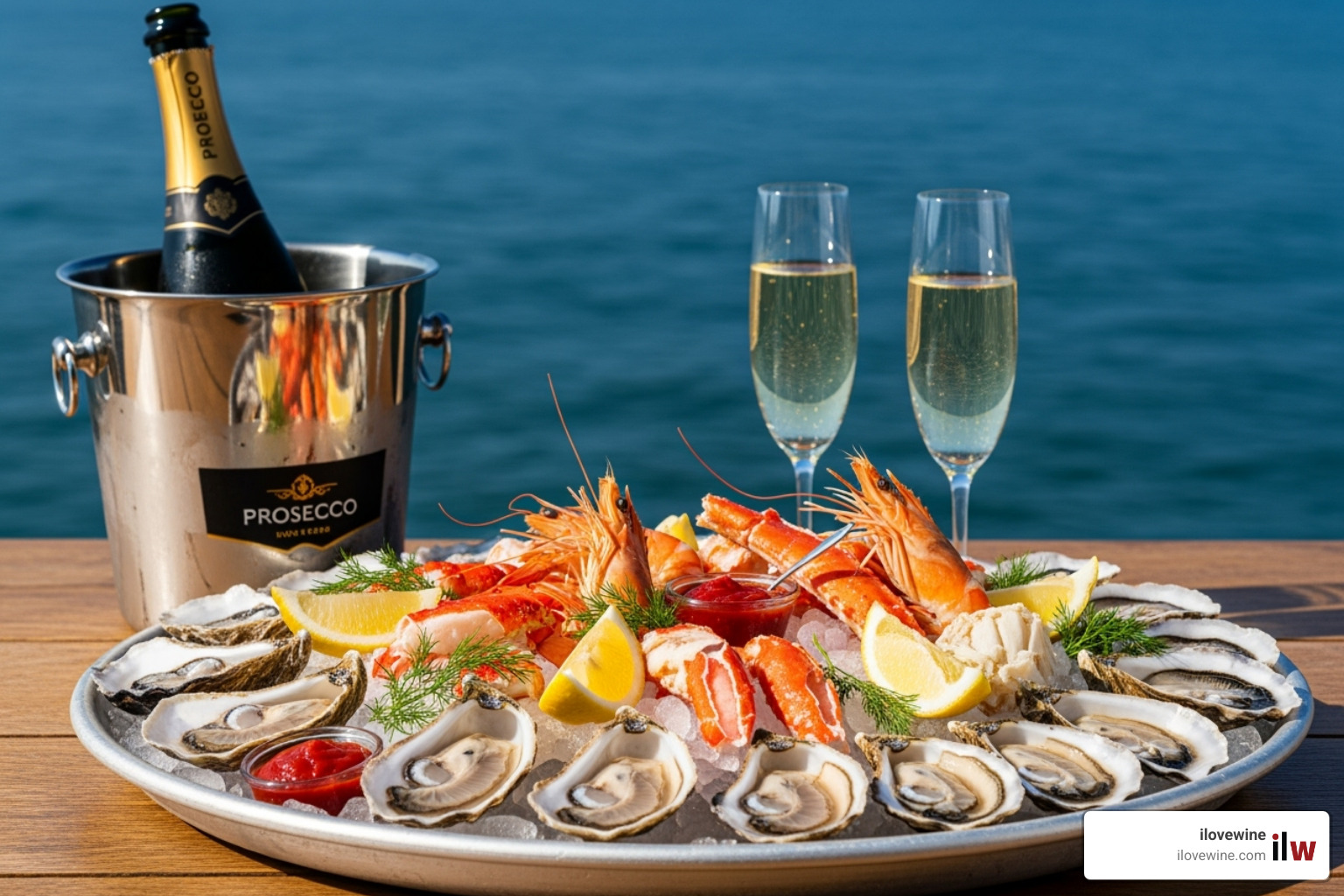
Prosecco’s crisp acidity and dry profile make it incredibly versatile with food. It excels as an aperitif, setting a refreshing tone for any gathering. The wine pairs beautifully with cured meats (especially prosciutto-wrapped melon), seafood dishes, sushi, and fresh salads like arugula with prosciutto or watermelon and feta. Its bubbles and acidity also cleanse the palate with spicy dishes, and it forms the base for popular cocktails like mimosas and spritzes.
Moscato’s sweetness and aromatic profile create different pairing opportunities. It shines as a dessert wine with fruit tarts, sorbets, fresh fruit, and white chocolate. Surprisingly, its sweetness also balances spicy Asian and Indian cuisine beautifully, while its bubbles cleanse the palate between bites.
Moscato also complements creamy cheeses like Brie, aged Gouda, or Gorgonzola dolce, Italian pasta dishes, and lighter meats with sweet or savory glazes.
Top 5 Food Pairings for Prosecco:
- Cured Meats (e.g., Prosciutto)
- Seafood (e.g., Oysters, Shrimp Scampi)
- Light Salads (e.g., Caprese, Arugula with Parmesan)
- Fried Appetizers (e.g., Fritto Misto)
- Mild Cheeses (e.g., Mozzarella, Ricotta)
Top 5 Food Pairings for Moscato:
- Fresh Fruit Tarts and Fruit-based Desserts
- Spicy Asian or Indian Cuisine
- Soft, Creamy Cheeses (e.g., Brie, Gorgonzola Dolce)
- Panettone or Sponge Cake
- Lighter Meats with Sweet Glazes (e.g., Honey-glazed Chicken)
For more pairing inspiration, explore our comprehensive Wine Pairing Guide.
Styles, Price, and Broader Comparisons
Moscato encompasses much more than the sweet, bubbly wine most people know. Beyond Moscato d’Asti and Asti Spumante, the Muscat grape family produces still Moscato wines, Pink Moscato (blended with red grapes for color), and even Red Moscato from Black Muscat grapes. These styles offer varying sweetness and effervescence while maintaining that signature aromatic profile.


To explore the full range of Moscato styles, visit our guide to the Best Moscato Wines for a Sweet Way to Unwind.
Both wines offer excellent value compared to premium French Champagne. Moscato is typically more budget-friendly, with quality bottles starting around $5-8. Prosecco usually begins around $15, though premium DOCG bottles can reach $30-40. This affordability makes both wines perfect for everyday enjoyment or large gatherings where you want celebratory bubbles without the premium price.
In the broader sparkling wine landscape, prosecco vs moscato occupies distinct niches. Prosecco has become the world’s most popular sparkling wine thanks to its fresh, fruit-forward character and accessible price point. Its Charmat method production creates that signature bright, clean style that differs dramatically from Champagne’s complex, toasty flavors created through traditional bottle fermentation.
Moscato, with its lower alcohol and pronounced sweetness, often functions more as a dessert wine than a direct competitor in the dry sparkling category. While both bring bubbles and joy, they serve different purposes and occasions.
To understand the complete world of sparkling wines, explore What is Sparkling Wine?.
Choosing Your Bubbly: A Guide to Prosecco vs Moscato
Your choice in prosecco vs moscato depends entirely on your taste preferences and the occasion at hand.
Choose Prosecco when you want something drier and crisper with higher alcohol content (11-12% ABV) and full, lively bubbles. It’s perfect for celebrations, aperitifs, and savory food pairings with everything from seafood to cured meats. If you enjoy dry white wines like crisp Chardonnay, Prosecco will likely appeal to your palate.
Choose Moscato when you prefer something sweeter and more aromatic with lower alcohol (5-7% ABV) and gentle fizz or still wine options. It excels with desserts, spicy cuisine, and casual sipping. If you enjoy sweeter wines like off-dry Riesling or fruit-forward styles, Moscato will be your perfect match.
Consider your experience level too. Many wine newcomers or those who prefer sweeter beverages naturally gravitate toward Moscato’s approachable, fruity character. Prosecco’s drier style can be less immediately appealing to those accustomed to sweeter drinks, but it offers more versatility with food and occasions.
Both wines deserve a place in any wine lover’s repertoire – they simply serve different moments in life’s celebrations.
Which Bubbly Will You Choose?
The world of Italian sparkling wine becomes much clearer once you understand the fundamental differences between prosecco vs moscato. These two beloved wines represent completely different philosophies of winemaking and enjoyment, each with its own devoted following for good reason.
Prosecco stands as Italy’s answer to celebration itself. Born from the Glera grape in the rolling hills of Veneto and Friuli, it brings crisp, dry sophistication to any gathering. The Charmat method production preserves those bright flavors of green apple and pear while creating persistent, lively bubbles. With its 11-12% alcohol content, Prosecco commands attention and pairs beautifully with savory appetizers, fresh seafood, and those special moments that call for a proper toast.
Moscato, on the other hand, whispers where Prosecco shouts. This aromatic beauty, crafted from ancient Muscat grapes, offers a completely different experience. Its partial fermentation creates a wine that’s naturally sweet and gently effervescent, with perfumed notes of peach and orange blossom dancing on your palate. At just 5-7% alcohol, Moscato becomes your companion for lazy afternoons, dessert courses, or when you want something delicious without the stronger alcoholic punch.
The beauty lies in having both options available. I always tell wine lovers to try each in their ideal setting – sip a chilled Prosecco during happy hour with friends, then enjoy a glass of Moscato with fresh fruit or your favorite dessert. You’ll quickly find which style speaks to your personal taste preferences.
Whether you gravitate toward the crisp, dry character of Prosecco or find yourself enchanted by the sweet, aromatic nature of Moscato, understanding their differences improves every glass you pour. These wines aren’t competing against each other – they’re complementing different moments in our lives, different foods on our tables, and different moods in our hearts.
At iLoveWine, we believe the best wine education happens through experience. So grab a bottle of each, invite some friends over, and find your own preferences in this delightful prosecco vs moscato debate. After all, the most important thing is finding the wines that bring you joy.
Continue exploring wine with our complete guide on Prosecco vs. Moscato.
What's Your Reaction?
