The Great Debate: Should You Bottle Red Wine in Blue?


Why Blue Bottle Red Wine Sparks Curiosity
Blue bottle red wine refers to red wines packaged in blue-colored glass bottles rather than the traditional green or brown glass. While most red wines come in darker glass bottles for preservation reasons, some producers choose blue bottles for branding, aesthetic appeal, or regional tradition.
Quick Answer: What You Need to Know About Blue Bottle Red Wine
- Purpose: Blue bottles are primarily a marketing tool to create visual distinction and brand identity
- Protection: Blue glass offers moderate UV light protection, better than clear glass but less effective than brown
- Common Types: Sweet German Rieslings, Moscato d’Asti, and select Cabernet Sauvignons or Syrahs
- Notable Brands: La Maison Bleue, Blue Rock Baby Blue, Bartenura wines
- Best For: Wines meant for early consumption rather than long-term cellaring
- Price Range: $12-$75+ depending on producer and region
- Tradition: Historically linked to German wine regions (Mosel vs. Rhine)
The story of blue wine bottles combines romance and practicality. When a local Ohio winery switched their Vidal Blanc to blue bottles, sales doubled. That’s the power of standing out on crowded shelves.
But there’s more to the story than marketing. The blue glass choice impacts wine preservation, signals regional heritage, and even influences consumer perception of quality. Some producers use blue bottles to evoke coastal connections or premium positioning, while others follow centuries-old German traditions.
For wine enthusiasts planning vineyard visits or seeking unique bottles for their collection, understanding what blue bottles mean helps you make informed choices about which wines to buy now versus which to cellar.
The Allure and Science of Blue Bottle Red Wine
Walk into any wine shop, and you’ll notice something interesting: most bottles look pretty similar. Green glass here, brown glass there, maybe some clear bottles in the white wine section. But then—wait—what’s that striking blue bottle doing on the shelf?
That’s exactly the reaction winemakers are hoping for. Blue bottle red wine stands out like a sapphire in a sea of emeralds, and there’s both art and science behind this choice.
Why Choose a Blue Bottle for Red Wine?
The honest truth? Most wineries choose blue bottles because they work. In a market where consumers make split-second decisions, a distinctive blue bottle can be the difference between getting noticed and getting passed over. Ohio winery we mentioned earlier? Their sales doubled simply by switching to blue glass. That’s not magic—it’s smart marketing.
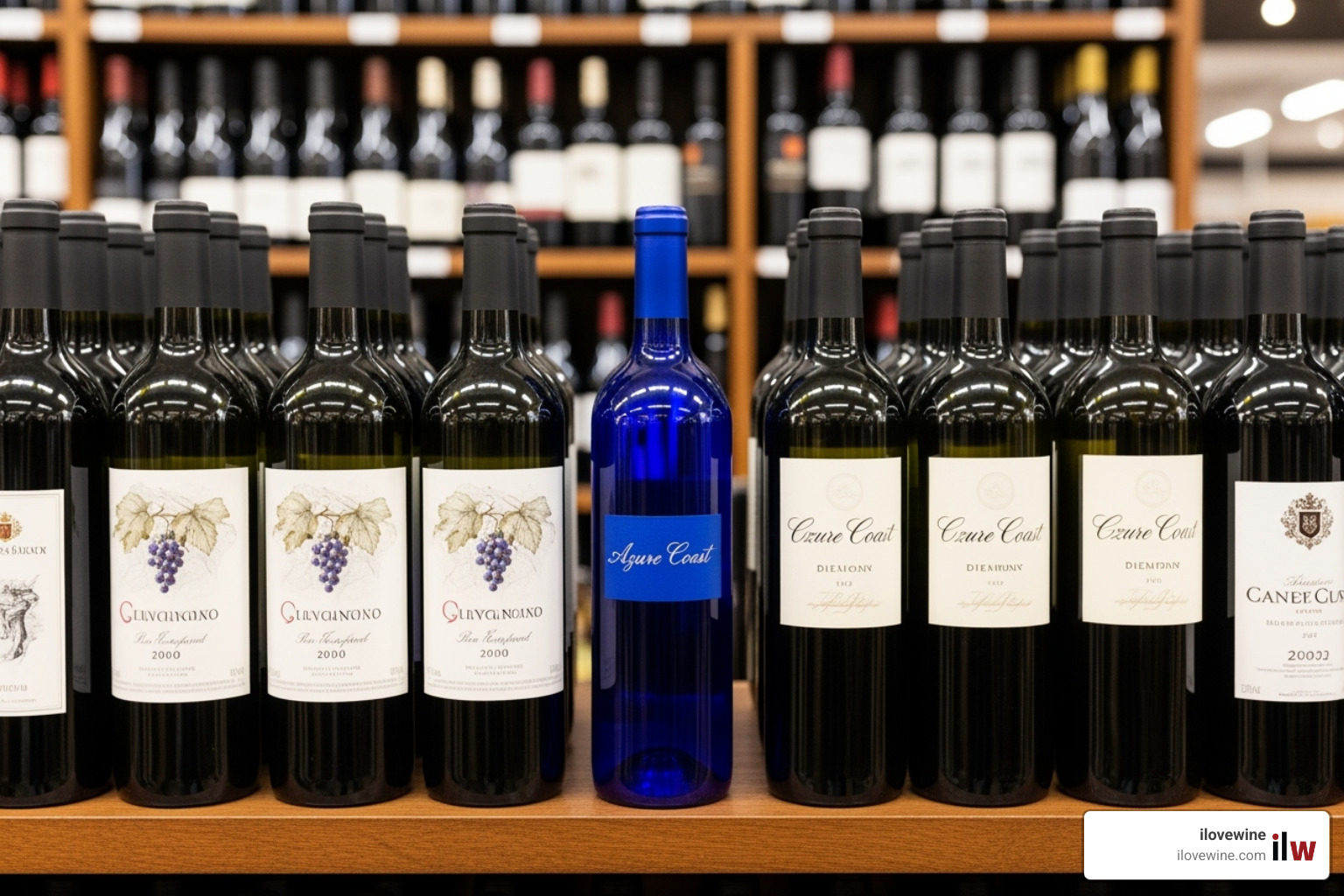
But there’s more to the story than just catching your eye. Blue bottles create instant brand recognition. Once you’ve tried a wine you love in a blue bottle, you’ll spot it immediately next time you’re shopping. That distinctive packaging becomes part of the wine’s identity.
The psychology of color plays a role too. Blue evokes calmness, trust, and quality in consumers’ minds. Some producers use it to suggest coastal connections—think Mediterranean breezes or California oceanside vineyards. Others leverage it to signal that their wine is something special, different from the everyday bottles surrounding it.
There’s also genuine tradition at play. German wine regions historically used bottle color to indicate origin—brown for Rhine wines, green for Mosel. Blue bottles emerged as winemakers wanted to blend tradition with modern branding. The famous Blue Nun wines (though typically white) proved that blue glass could achieve mainstream success and lasting recognition. This interplay between heritage and innovation shows how bottle color carries cultural meaning beyond mere aesthetics. To understand more about these regional traditions, explore our guide on Old World vs. New World Wines: What Are Key Differences?.
How Bottle Color Affects Aging and Quality
Here’s where things get technical—but stay with us, because this matters for your wallet and your wine cellar.
Wine’s biggest enemy (besides that friend who always overpours) is ultraviolet light. UV exposure triggers chemical reactions that create “lightstrike,” a wine fault that produces unpleasant aromas reminiscent of wet cardboard or cooked cabbage. Not exactly what you’re hoping for when you uncork that special bottle.
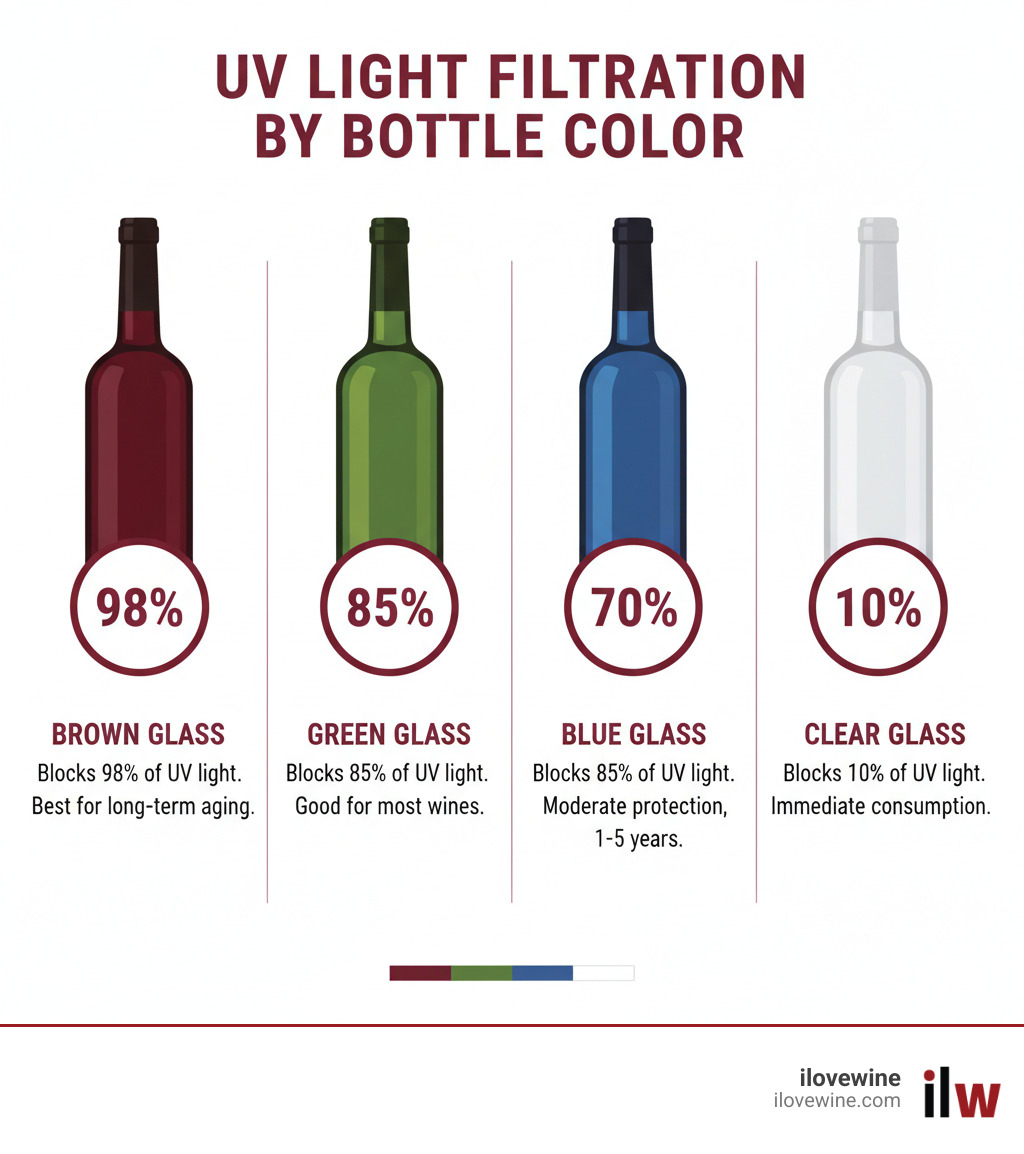
Glass color acts as sunscreen for wine, but not all colors protect equally. Brown glass blocks about 98% of UV light, making it the gold standard for wines destined for long-term aging. Green glass blocks roughly 85%—still excellent protection for most wines. Blue glass manages about 70%, which puts it ahead of clear glass (a measly 10%) but behind its darker cousins.
For blue bottle red wine, this moderate protection means the wine is best enjoyed within one to five years. That’s not a criticism—many wines are crafted specifically for earlier consumption. But if you’re planning to cellar a bottle for a decade, brown or green glass offers better insurance for your investment.
Red wines face particular vulnerability because their complex compounds—tannins and anthocyanins (the pigments giving wine its ruby color)—evolve delicately over time. Light exposure accelerates oxidation and disrupts this natural aging process, potentially turning a graceful evolution into premature decline.
The practical takeaway? A stunning blue bottle signals that the winemaker prioritized visual appeal alongside (rather than above) long-term preservation. It’s an honest trade-off, not a flaw—as long as you drink the wine within its intended timeframe. For more foundational wine knowledge, check out The Difference Between Red and White Wine: A Beginner’s Guide.
Examples of Blue Bottle Red Wine and Pairings
While blue bottles appear most often with white wines and Moscato, several producers have accepted this distinctive packaging for their reds—and the results are worth exploring.

La Maison Bleue Cabernet Sauvignon from France’s South-West region offers exceptional value at $12-$15. This Kosher-certified wine delivers blackcurrant and blueberry aromas with a touch of liquorice, backed by fleshy texture and melted tannins. The sustained deep color hints at the concentration inside. Pair it with grilled meats, dishes in rich sauces, or a thoughtfully assembled cheese plate. You’ll find the La Maison Bleue Cabernet Sauvignon 2022 at various retailers, including Tesco.
Maison Blue SA Shiraz brings South Australian sunshine in a bottle (around $30). Its neat purple-red hue precedes aromas of blueberries and black pepper spice. Soft tannins and balanced acidity create a round, immediately drinkable wine—no aging or decanting required. Try it with hearty stews, barbecued ribs, or mushroom risotto. Find it at specialized retailers like vevinos.
Blue Rock Baby Blue Red from Sonoma County ($25-$30) showcases California’s take on Bordeaux blending. This Cabernet Sauvignon-dominant blend incorporates Merlot, Petit Verdot, Syrah, Cabernet Franc, and Malbec. The highly-rated 2021 vintage earned 92 points for its polished aromas of blackberry, dark currant, pencil shavings, and peppercorn, layered with tilled earth, cedar, and vanilla bean. Flavors span black and red fruits, savory spices, black tea, espresso, and toasty oak. Its versatility shines with everything from grilled meats and hard cheeses to casual burgers—it genuinely “plays the burger game well.” Look for it at shops like Ed’s Fine Wines.


Paul Jaboulet Aîné Hermitage La Maison Bleue represents the pinnacle of blue bottle red wine, offering Hermitage Syrah under $60—exceptional value for this prestigious Northern Rhône appellation. This wine delivers power, depth, and minerality with aromatics of violets, lilacs, smoky herbs, and sweet earth. The palate unfolds with crushed blackberry, black raspberry, plum, and blueberry, accented by bacon fat, espresso, tobacco, licorice, and a distinctive mineral, saline edge. Age it for five to fifteen years, or enjoy its complexity now. Northern Rhône Syrah and lamb are legendary partners, making this perfect for pistachio-crusted lamb chops—the nutty pistachio and herb crust lifts the wine’s dark fruit and savory notes beautifully. Find it at merchants like First Bottle Wines. For more pairing inspiration, explore our comprehensive Wine Pairing Guide.
These examples prove that blue bottle red wine spans regions, styles, and price points—from weeknight-friendly to special-occasion worthy. The blue glass doesn’t define quality; it simply signals a winemaker confident enough to stand out visually while delivering substance in the glass.
Conclusion: The Verdict on Blue Bottles
So what’s the final word on blue bottle red wine? Like most things in the wine world, it’s not quite black and white—or should we say, brown and clear.
The truth is, blue bottles excel at one thing brilliantly: making a statement. They catch your eye from across the room, spark conversations at dinner parties, and create instant brand recognition. That Ohio winery that doubled its sales wasn’t just lucky—they tapped into something powerful. In a crowded marketplace where hundreds of bottles compete for attention, standing out matters. For wineries focused on building a distinctive identity and connecting emotionally with consumers, the blue bottle delivers impressive results.
But here’s where we need to balance romance with reality. Blue glass offers moderate UV protection—blocking about 70% of harmful light—which places it somewhere between clear glass (barely protective) and the superior shielding of brown bottles at 98%. This means blue bottle red wine works beautifully for wines you’ll enjoy within the next few years, but less so for those special bottles you’re tucking away for a decade or more.
Think of it this way: if you’re buying a wine to enjoy this year or next, the blue bottle is both practical and delightful. If you’re building a cellar for long-term aging, you’ll want to look for darker glass that offers better protection for those precious compounds that develop over time.
We love that winemakers continue pushing boundaries and challenging traditions. The blue bottle represents that innovative spirit—a willingness to blend marketing savvy with winemaking craft. These wines prove that sometimes, being different is worth celebrating. Whether it’s a fruit-forward Cabernet Sauvignon perfect for Tuesday night dinner or a complex Hermitage Syrah that pairs magnificently with pistachio-crusted lamb chops, blue bottles bring something fresh to our wine experiences. The nutty, herbaceous crust of the lamb beautifully complements the dark fruit and savory notes of a Northern Rhône Syrah, creating a truly memorable pairing.
At the iLoveWine community, we appreciate both the time-honored traditions and the creative innovations that keep wine culture vibrant and evolving. Blue bottles sit right at that intersection—honoring heritage while daring to be different.
Ready to explore more distinctive wines? Find more about 7 Iconic Wines in Blue Wine Bottles and continue your journey through the colorful world of wine with us. After all, life’s too short to drink boring wines from boring bottles.
What's Your Reaction?
