The Best Wine Recipes on a Budget


Why Homemade Wine Recipes Are Perfect for Budget-Conscious Wine Lovers
Wine Recipes offer an affordable way to create delicious homemade wine. Here’s a quick overview:
Essential Wine Recipe Components:
- Fruit: 13-80 pounds, depending on the type.
- Sugar: 2-11 pounds to achieve the desired alcohol content.
- Wine Yeast: One packet is sufficient for up to 6 gallons.
- Time: 21 days minimum, with 3+ months for more complex flavors.
- Cost: A basic $50 kit vs. paying $15-30+ per bottle for store-bought wine.
Popular Beginner Wine Recipes:
- Quick Grape Wine: Ready in 21-30 days.
- Blackberry Wine: Sweet and fruit-forward.
- Peach Wine: Ideal for summer.
- Traditional Grape Wine: A classic approach requiring 3+ months of aging.
Making wine at home transforms seasonal fruit into a year-round treat. The average recipe takes approximately 42 days, although some are ready in as little as 21 days. A 5-gallon batch yields roughly 30 bottles, saving you a significant amount compared to retail prices.
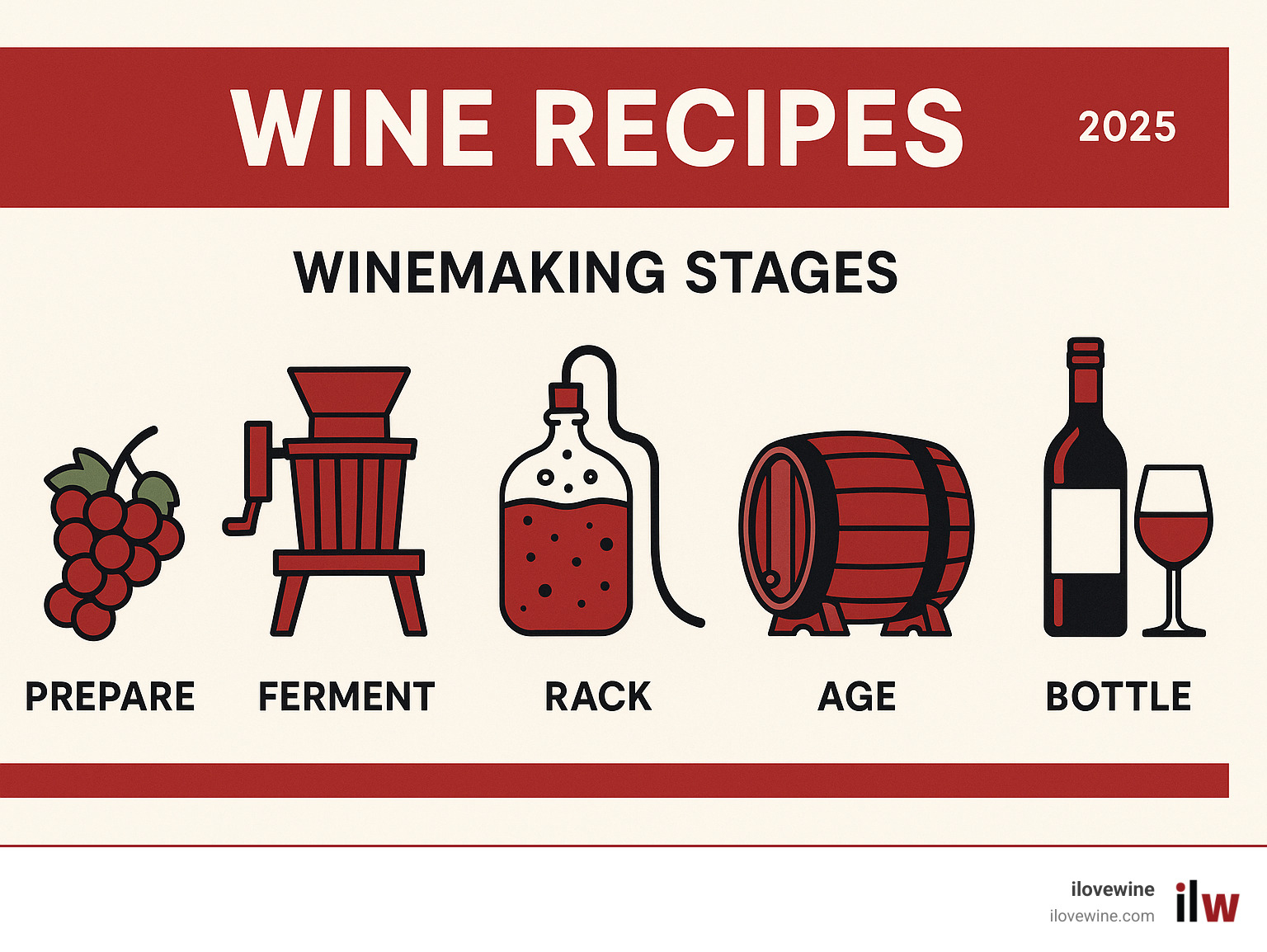
The process is simple: crush fruit, add sugar and yeast, ferment, age, and bottle. Using garden grapes or frozen berries gives you complete control over sweetness, flavor, and strength.
I’m Ryan Lenett, author at ILW. Over the past decade, I’ve explored winemaking from Bordeaux châteaux to Tokyo sake breweries, gaining deep insights into commercial and artisanal production. My experience with Wine Recipes helps enthusiasts create exceptional bottles at home.
Easy Wine Recipes Glossary:
Your First Batch: Essential Knowledge and Wine Recipes
Ready to dive into the wonderful world of homemade wine? This section walks you through everything you need to create your first successful batch, from gathering your ingredients to watching that magical fermentation bubble away. Don’t worry – it’s easier than you might think!
Essential Ingredients and Equipment on a Budget
Making Wine Recipes at home is budget-friendly, allowing you to create wine that rivals bottles costing $15-30. With a few key ingredients and basic equipment, you can get started.
What Goes Into Your Wine
Every wine needs four key ingredients. Grapes are traditional; choose organic, untreated varieties, as supermarket grapes may have chemicals that inhibit fermentation. A 5-gallon batch requires 40 to 80 pounds of grapes.
Other fruits like blackberries, peaches, and rhubarb also make fantastic wines. Fruit amounts vary: a mead might need only 13 pounds of honey, while berry wines typically use less fruit than grape wines.
Sugar fuels the yeast, converting to alcohol. You’ll need 2 to 11 pounds for a 5-gallon batch, depending on the fruit’s sweetness and your desired alcohol content. Water (typically 9-12 cups) helps create the “must,” or unfermented juice.
Wine yeast ensures predictable results. A single 5-gram packet works for up to 6 gallons. Popular strains like Montrachet are ideal for fruit wines, while EC-1118 is great for dry wines.
Setting Up Your Home Winery
Sterile food-grade containers are your foundation. A 1-gallon glass jug is great for beginners, while a 6-gallon food-grade plastic bucket is perfect for primary fermentation. Use only glass, ceramic, or food-grade plastic to avoid off-flavors.
An airlock is essential for releasing carbon dioxide while keeping oxygen out. Professional airlocks are cheap, but a balloon with a few pinholes secured over your container works in a pinch.
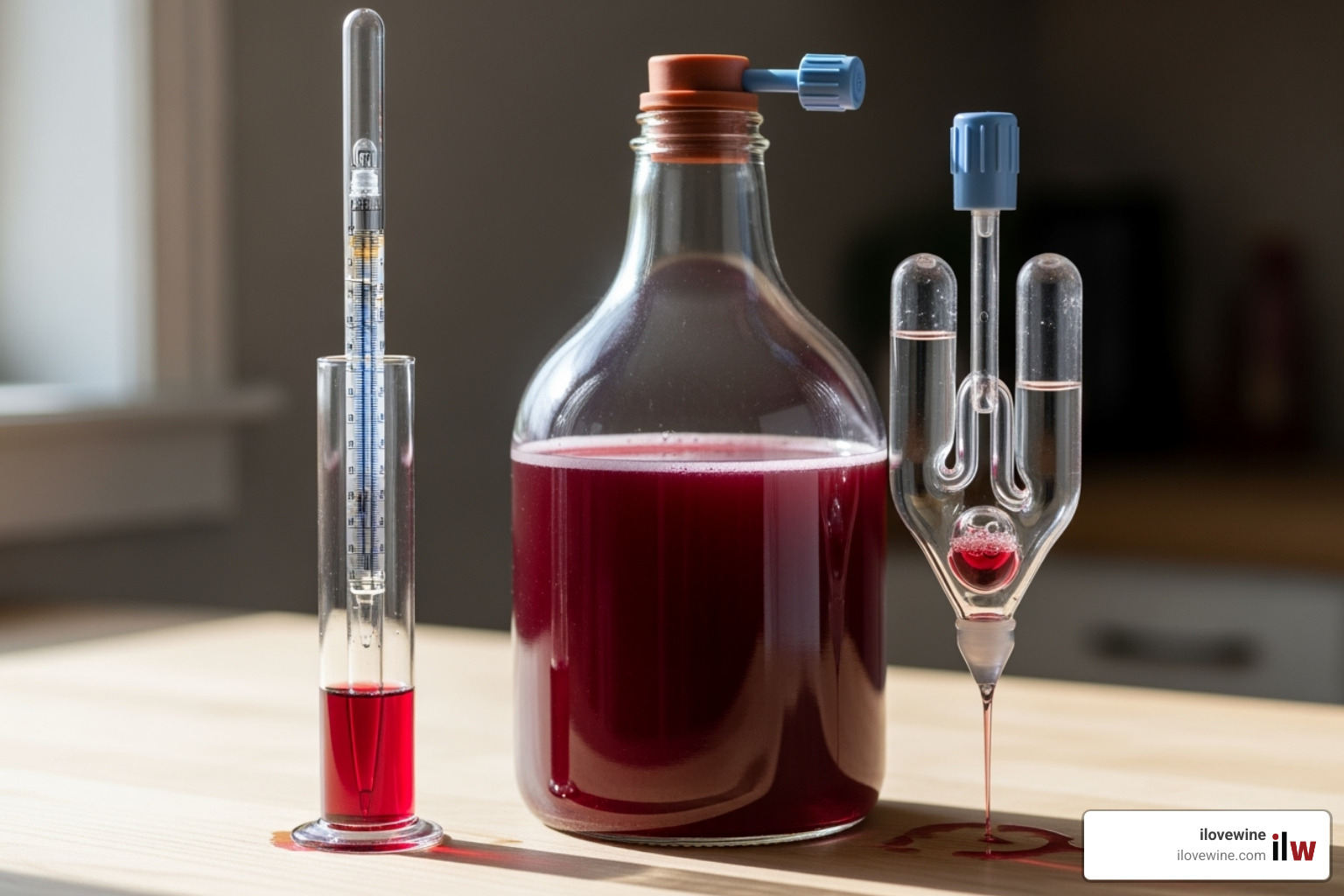
Sanitization is critical for success. Campden tablets (potassium metabisulfite) create an excellent sanitizing solution that kills unwanted microorganisms and protects against oxidation. Sanitize every piece of equipment, your work area, and your hands.
Ingredients That Make the Difference
These optional additives can significantly improve wine quality. Pectic enzyme prevents cloudiness in fruit wines. Yeast nutrient ensures healthy fermentation. Acid blend balances flavor, and grape tannin adds body and structure.
The Winemaking Process: From Grape to Glass
The winemaking process is straightforward. Your main choice is between traditional or quick Wine Recipes.
Choosing Your Timeline
Traditional methods take 3+ months, yielding complex, well-developed flavors. A chokecherry wine, for instance, needs about 3 months to mature.
Quick methods produce wine in just 21-30 days. These are great for certain grape varieties if you want to enjoy your creation sooner.
Primary Fermentation: Where It All Begins
First, crush your fruit after washing it thoroughly. Gently break the skins without pulverizing the seeds, which can add bitterness. Tougher fruits like rhubarb may need gentle simmering to extract juice.
Next, create the must by combining crushed fruit with water, sugar, and any additives. The must should be around 70-75°F before adding yeast. Pitching the yeast involves adding it to the cooled must and stirring well. Bubbling should begin within 24-48 hours.
Secondary Fermentation and Beyond
After a few days, rack your wine by siphoning it into a clean container, leaving the sediment behind. This clarifies the wine and prevents off-flavors.
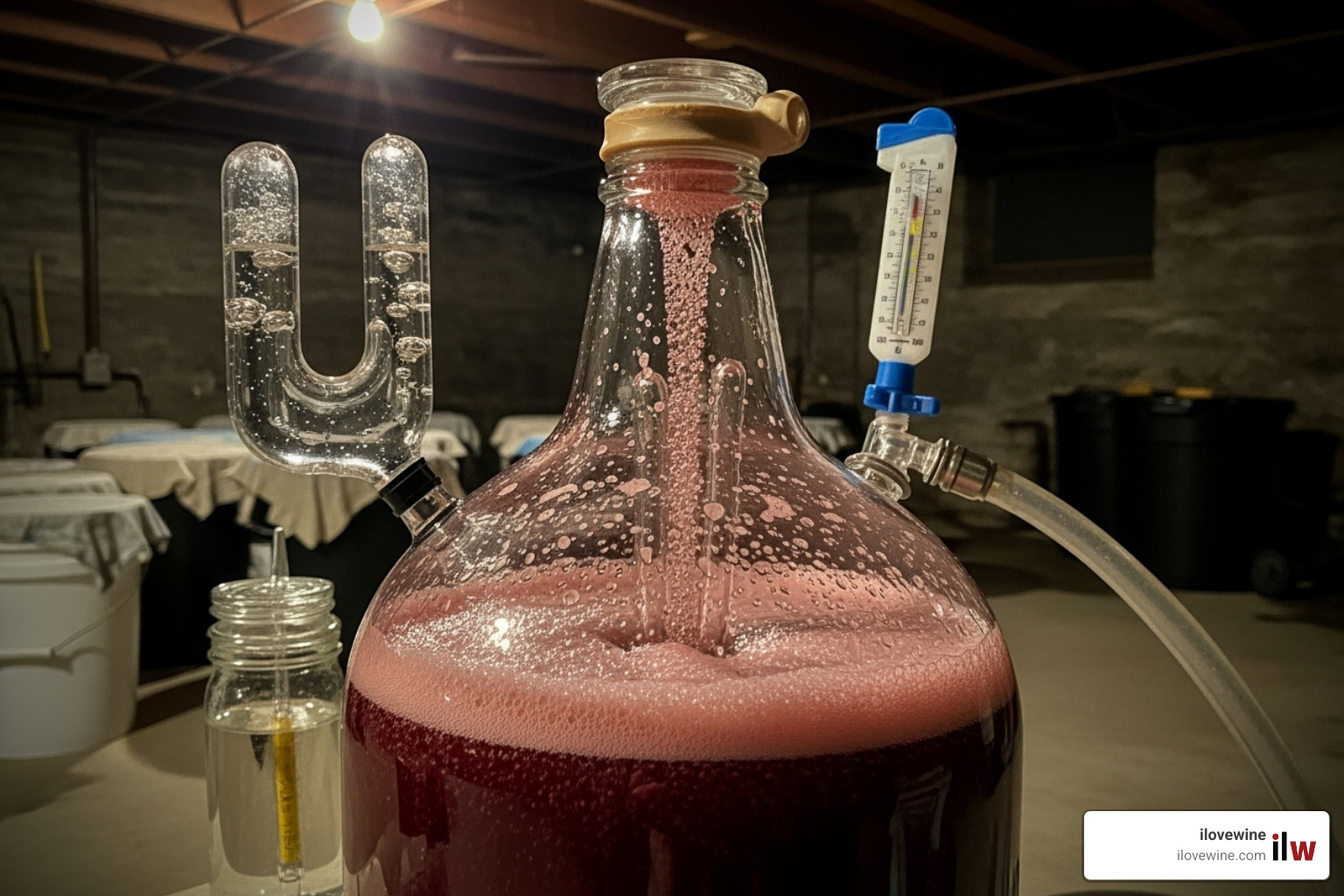
Your airlock is essential during this stage to let CO2 escape while blocking oxygen. The bubbling will gradually slow as fermentation progresses.
Temperature control is key. Keep your fermenting wine between 68-86°F (ideally 75-80°F). Temperatures that are too hot or cold can stress the yeast and stall fermentation.
Mastering Fermentation and Flavor
Understanding fermentation gives you control over your wine’s final character.
The Sugar-Alcohol Connection
Sugar content directly affects alcohol level. More sugar means higher potential alcohol. A starting specific gravity of 1.090 typically yields about 12% ABV if fermented completely dry.
A hydrometer measures the specific gravity (sugar concentration), taking the guesswork out of the process. Measure before fermentation and track its progress. Online ABV calculators can then determine the potential alcohol from your initial and final readings.
Recognizing Complete Fermentation
Fermentation is finished when there are no more bubbles in the airlock and the specific gravity is stable around 0.998 or below for several consecutive days.
Making It Your Own
This is where winemaking becomes an art. Add spices like cinnamon and cloves during fermentation for festive, complex flavors.
Different yeast strains dramatically impact flavor. Montrachet creates a rich, full-bodied character. EC-1118 produces clean, dry wines. K1V-1116 preserves fruit aromas, RC-212 improves color in reds, and Champagne yeast creates crisp flavors. Experimenting with yeast lets you craft unique Wine Recipes that reflect your personal taste.
Bottling, Aging, and Troubleshooting Your Wine
You’ve watched your must transform through fermentation and carefully racked it to sparkling clarity. Now comes the moment every home winemaker dreams of: bottling your creation and preparing it for the aging process that will develop its full potential. This final stage requires just as much attention as the earlier steps, but the reward of sipping your own perfectly crafted wine makes every careful detail worthwhile.
Best Practices for Bottling and Storing Your Creation
Bottling is a pivotal step in your Wine Recipes journey, preserving your wine’s character and preparing it for aging.
Timing Your Bottling Decision


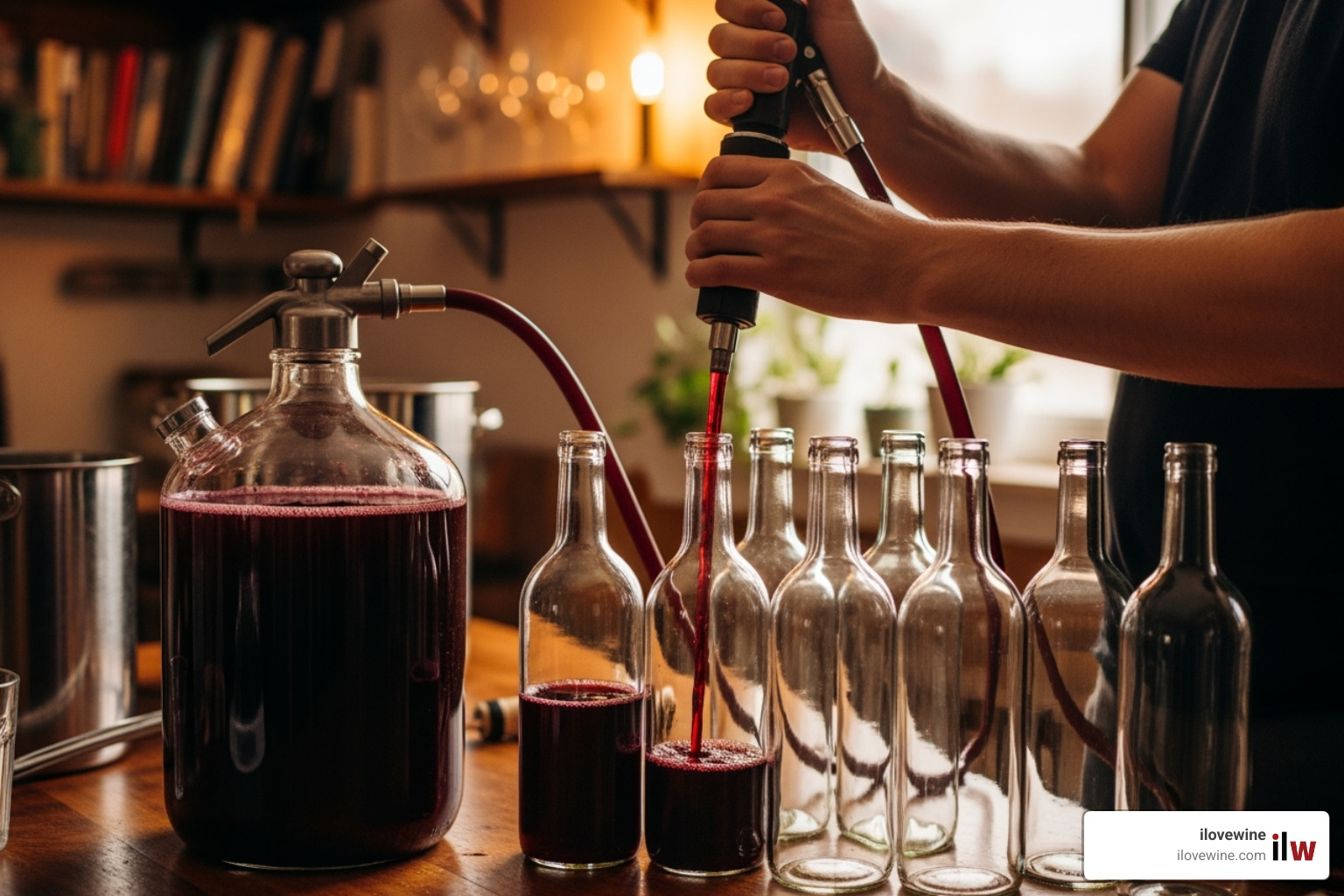
Bottle your wine only when fermentation has completely stopped (confirmed by a stable SG reading around 0.998) and the liquid is clear. Rushing this step can lead to exploding bottles or cloudy wine. Before bottling, perform one final racking for clarity, using a gentle siphon to minimize oxidation.
Choosing Your Vessels and Sealing Methods
Flip-top bottles are convenient for wines you’ll drink soon, while traditional corked bottles are best for long-term aging. For corking, a simple hand corker is fine for small batches. Ensure all bottles and corks are sanitized.
Creating the Perfect Storage Environment
Store your wine in a cool, dark place with stable temperatures, like a basement. For corked wines, store bottles on their side to keep the corks moist and prevent air from spoiling the wine.
Understanding Aging Potential
While some quick Wine Recipes are ready in 21-30 days, most homemade wines improve dramatically with age. A blackberry wine benefits from at least a year of aging, while a rhubarb wine can age for a year and a half or more. Aging softens tannins and integrates flavors, creating complexity.
Troubleshooting Your Common Wine Recipes
Even experienced winemakers face challenges. Knowing how to address them can save your batch.
Recognizing and Solving Common Problems
- Stalled fermentation: If yeast stops working prematurely, check the temperature (should be 68-86°F), add yeast nutrient, or re-pitch with a robust strain like EC-1118.
- Off-flavors or smells: Usually caused by contamination or oxidation. This highlights the importance of sanitization, your best defense against spoilage.
- Cloudy wine: Often a result of pectin haze in fruit wines. Pectic enzyme at the start prevents this. If it’s already cloudy, repeated racking and patience usually help.
Protecting Your Investment
Use Campden tablets to sterilize your must and protect against oxidation during racking or bottling. If you plan to back-sweeten your wine, always use a wine stabilizer (potassium sorbate) first to prevent re-fermentation in the bottle.
Legal Considerations and Compliance
Personal consumption laws in the United States generally allow adults to produce up to 100 gallons of wine annually (200 per household) without a license. State regulations vary, so check your local laws to ensure compliance with home winemaking rules.
Exploring Alternative Ingredients
The beauty of homemade Wine Recipes is experimentation. Berries, peaches, and rhubarb all produce unique and delicious wines. Each ingredient offers different challenges and rewards, expanding your winemaking skills.
Perfecting Sweetness Levels
Back-sweetening lets you customize the final taste. After fermentation is complete and the wine is stabilized, slowly add sugar or sweet fruit concentrates until you reach your desired sweetness.
Learning from the Community
Keep a detailed journal of your ingredients, process, and readings to replicate successes and troubleshoot issues. Don’t be afraid to experiment with different fruits, yeasts, or spices. Most importantly, be patient; proper aging is what transforms simple ingredients into complex, satisfying wines.
Your homemade wine connects you to a rich tradition. With care, you’ll create bottles worthy of sharing, each telling a story of your creativity.
Ready to explore how your homemade creations can improve your culinary experiences? Find perfect pairings for your new creation in our food and wine pairing guide.
What's Your Reaction?
