Prosecco or Champagne? Your Guide to Choosing the Right Bubbles


Why Understanding Prosecco vs Champagne Matters for Wine Lovers
Prosecco vs Champagne isn’t just about bubbles – it’s about understanding two completely different worlds of sparkling wine. While both wines pop and fizz, they come from different countries, use different grapes, and follow entirely different production methods that create distinct flavors and experiences.
Quick Answer: The Key Differences
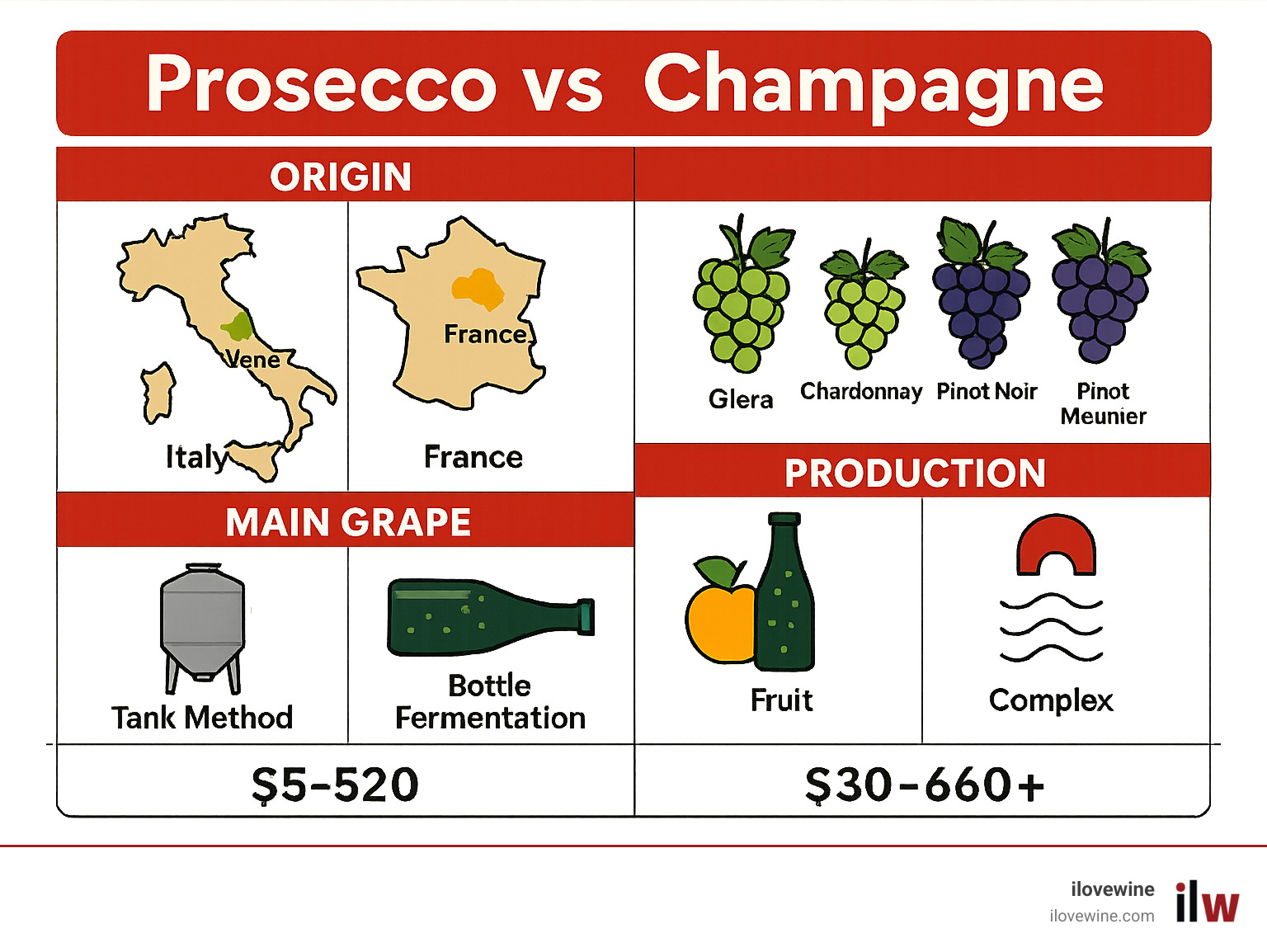
| Factor | Prosecco | Champagne |
|---|---|---|
| Origin | Italy (Veneto region) | France (Champagne region) |
| Main Grape | Glera | Chardonnay, Pinot Noir, Pinot Meunier |
| Production | Tank Method (Charmat) | Traditional Method |
| Flavor | Fresh, fruity, floral | Complex, toasty, citrusy |
| Price | $5-$20 | $30-$60+ |
| Best For | Casual drinking, cocktails | Special occasions, aging |
The confusion between these two sparkling wines runs deep. Many wine lovers use the terms interchangeably—but they shouldn’t.
The differences go far beyond price. Champagne undergoes secondary fermentation in the bottle, creating complex flavors like brioche and toast through extended contact with yeast. Prosecco uses tank fermentation, preserving bright fruit flavors like green apple and pear while keeping production costs lower.
Whether you’re planning a casual summer gathering or a milestone celebration, knowing these differences helps you choose the right bubbles for the moment.
I’m Jonas Muthoni ILW, and I’ve spent years exploring vineyards from Champagne to Italy. My journey has taught me that the prosecco vs champagne debate isn’t about which is better—it’s about appreciating what makes each special.
The Tale of Two Terroirs: Origin and Grapes
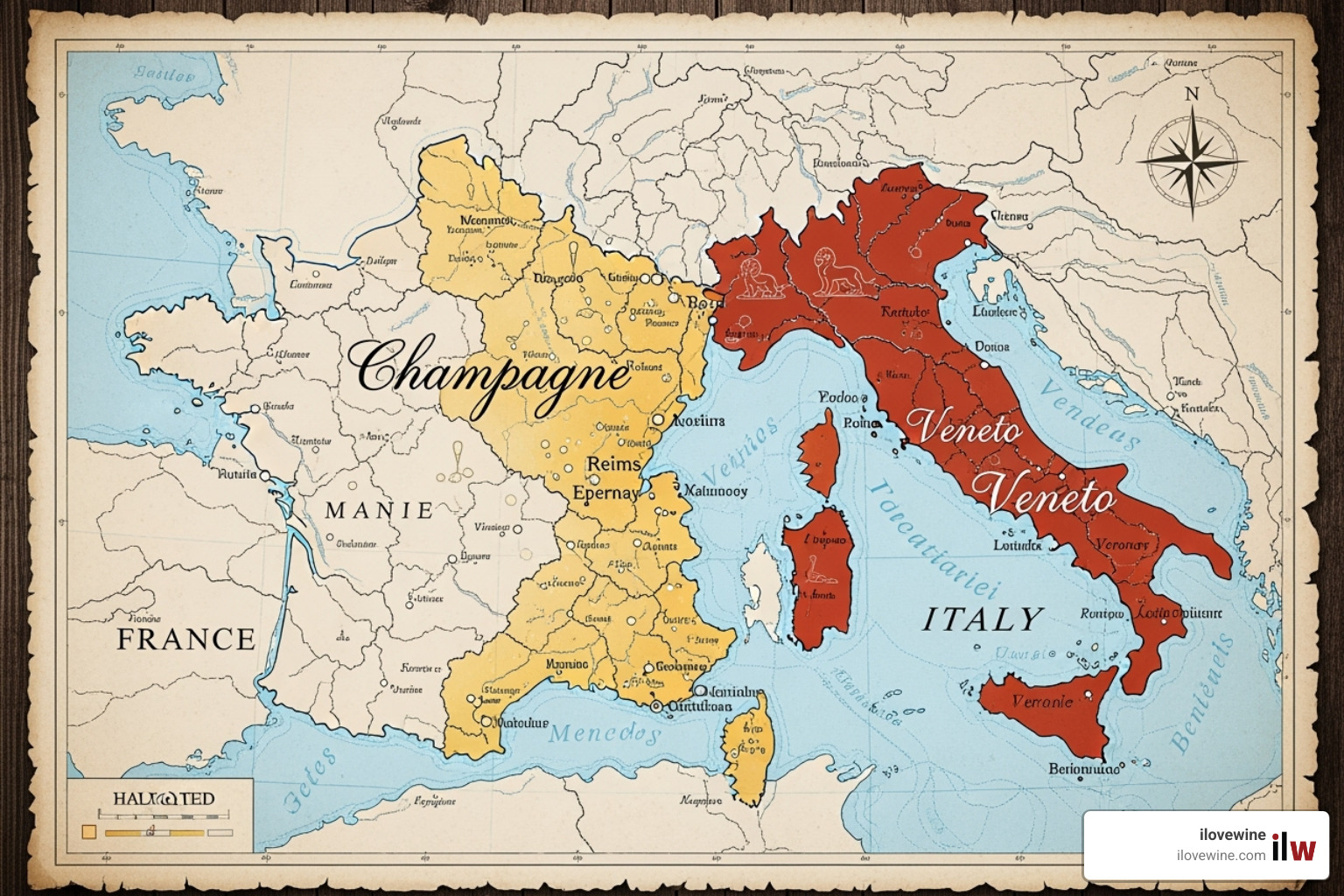
Understanding prosecco vs champagne starts with a simple truth: location matters. These aren’t just fancy names; they’re protected geographical designations that tell a story of place, tradition, and terroir. You can’t call a sparkling wine from California “Champagne” any more than you can call cheese from Wisconsin “Parmigiano-Reggiano.”
Champagne: A French Icon
About 80 miles northeast of Paris lies Champagne, a region so special that UNESCO declared it a World Heritage site. The chalky soil here has produced exceptional grapes for over 1,500 years.
French law is strict. The Appellation d’Origine Contrôlée (AOC) rules regulate everything from which grapes can be grown to how the vines are pruned.
The magic happens with three main grape varieties. Chardonnay brings elegance and bright citrus notes. Pinot Noir adds structure, body, and red berry flavors. Pinot Meunier rounds things out with fruitiness and a touch of earthiness.
The climate is key to Champagne’s character. The chilly northern temperatures create high acidity—the backbone that makes Champagne crisp and gives it the ability to age for decades.
Want to dive deeper into what makes Champagne so special? Learn more about the Champagne Appellation straight from the source.
Prosecco: Italy’s Pride
Over in northeastern Italy, the Veneto and Friuli regions are home to Prosecco. About 15 miles north of Venice, the hills around Treviso are where this sparkling wine is perfected.
Prosecco has its own protection system through Italy’s Denominazione di Origine Controllata (DOC) and the more exclusive DOCG designations, ensuring its origin.
The star of the show is the Glera grape. This grape was called “Prosecco” until 2009, when Italian authorities renamed it to protect the regional designation. Now, only wines from the proper regions can use the Prosecco name.
While Glera must make up at least 85% of the blend, winemakers can add small amounts of other local or international varieties for complexity.
The cooler microclimate in areas like Conegliano Valdobbiadene, with its morning mists and afternoon sun, helps Glera develop the fresh, crisp flavors that make Prosecco so approachable.
These conditions produce wines with bright green apple and pear flavors, plus delicate floral notes, making Prosecco a go-to for casual celebrations.
Curious about exploring these beautiful wine regions? You can Find the Prosecco region and plan your next Italian trip.
Crafting the Bubbles: The Great Prosecco vs Champagne Production Divide
How the bubbles are created is a key difference in the prosecco vs champagne debate. The production methods are entirely different, affecting flavor, texture, and price.
The bubbles aren’t just fizz; they are the heart of each wine’s unique character.
The Traditional Method (Méthode Champenoise)
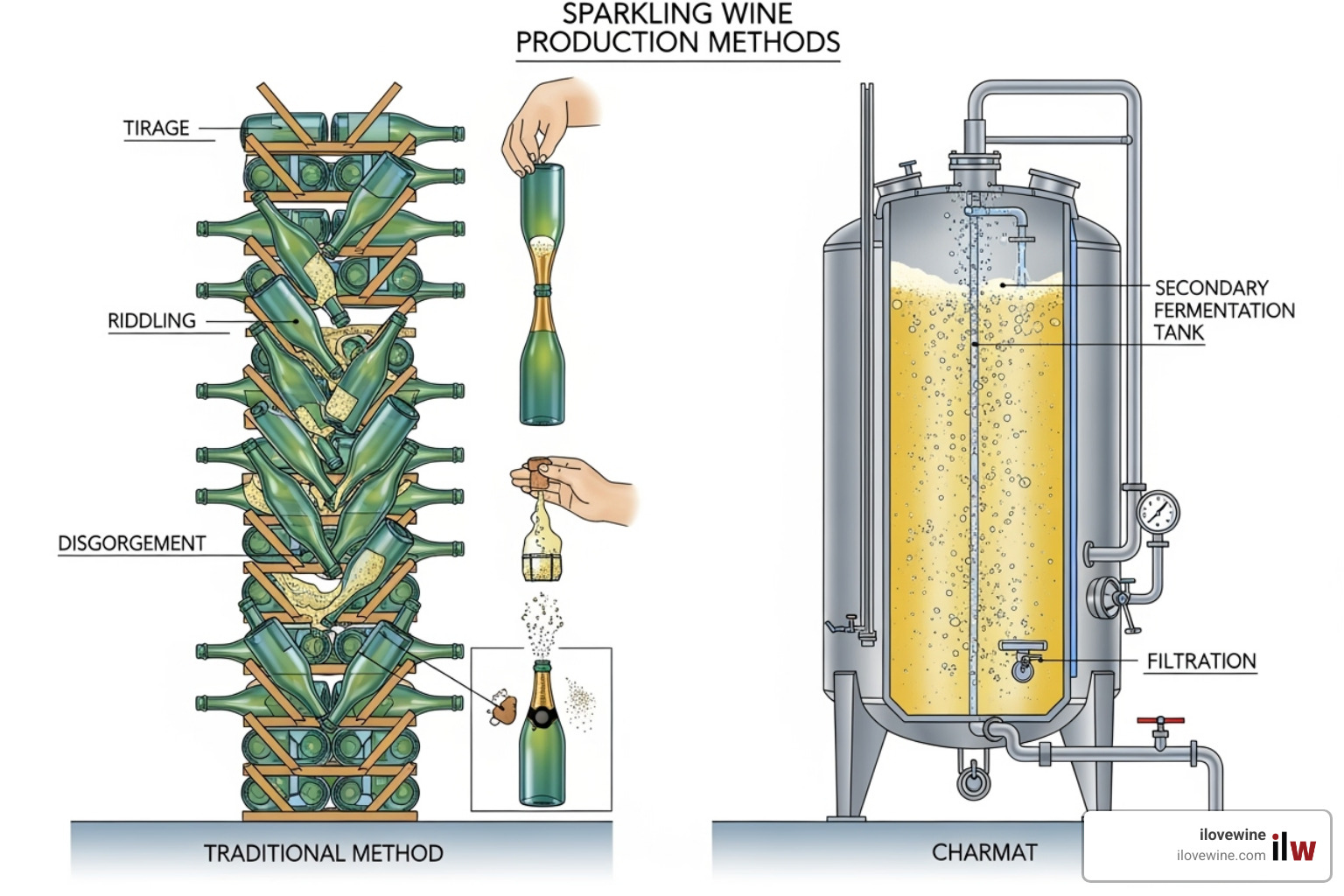
Champagne production uses the Traditional Method, or Méthode Champenoise, perfected over centuries. The process begins with in-bottle fermentation, where a mixture of sugar and yeast is added to each bottle of still wine. The yeast consumes the sugar, creating carbon dioxide that carbonates the wine.
Champagne gets its legendary complexity from lees aging. The wine sits on the dead yeast cells, or “lees,” for at least 12 months (often much longer for premium versions). This lees aging is what gives Champagne its signature flavors of brioche, toasted nuts, and citrus.
Next are riddling, where bottles are rotated to collect sediment in the neck, and disgorgement, which removes the sediment. This creates fine, persistent bubbles. The entire process is time-intensive and requires skilled labor, which impacts the cost. It’s the same method used for other premium sparkling wines. If you’re curious, you can explore other sparkling wines like Cava.
The Tank Method (Charmat Method)
Prosecco uses the Tank Method, also known as the Charmat Method, an efficient approach that makes this sparkling wine more accessible. Instead of individual bottles, Prosecco undergoes its secondary fermentation in large, pressurized stainless steel tanks.
This faster process is key to Prosecco’s style. The secondary fermentation takes weeks or months, not years, making it significantly less expensive to produce. This speed isn’t a compromise; it’s a feature that preserves freshness.
The Tank Method beautifully preserves fresh fruit flavors. The bright green apple, pear, and floral notes stay vibrant because the wine doesn’t sit on lees for long. The result is lighter, frothier bubbles and an approachable style perfect for casual sipping or cocktails.
Prosecco’s bubbles may not last as long as Champagne’s, but they deliver an immediate burst of fresh fruit and flowers. This efficient production method allows Prosecco to be the friendly, everyday sparkling wine that has won hearts worldwide. It’s not trying to be Champagne—it’s being the best version of itself.
A Symphony of Senses: Flavor, Aging, and Texture
The distinct production methods of prosecco vs champagne lead to vastly different sensory experiences. From the aroma to the last taste, these two sparkling wines offer unique journeys for the palate.
Key Differences in the Prosecco vs Champagne Taste Profile
We can taste the direct results of their different grapes, terroirs, and production methods.
Champagne flavors are renowned for their complexity and depth from extended lees aging. Key notes include:
- Brioche, Toast, Fresh-Baked Bread: These classic notes come from lees aging, giving Champagne a rich, yeasty quality that becomes more refined over time.
- Citrus: Lemon zest, grapefruit, and subtle orange notes.
- White Peach, White Cherry: Delicate stone fruit and berry undertones.
- Almonds, Hazelnut: Nutty characteristics can emerge, especially in aged Champagnes.
- Mineral Notes: Chalky or flinty undertones reflecting the region’s soil.
Champagne’s bubbles are typically finer and more persistent, creating a creamy mouthfeel. The alcohol content is usually around 12% to 12.5% ABV.
Prosecco flavors are celebrated for their vibrant fruitiness and floral aromas, preserved by the Charmat Method. Common flavors are:
- Green Apple: A crisp, refreshing, and prominent fruit note.
- Honeydew Melon, Pear: Sweet, juicy orchard fruit flavors.
- Floral Notes: Hints of honeysuckle, acacia, and jasmine.
- Citrus: Lighter lemon and lime notes for brightness.
Prosecco’s bubbles are lighter and frothier, creating a lively sensation. The alcohol content is slightly lower, around 10.5% to 11% ABV, making it feel approachable and casual.
To Age or Not to Age?
The aging potential is another critical distinction in the prosecco vs champagne comparison.
Champagne aging is a cornerstone of its identity. The Traditional Method provides a structure that allows it to evolve beautifully in the bottle for years, even decades.
- Non-Vintage (NV) Champagne: Designed for immediate enjoyment, NV Champagne is best consumed within a few years of release. However, it still benefits from a minimum of 15 months of lees aging, which develops its characteristic flavors.
- Vintage Champagne: Made from a single, exceptional year’s harvest, vintage Champagne is built to age for a decade or more. It spends at least 3 years on its lees, developing complex notes of honey, nuts, and dried fruit over time as its texture becomes creamier.
For a deeper dive into Champagne’s longevity, read our guide: Does Champagne Go Bad? A Definitive Guide.
Prosecco aging is generally not recommended, as it’s geared towards fresh fruit character best enjoyed young.
- Best Consumed Young: Prosecco is best consumed within a year of production to enjoy its fresh and vibrant fruit and floral notes at their peak.
- Freshness is Key: Prosecco doesn’t spend extended time on the lees and has no minimum aging requirements beyond its short production time. This prevents it from developing the complex secondary flavors found in aged Champagne.
- Top-Quality Exceptions: While rare, some top-quality Proseccos, like those from the Conegliano Valdobbiadene Superiore di Cartizze DOCG, can be aged for up to seven years. However, the vast majority are meant for immediate enjoyment.
If you’re looking for a wine to lay down for a future celebration, Champagne is your choice. If you want something bright and lively for this weekend, Prosecco is ready.
Popping the Question: Price, Popularity, and Pairings
When deciding between prosecco vs champagne, your wallet often has a say. Understanding the price differences and how each wine fits different occasions can help you make the perfect choice.
Understanding the Prosecco vs Champagne Price Point
The price gap isn’t marketing; it’s a direct result of production methods.
Champagne demands patience and pays for it. Expect to spend $40 or more for an entry-level bottle, with premium vintages climbing past $100. This is the cost of time. Every bottle ages in a cellar for at least 15 months, and the labor-intensive process of riddling and disgorgement adds to the expense. The prestige factor also plays a role. Champagne has spent centuries building its reputation as the ultimate celebration wine, a status that contributes to its price.
Prosecco takes the express route to your glass. Most bottles cost under $20, with many great options between $5 and $15. This affordability comes from efficiency. The Charmat Method means production happens in weeks, not years, using large tanks instead of individual bottles, which eliminates the need for expensive cellar space and labor.
The Perfect Pour for Any Occasion
Prosecco and Champagne have naturally found their own lanes, making it easy to choose the right one for the moment.
Prosecco is the everyday celebration wine. Its bright, approachable character is perfect for casual gatherings where you want something festive without formality. Think summer barbecues or a spontaneous Tuesday night toast.
Summer cocktails are where Prosecco truly shines. Its light, fruity profile is the star of an Aperol Spritz or a weekend Bellini. It’s the perfect choice when you want something fun and refreshing.
For your next brunch, check out our guide to Find the Best Champagnes for Mimosas—because sometimes the occasion calls for an upgrade.
Champagne owns the milestone moments. Its complexity and tradition make it the natural choice for special celebrations like weddings, anniversaries, and graduations. Popping a real Champagne cork makes any moment unforgettable.
Beyond toasting, Champagne’s sophisticated profile is brilliant for neat dinners. Its brioche notes and fine bubbles pair beautifully with rich dishes, cleansing the palate between bites.
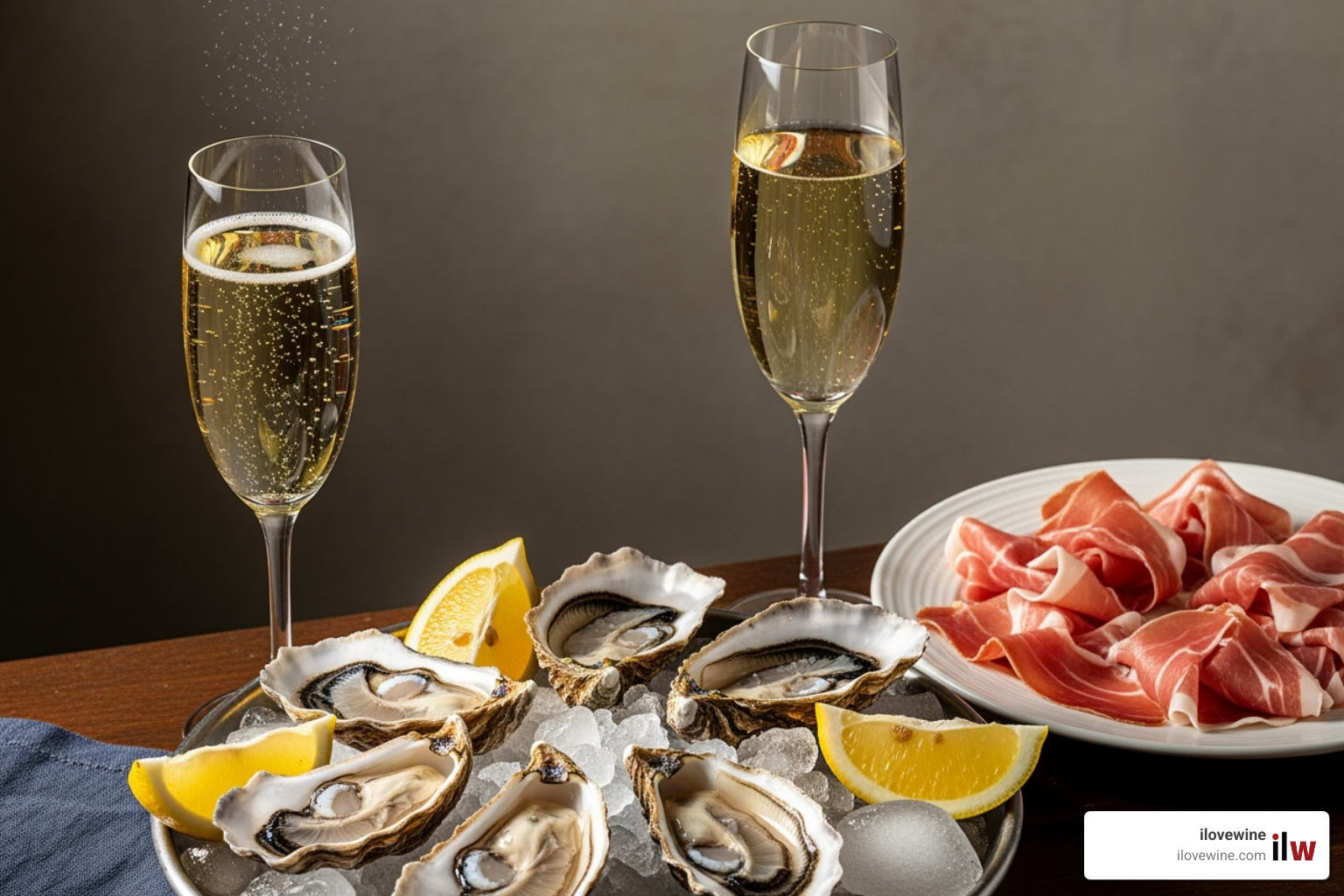
Food pairing brings out their personalities even more. Champagne’s complexity loves bold flavors like oysters, caviar, aged cheeses, and even potato chips. Its acidity cuts through rich and fried foods.
Prosecco prefers lighter companions like prosciutto-wrapped melon, fresh mozzarella, and mildly spiced Asian dishes. It’s also wonderful with fruit-based desserts.


The secret is that there’s no wrong choice—only the right wine for the right moment.
Frequently Asked Questions about Prosecco and Champagne
When it comes to prosecco vs champagne, I hear the same questions pop up again and again at tastings and dinner parties. Let’s tackle the most common misconceptions and give you the straight answers you need to steer these bubbly waters with confidence.
Is Prosecco just a cheaper version of Champagne?
This question makes me smile every time because it’s such a widespread myth. The short answer is absolutely not – and here’s why that matters for your wine enjoyment.
Think of it this way: asking if Prosecco is just cheap Champagne is like asking if a sports car is just an expensive bicycle. Both get you places, but they’re completely different experiences designed for different purposes.
The price difference between these wines isn’t about one being “better” – it’s about completely different approaches to winemaking. Champagne’s Traditional Method requires years of aging, hand-riddling bottles, and painstaking individual attention. That’s expensive. Prosecco’s Charmat Method uses efficient tank fermentation that preserves fresh fruit flavors while keeping costs reasonable.
But here’s what really matters: they use different grapes entirely. Prosecco showcases the Glera grape’s bright, fruity personality, while Champagne blends Chardonnay, Pinot Noir, and Pinot Meunier for complexity. It’s not a budget substitute – it’s a distinct flavor profile that many wine lovers actually prefer for everyday drinking.
Both wines follow strict quality regulations too. Prosecco’s DOC and DOCG designations are just as rigorous as Champagne’s AOC laws. The difference is that Prosecco’s production method allows for accessible pricing without compromising on authenticity or quality.
What are the main similarities between Prosecco and Champagne?
Despite all their differences, these two sparkling stars share some fascinating common ground that explains why we love them both.
Both are legitimate sparkling wines created through secondary fermentation – they’re not just still wines with bubbles pumped in. This shared foundation means both deliver that delightful effervescence we associate with celebration.
Geography plays a huge role for both. Both come from protected European regions with centuries of winemaking tradition. Just as true Champagne can only come from France’s Champagne region, authentic Prosecco must originate from specific areas in Italy’s Veneto and Friuli regions.
Here’s something that might surprise you: both regions are UNESCO World Heritage sites. The Champagne region earned this recognition for its unique viticultural landscape, while the Conegliano Valdobbiadene hills where premium Prosecco grows received the same honor in 2019.
Both can be made in rosé styles now too. While Champagne rosé has existed for centuries, Prosecco rosé only became officially recognized in 2020, giving us even more pink bubbly options to explore.
Most importantly, both are perfect for celebrations. Whether you’re toasting a promotion with Prosecco or marking an anniversary with Champagne, both wines carry that special magic that turns ordinary moments into memorable ones.
Which is sweeter, Prosecco or Champagne?
This question gets tricky because sweetness in prosecco vs champagne isn’t always what it seems on the surface.
Technically, both wines are usually made in dry styles. The most popular category for both is “Brut,” which means dry with minimal residual sugar. So on paper, they’re equally dry.
But here’s where it gets interesting: Prosecco often tastes fruitier, which our brains can interpret as sweetness even when the sugar levels are low. Those bright green apple and pear flavors from the Glera grape create a perception of sweetness that’s really just vibrant fruit character.
Champagne offers a broader range of sweetness levels with specific classifications. You’ll find everything from bone-dry Brut Nature (zero added sugar) all the way up to dessert-sweet Doux. The traditional Brut style dominates the market, but vintage Champagnes sometimes lean slightly sweeter to balance their complexity.
Prosecco’s fruit-forward nature makes it feel more approachable and less austere than many Champagnes, even at the same technical sweetness level. This is why Prosecco works so beautifully in cocktails like Aperol Spritz – its natural fruitiness plays well with other flavors.
The bottom line? If you’re drawn to wines that feel bright and fruity, Prosecco’s natural character might appeal to your palate regardless of actual sugar content. If you prefer crisp, mineral-driven wines with savory complexity, Champagne’s drier profile is probably more your style.
Your Perfect Bubbly Awaits
After exploring the fascinating worlds of prosecco vs champagne, one thing becomes beautifully clear: there’s no winner in this sparkling showdown, only perfect matches waiting to be found. Both wines have earned their place in our hearts and glasses, each bringing something special to the table.
The magic lies in understanding that these aren’t competing products but complementary experiences. Champagne, with its complex brioche and toast notes developed through years of patient aging, serves as your sophisticated companion for life’s milestone moments. Meanwhile, Prosecco’s vibrant green apple and floral character makes it the perfect partner for everyday joy and spontaneous celebrations.
Not better or worse, just beautifully different. Champagne’s Traditional Method creates those fine, persistent bubbles and layered flavors that can age gracefully for decades. Prosecco’s Charmat Method preserves the fresh, fruit-forward essence of Glera grapes, delivering immediate pleasure at a price that won’t make your wallet weep.
Your personal preference and the occasion should guide your choice, not wine snobbery or price tags. Planning an intimate anniversary dinner where you want complexity and elegance? That bottle of Champagne will create the perfect atmosphere. Hosting a summer barbecue or mixing Aperol Spritzes for friends? Prosecco brings exactly the right energy and won’t break the bank.
The beauty of understanding these differences is that it empowers you to choose confidently. No more standing in the wine aisle wondering if you’re making the “right” choice. You now know that a $15 Prosecco can be absolutely perfect for your Tuesday night celebration, while that special vintage Champagne deserves to wait for your promotion toast.
At iLoveWine, we’re passionate about helping wine lovers steer these delicious decisions. Our goal isn’t to tell you what to drink, but to give you the knowledge to find what brings you joy. Whether that’s the yeasty complexity of a well-aged Champagne or the refreshing simplicity of a young Prosecco, both paths lead to happiness.
Ready to explore more sparkling comparisons? Continue your sparkling wine journey with Prosecco vs Moscato and find even more bubbly possibilities. Here’s to finding your perfect match, one glass at a time!
What's Your Reaction?
