Body Language: What Your Wine’s Fullness Tells You


Decoding Wine Body: Your Guide to Understanding Fullness

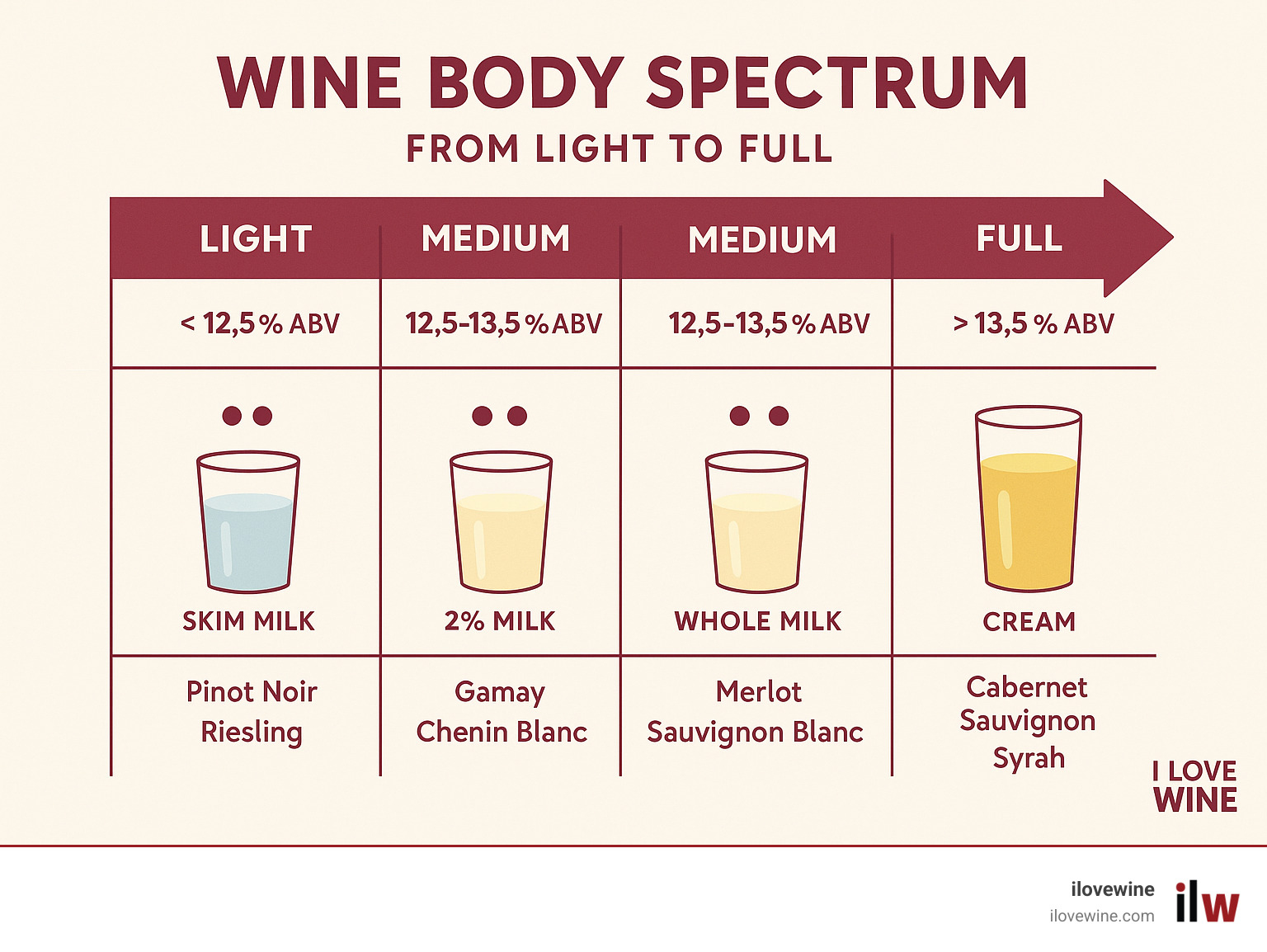
Full body wine refers to wines that feel heavy, rich, and viscous in the mouth. The term describes the wine’s texture and weight—its physical presence on the palate—rather than its specific flavors. This sensation is often compared to the difference between skim milk (light-bodied), whole milk (medium-bodied), and cream (full-bodied).
Key Characteristics:
- Alcohol content: 13.5% ABV or higher (often 14.5%+)
- Tannins: High levels from grape skins and seeds
- Mouthfeel: Thick, coating sensation that lingers
- Texture: Dense and substantial on the palate
- Examples: Cabernet Sauvignon, Syrah, Malbec, oaked Chardonnay
Understanding wine body is one of the most effective ways to categorize wine and make confident selections. A wine’s body is determined by measurable factors that create its mouth-coating density. While often associated with powerful red wines, the term “full-bodied” can describe both red and white wines that possess these textural qualities.
Full body wine vocab to learn:
What Factors Contribute to a Full-Bodied Wine?
A wine’s body is the result of several key factors, many of which are intentionally managed by the winemaker to achieve a specific style.
- Alcohol Content: Higher alcohol levels directly increase a wine’s viscosity and perceived weight.
- Tannin Levels: These phenolic compounds, found in grape skins, seeds, and stems, provide structure and a drying sensation that adds to the wine’s heft.
- Grape Varietal: Grapes with thicker skins, such as Cabernet Sauvignon, naturally produce wines with a fuller body.
- Oak Aging: Aging in oak barrels imparts tannins and texture, contributing to a richer mouthfeel.
- Malolactic Fermentation: This secondary fermentation converts sharp malic acid into softer lactic acid, creating a creamier, rounder texture.
- Residual Sugar: Small amounts of unfermented sugar can increase a wine’s viscosity and richness, even in dry styles.
- Glycerol: A natural byproduct of fermentation, this colorless, odorless polyol adds to the perception of body without contributing flavor.
- Climate: Grapes from warmer climates ripen more fully, developing higher sugar levels (which convert to higher alcohol) and more phenolic compounds.
- Winemaking Techniques: Methods like extended skin contact, sur lie aging (aging on yeast lees), and bâtonnage (lees stirring) are used to enhance a wine’s texture and weight.
The Anatomy of a Full Body Wine

The creation of a full body wine involves specific elements from both the vineyard and the cellar, combining the natural characteristics of the grapes with targeted winemaking techniques.
The Power of Grapes: Alcohol and Tannins
The most significant contributor to a wine’s body is its alcohol content. Wines with 13.5% ABV or higher feel more viscous and rich. Alcohol is denser than water, which gives the wine a more substantial weight on the palate. This viscosity is visible in the slow-moving streaks, or “legs,” that slide down the side of a glass after swirling.
Tannins provide structure and weight, particularly in red wines. These natural compounds are extracted from grape skins, seeds, and stems. Thick-skinned varieties like Cabernet Sauvignon are high in tannins, which create a drying, puckering sensation. The duration of skin contact during fermentation determines the level of tannin extraction, directly impacting the wine’s body.
Glycerol, a colorless and slightly sweet byproduct of fermentation, also enhances a wine’s richness. While it does not alter the flavor, scientific research confirms that glycerol and ethanol work together to create the smooth, coating sensation associated with full-bodied wines.
The Winemaker’s Touch: Crafting a Full Body Wine
Skilled winemakers employ specific techniques to enhance a wine’s body.
Malolactic fermentation is a key process for developing a richer texture. It uses Oenococcus oeni bacteria to convert sharp malic acid (reminiscent of green apples) into softer, creamier lactic acid (found in dairy products). This conversion not only softens the wine’s acidity but also adds weight and creates a rounder, more integrated mouthfeel, which is responsible for the buttery notes in many Chardonnays and the smooth texture of most red wines.
Oak aging contributes tannins, complexity, and texture. New oak barrels in particular impart their own tannins, adding structure and weight. They also release compounds like vanillin and lactones, which introduce vanilla and coconut notes. The slow, controlled oxidation that occurs through the porous wood helps to integrate flavors and create a smoother profile, especially in wines aged for 12 months or more.
Residual sugar plays a subtle but important role. Even in wines classified as “dry,” winemakers may leave a few grams per liter of unfermented sugar. This small amount is not perceived as sweetness but increases the wine’s viscosity and creates a more opulent feel.
Producing full-bodied wines presents significant technical challenges. High-sugar grapes can cause yeast stress and lead to stuck fermentations, while the resulting high pH requires meticulous acid management to prevent spoilage. Furthermore, the high-alcohol environment can inhibit malolactic bacteria, and long aging periods necessitate robust microbial protection strategies. A technical guide for winemakers details the complete process for managing these complexities.
Common Full-Bodied Grapes and Their Flavors
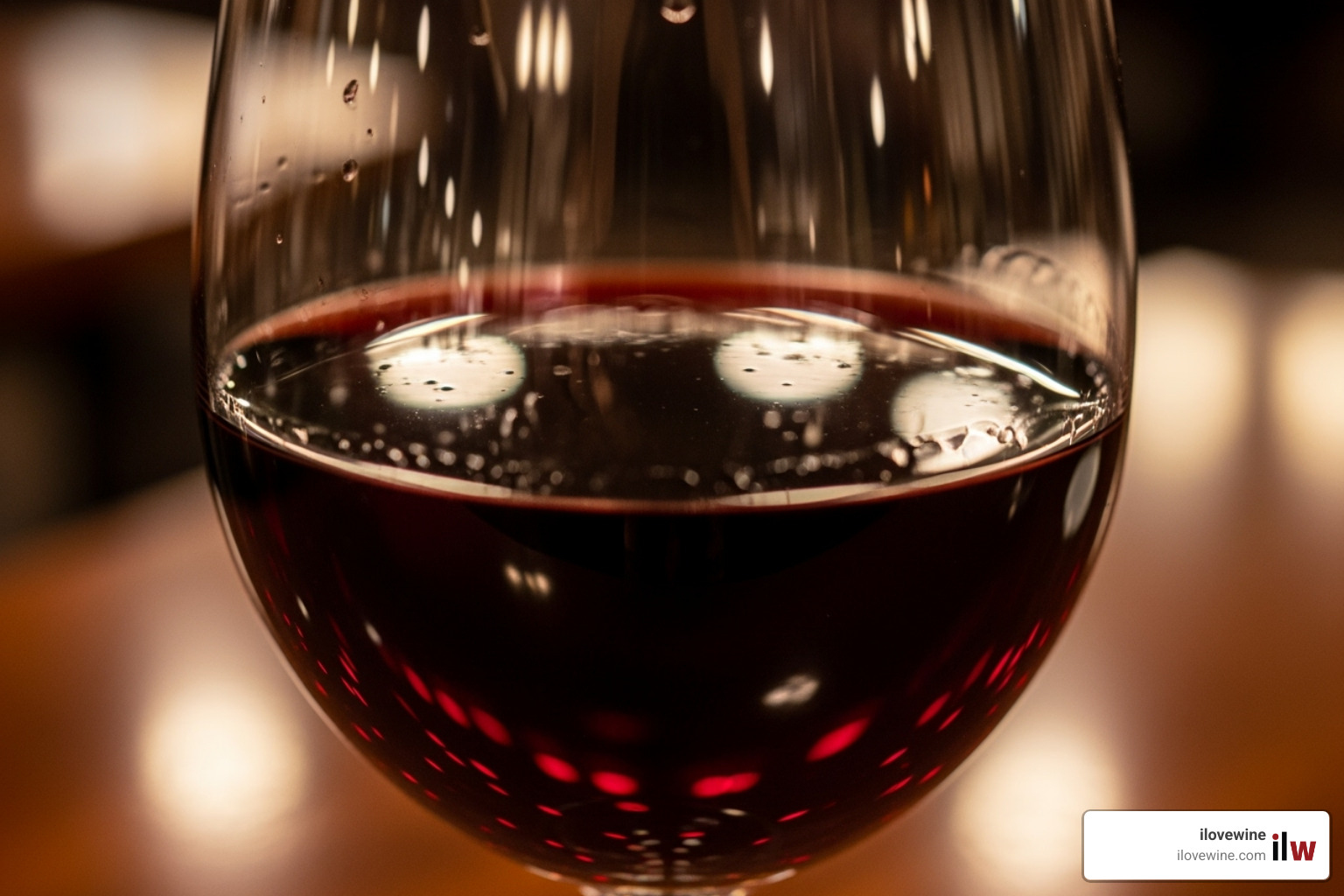
Certain grape varieties are naturally predisposed to producing full body wine due to their genetic traits.
Cabernet Sauvignon is renowned for producing full-bodied reds with firm tannins and flavors of black currant, blackberry, and plum. Oak aging often adds notes of cedar, tobacco, and graphite.
Syrah Wines (or Shiraz in Australia) deliver intense dark fruit, black pepper, and smoked meat characteristics. Northern Rhône Syrah often shows more savory olive and violet notes, while Australian Shiraz exhibits bold, fruit-forward power.
Malbec, especially from Argentina, produces plush wines with soft, velvety tannins and flavors of black cherry, plum, and cocoa.
Merlot Wine can range from medium to full-bodied. Concentrated examples, such as those from Bordeaux’s Pomerol region, offer dark plum, black cherry, and herbal notes enhanced by chocolate and vanilla from oak.
Zinfandel from California often has high alcohol levels, creating jammy, powerful wines with flavors of blackberry and raspberry and a spicy pepper finish.
Petite Sirah, a cross between Syrah and Peloursin, is known for its inky color, high tannins, and concentrated blackberry, blueberry, and black pepper flavors.

Nebbiolo is the grape behind Italy’s Barolo and Barbaresco. These highly tannic wines feature complex aromas of cherry, rose, tar, and licorice and are capable of aging for decades.
For whites, Oaked Chardonnay leads the category with a creamy texture and flavors of butter, vanilla, and baked apple derived from malolactic fermentation and oak aging. Other examples include Viognier, with its aromatic apricot, peach, and honeysuckle notes, and the Rhône varieties Marsanne and Roussanne, which offer flavors of stone fruit, nuts, and honey.
These grape varieties, when combined with skilled winemaking, produce the substantial wines that define the full-bodied category, each delivering a distinct personality alongside the characteristic rich, mouth-coating texture.
How to Experience and Pair Full-Bodied Wines


Enjoying a full body wine to its fullest potential involves serving it correctly and pairing it with food that complements its intensity.
Perfect Pairings for a Full Body Wine
The guiding principle for successful wine pairing is to match the weight of the wine with the weight of the food. A delicate dish would be overwhelmed by a bold wine, while a robust dish would overpower a light one. Full body wine demands equally substantial food to create a harmonious pairing.
For full-bodied reds, the high tannin content acts as a palate cleanser, cutting through fat and protein. This makes them ideal for rich, flavorful dishes.
- Steak: A grilled ribeye or New York strip has the fat and umami to stand up to a Cabernet Sauvignon or Malbec. The wine’s tannins cut through the meat’s richness, while the beef enhances the wine’s dark fruit notes.
- BBQ and Smoked Meats: The smoky, caramelized flavors of BBQ ribs pair exceptionally well with the concentrated fruit and spice in a Zinfandel or Australian Shiraz.
- Hearty Stews: Slow-cooked dishes like beef bourguignon or lamb tagine develop deep flavors that complement the layered character of an aged Barolo or a structured Bordeaux blend. For more ideas, see our guide to the Best Red Wines for a Hearty Winter Meal.
Full-bodied white wines, with their rich textures, pair well with creamy or rich dishes.
- Lobster with Butter: The wine’s creamy mouthfeel mirrors the butter sauce, while its acidity provides a refreshing contrast to the rich lobster meat.
- Creamy Pasta Sauces: An oaked Chardonnay is a classic match for Alfredo or mushroom cream sauces, as the wine’s buttery notes create a seamless flavor bridge.
- Roasted Chicken: A roasted chicken with herbs is excellent when paired with Viognier or Marsanne, whose body complements the meat’s richness while their floral notes add complexity.
- Rich, Soft Cheeses: Triple-cream brie or aged Camembert pair well with full-bodied whites, whose texture can handle the creaminess of the cheese.
For more specific ideas, our Syrah Food Pairing Recipes offer detailed guidance for that varietal.
Developing Your Palate
The most effective way to understand wine body is through direct comparison. Tasting a light-bodied wine, like Pinot Noir, alongside a full-bodied Cabernet Sauvignon will make the textural differences immediately apparent. Similarly, comparing an unoaked Chardonnay with its oaked counterpart highlights the impact of winemaking on body and mouthfeel. These side-by-side tastings are invaluable for training your palate to identify the characteristics of a full body wine.
Experimenting with food pairings is also a crucial part of the learning process. While classic pairings provide a reliable foundation, discovering unexpected combinations that create harmony between food and wine is a rewarding aspect of wine exploration. Ultimately, personal preference dictates the ideal choice, and the goal is to identify the styles and pairings you enjoy most. To continue learning, explore the distinctions between other popular wine styles, such as Prosecco vs Moscato, to further refine your understanding of wine’s diverse characteristics.
What's Your Reaction?
