Rosé All Day: Perfect Pairings for Every Occasion


Why Rosé Wine Pairing Deserves Your Attention Year-Round
Rosé wine pairing offers remarkable versatility that extends far beyond summer afternoons. Whether you’re planning a seafood dinner, assembling a cheese board, or tackling spicy Thai cuisine, there’s a rosé that will lift your meal.
Quick Rosé Pairing Guide:
- Dry, Light Rosé – Seafood, salads, goat cheese, grilled fish
- Dry, Fuller-Bodied Rosé – Mediterranean dishes, roasted chicken, pizza, grilled lamb
- Off-Dry/Sweet Rosé – Spicy Asian food, barbecue, fruit desserts, Thai curries
- Sparkling Rosé – Fried foods, oysters, charcuterie, sushi
The pink wine spectrum ranges from pale onion-skin orange to deep salmon hues. Each shade signals different characteristics—pale Provence rosés offer delicate minerality, while darker Spanish Rosados deliver bolder fruit flavors and more body.
What makes rosé such a food-friendly choice? Its unique position between red and white wines. Rosé carries the fruit character of reds without heavy tannins, while offering the refreshing acidity of whites. This dual nature means rosé can handle dishes that challenge other wines—think garlicky Mediterranean fare, rich tomato sauces, or even challenging vegetables like artichokes.
Long dismissed as merely a summer sipper or poolside drink, rosé has evolved into a serious pairing partner. Modern winemakers craft everything from whisper-light vin gris to structured, age-worthy Tavel. The key to successful pairing lies in matching the wine’s weight and intensity to your dish.
Consider serving temperature too. Rosé shines when chilled between 45-55°F (7-13°C), making it naturally refreshing while preserving its delicate aromatics and crisp acidity.
The Ultimate Guide to Rosé Wine Pairing
Understanding Rosé: From Grape to Glass
Rosé wine occupies a unique space, combining the refreshing qualities of white wine with the fruit character of red wine. Its signature pink color comes from brief skin contact with red grapes, lasting anywhere from a few hours to a couple of days. This process is key to its diversity; paler rosés are typically lighter and more delicate, while deeper salmon hues signal bolder, more structured wines.
Three primary methods are used to create rosé. The most common is the maceration method, where red grapes are crushed and left to soak with their skins until the desired color is achieved, a technique perfected in Provence and now expertly practiced by California winemakers from Paso Robles to Santa Barbara. The saignée method, French for “bleeding,” involves draining off some juice from a tank of red wine early in its fermentation. This produces a richer, more flavorful rosé. Finally, the blending method, which involves mixing red and white wine, is rare for still rosé but common for sparkling varieties like Champagne.
The grape variety also defines the wine’s profile. Grenache offers notes of strawberry and bright acidity, typical of Provence styles and increasingly popular in California’s Central Coast. Pinot Noir yields delicate rosés with flavors of white cherry and orange zest, particularly stunning from cooler California regions like the Santa Rita Hills. Italian Sangiovese rosato brings sweet cherry and spice, while Syrah creates a “meaty” rosé with hints of white pepper and a richer texture—a style mastered by many California producers. Then there is White Zinfandel, a popular off-dry style that introduced many to pink wine and remains a California specialty. This wide range of production styles and grapes makes rosé wine pairing an exciting adventure.
General Principles for a Perfect Match
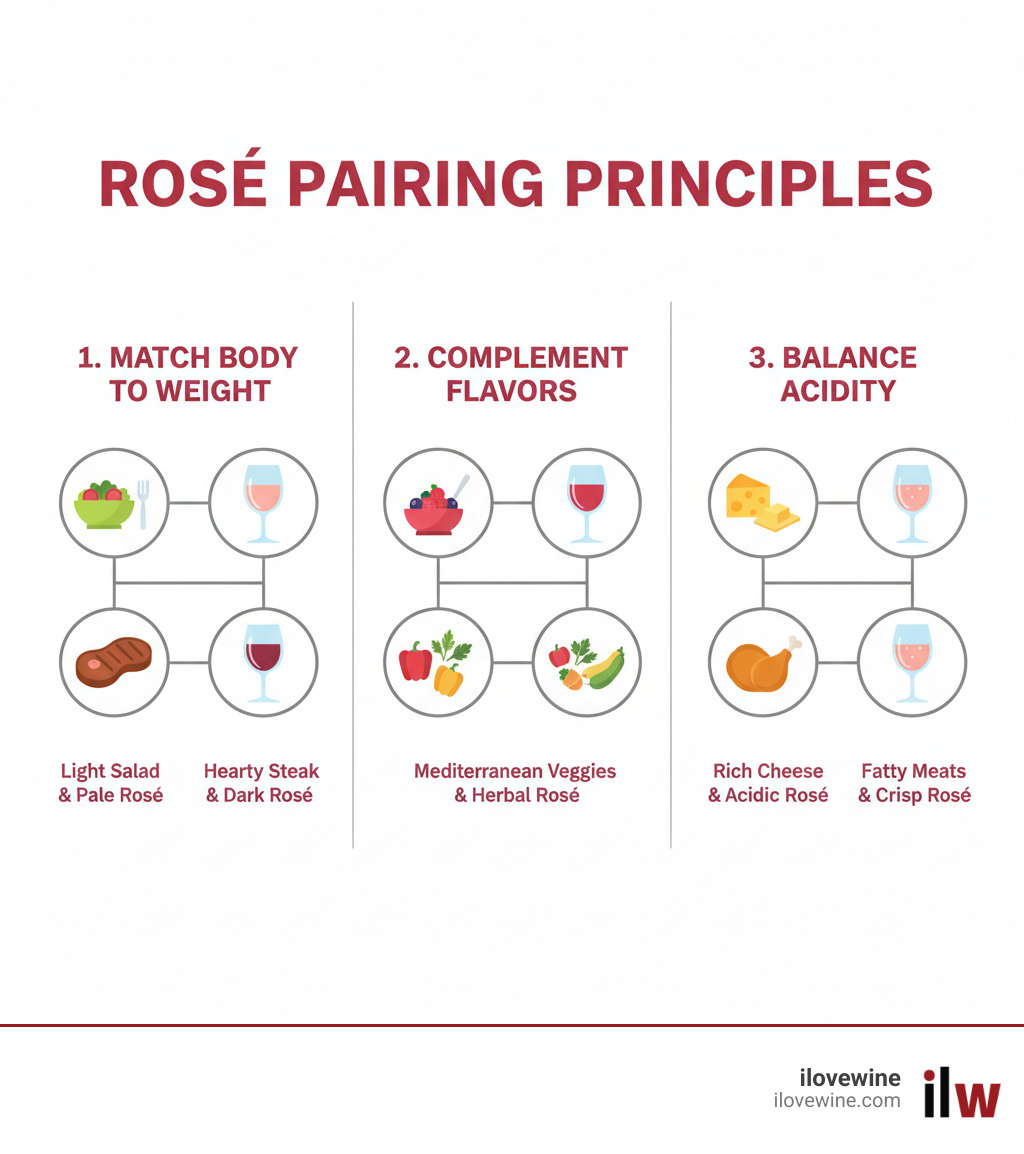
The key to successful rosé wine pairing is mastering a few core principles.
First, match the weight of the wine to the food. Light-bodied, pale rosés pair best with delicate dishes like fresh salads and simple seafood. Fuller-bodied, darker rosés can stand up to heartier fare like grilled chicken or lamb.
Next, consider flavor harmony. Rosé often features red fruit notes (strawberry, raspberry), citrus, and melon. Pair a berry-forward rosé with a fruit salsa or an herbal rosé with Mediterranean vegetables to create a complementary match.
Acidity is your friend. The crispness in rosé cuts through richness, making it an excellent partner for fatty foods like salmon, creamy cheeses, or fried appetizers. Each sip cleanses the palate, preparing you for the next bite.
Serve at the right temperature, between 45-55°F (7-13°C), to preserve its delicate aromas and crispness. Also, be mindful of sweetness; a sweet dish requires a wine that is at least as sweet to avoid tasting sour. While delicate rosés can be overwhelmed by heavy cream sauces, bolder styles are often up to the task.
For deeper insights into the art of pairing, explore our comprehensive Food and Wine Pairing Guide.
Specific Rosé Wine Pairing for Dry Styles
Dry rosés are the versatile workhorses of the wine world. Their crisp, mineral-driven character makes them ideal for a wide range of foods, especially the exceptional dry rosés from California’s Central Coast crafted from Pinot Noir or Grenache.
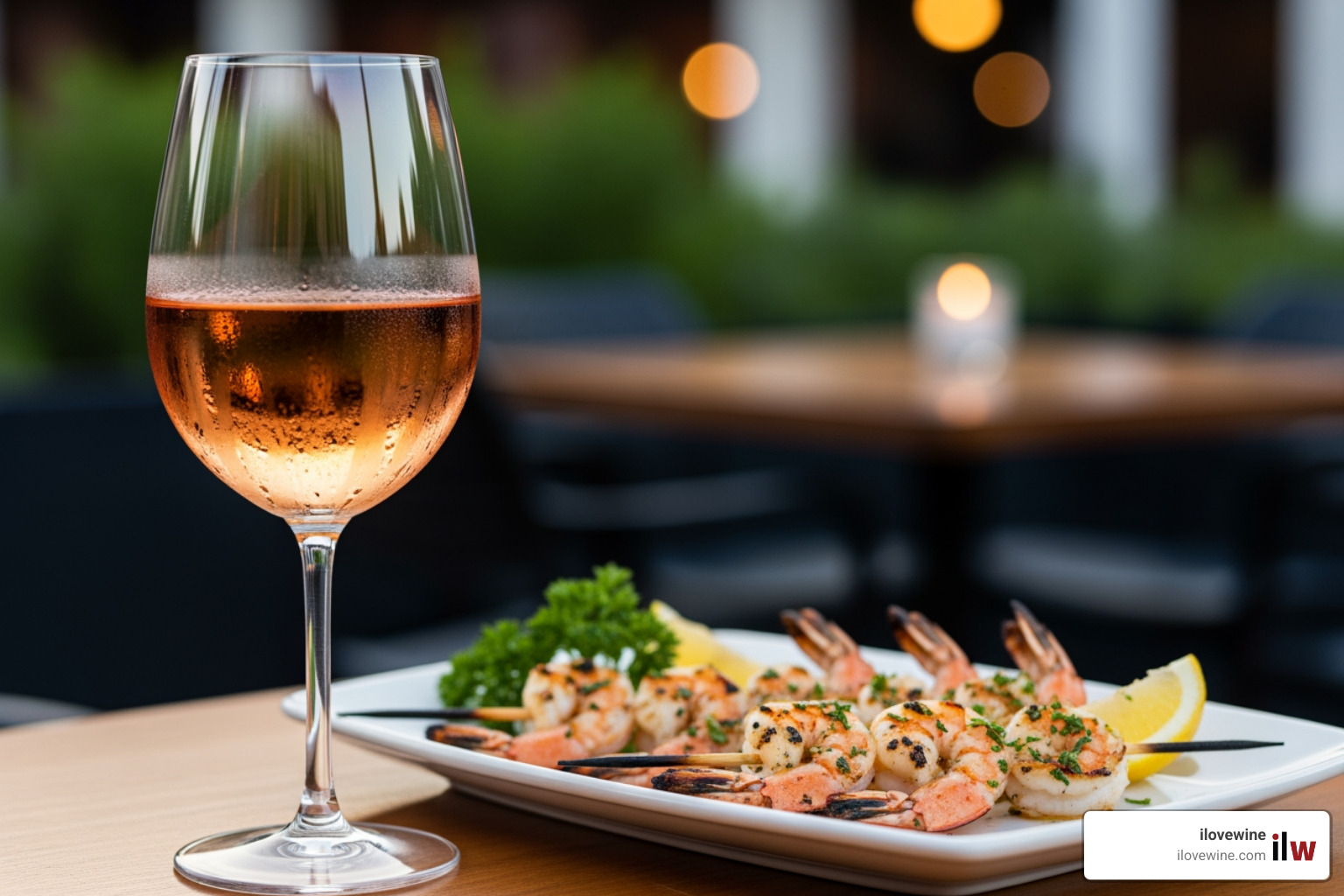
- Seafood & Poultry: Dry rosé is a classic match for seafood. Its acidity complements everything from grilled shrimp and seared scallops to sushi and lobster rolls. It also provides a refreshing lift to roast chicken and turkey without overwhelming them. California rosés from cooler coastal regions excel with Pacific seafood.
- Mediterranean & Vegetable Dishes: Rosé and Mediterranean cuisine are a natural fit. The wine’s bright profile enhances dishes with tomatoes, garlic, and herbs, such as ratatouille, Caprese salad, and grilled vegetables. Los Angeles area wineries produce rosés that perfectly complement the city’s vibrant Mediterranean-inspired food scene.
- Light Pasta & Cheese: Pair dry rosé with light pasta dishes like shrimp scampi or pasta primavera. It also creates beautiful pairings with fresh cheeses like goat cheese and feta, as well as semi-hard cheeses like young cheddar or Havarti.
This style acts like a bridge between red and white wine, carrying the acidity of a white with the fruit character of a red, making it a go-to choice for countless meals. For more ideas, see our guides on Wine Pairing Salmon and Wine Pairing Recipes.
Sweet & Sparkling Rosé Pairings
Sweeter and sparkling rosés tackle dishes that can challenge drier wines.
Sweeter rosés, such as off-dry styles, White Zinfandel (a California original), or Pink Moscato, are perfect for spicy food. Their residual sugar balances the heat in Thai curries, Mexican tacos, and tangy barbecue. They also pair well with appetizers that have a hint of sweetness, like prosciutto and melon, or mild cheeses like brie.
Sparkling rosés use their bubbles and high acidity to cleanse the palate, making them ideal for rich foods. They are a perfect match for fried dishes like crispy fried chicken or fish and chips, as the effervescence cuts through the fat. The acidity also complements salty charcuterie boards, oysters, and sushi. California sparkling rosés from regions like Carneros rival their French counterparts in quality.
Top 3 Sparkling Rosé Wine Pairing suggestions:
- Crispy Fried Chicken: The bubbles and acidity cut through the richness, refreshing the palate with each bite.
- Prosciutto-wrapped Melon: A classic pairing where the wine’s fruitiness balances the salty-sweet combination.
- Smoked Salmon Blinis: The wine’s crispness slices through the oily fish and creamy blinis for a clean finish.
These rosé wine pairing styles demonstrate that there is a pink wine for every dish and occasion.

The Ultimate Rosé and Cheese Board
Rosé’s blend of acidity and fruit character makes it an exceptional partner for a wide range of cheeses. Its ability to pair with fresh and young cheeses, where many other wines struggle, makes it a cheese board champion.


- Light, Dry Rosé: Pairs beautifully with fresh cheeses like goat cheese (chèvre), mozzarella, and feta. Its crispness complements their delicate flavors. California’s Central Coast produces exceptional goat cheeses that shine with local rosés.
- Dry to Off-Dry Rosé: The acidity cuts through the creaminess of soft-ripened cheeses like Brie and Camembert, while the fruit notes provide a pleasant contrast.
- Fuller-Bodied Rosé: A Grenache or Syrah rosé from Paso Robles or Santa Barbara stands up to semi-hard cheeses like young cheddar, Havarti, and Gouda.
- Sweeter Rosé: A White Zinfandel offers a fruity counterpoint to cheeses like Fontina or mild cheddar.
To build the perfect board, include a variety of cheese textures and flavors, along with accompaniments like fresh fruit, nuts, and crackers. The rosé will cleanse the palate between each bite. For more ideas, explore The Perfect Cheese Pairings for Your Next Wine Tasting.
Beyond the Main Course: A Rosé Wine Pairing for Every Dish
Rosé’s versatility shines with desserts, regional cuisines, and even surprisingly bold dishes.
For dessert, the wine must be sweeter than the dish. A sweeter rosé like a White Zinfandel or Pink Moscato is exceptional with fruit-based desserts like strawberry shortcake or peach cobbler. For more ideas, see our guide on Wine Pairing for Creme Brulee.
Regional pairings offer natural harmonies. Just as Provence rosé pairs with Mediterranean food, a dry California rosé made from Grenache or Syrah complements our local grilled vegetables and fresh California produce. Bolder Spanish Rosado is perfect for tapas and paella, while California rosés from regions like the Central Coast excel with the state’s diverse culinary traditions.
Don’t be afraid of bold pairings. Fuller-bodied, structured rosés from grapes like Syrah or Cabernet Sauvignon can stand up to grilled lamb chops or even steak. The wine’s acidity cuts through the fat, creating a refreshing balance. Even comfort foods like pizza, hamburgers, and grilled sausages work well with medium-bodied rosés.
While European rosés are often paler and more mineral-driven, New World rosés from regions like California tend to have riper fruit flavors. This makes them adept at handling a wider range of robust and spicy foods. California’s diverse wine regions—from the foggy coasts to sun-drenched inland valleys—produce rosés that rival any in the world. This diversity ensures there’s a perfect rosé wine pairing for nearly any meal, perhaps from a vineyard right here in California’s Central Coast or the greater Los Angeles area.
Conclusion
As this guide demonstrates, rosé wine pairing is a year-round delight. This versatile wine bridges the gap between red and white, offering a style for every occasion—from pale, dry rosés for seafood and salads to fuller-bodied versions for grilled meats, sweet styles for spicy food, and sparkling options for fried dishes.
The true joy lies in experimentation. Trust your palate and explore the diverse rosés available, especially the exceptional wines crafted here in California, from the Central Coast to Los Angeles. A California Grenache rosé with pizza or a Syrah rosé with steak might become your new favorite pairing.
We invite you to continue your journey with the iLoveWine community. For more expert advice to lift your dining experiences, explore our comprehensive Food and Wine Pairing Guide. Here’s to making every season a rosé season. Cheers!
What's Your Reaction?
