Sip, Savor, Pair: Decoding Wine Pairing Principles


Why Wine Pairing Principles Matter More Than You Think
Wine pairing principles are guidelines for matching food and wine to create a more enjoyable dining experience. At their core, these principles focus on balancing six basic tastes in food (salt, acid, sweet, bitter, fat, and spice) with three key components in wine (acidity, sweetness, and tannins).
Quick Answer: The Essential Wine Pairing Principles
- Match weight to weight: Light wines with light dishes, bold wines with hearty meals.
- Wine should be more acidic than the food: Acid cuts through richness and fat.
- Wine should be sweeter than the food: Especially critical for desserts.
- Balance bitter wines with fat: Tannins soften with fatty proteins.
- Pair wine to the sauce, not the protein: The sauce often dominates the flavor.
- Match intensity levels: Delicate flavors with delicate wines, bold with bold.
When a meal’s food and wine blend perfectly, it’s not luck—it’s the result of understanding these simple principles. Fortunately, wine pairing isn’t overly complex; it’s about learning how flavors interact.
Red wines generally have more bitterness (tannins), while white, rosé, and sparkling wines typically have more acidity. Sweet wines have more sweetness. Food brings salt, acid, sweet, bitter, fat, and spice to the table. Understanding how these elements interact—how acid cleanses fat, how salt softens tannins, how protein tames bitter wines—allows you to create pairings that lift both your food and your wine.
However, the most important rule is to trust your own palate. These principles are guidelines, not laws. If you love a particular combination, that makes it the right pairing for you.
The Core Wine Pairing Principles: Balancing Food and Wine
Moving past the anxiety of choosing the “right” wine, wine pairing principles are less about strict rules and more about understanding how flavors interact. At iLoveWine, we’ve seen countless enthusiasts become confident experimenters by learning a few core interactions between the plate and the glass. For a concise overview of the broader topic, see Wine and food pairing.
Understanding Taste Interactions: The Science of Flavor
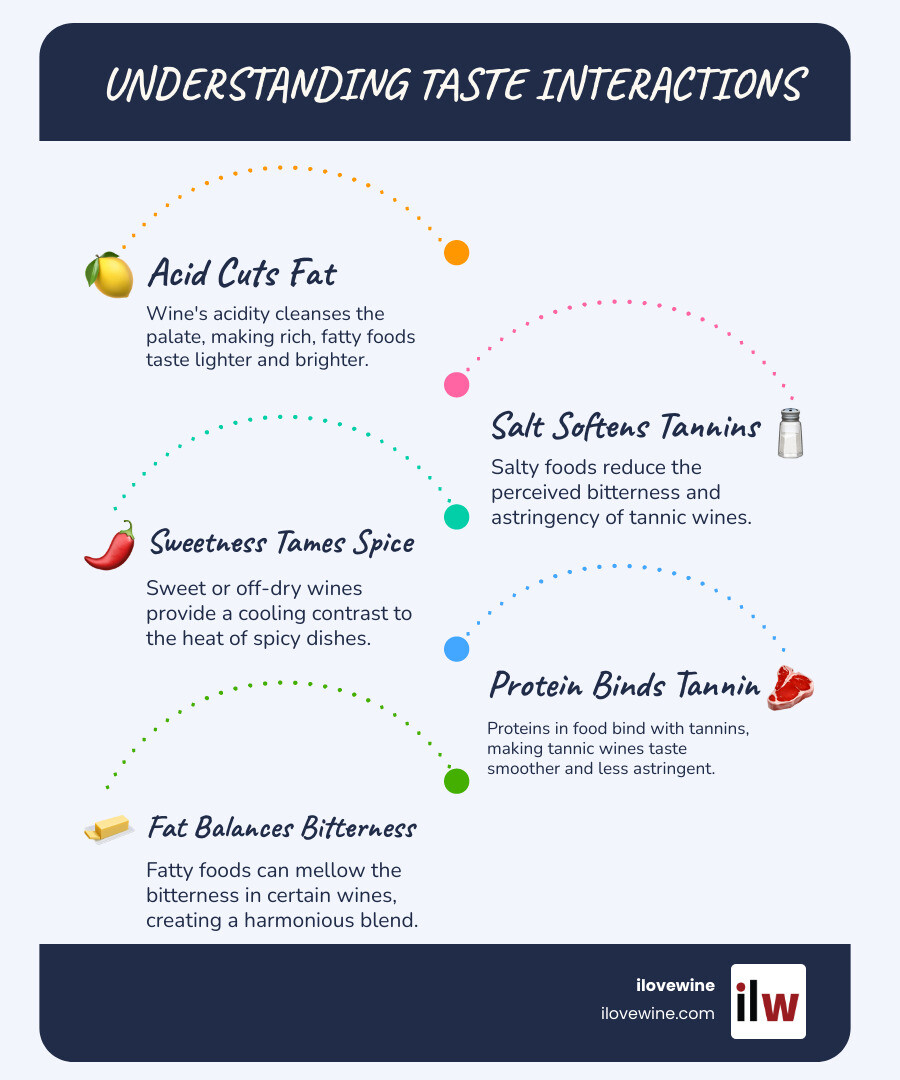
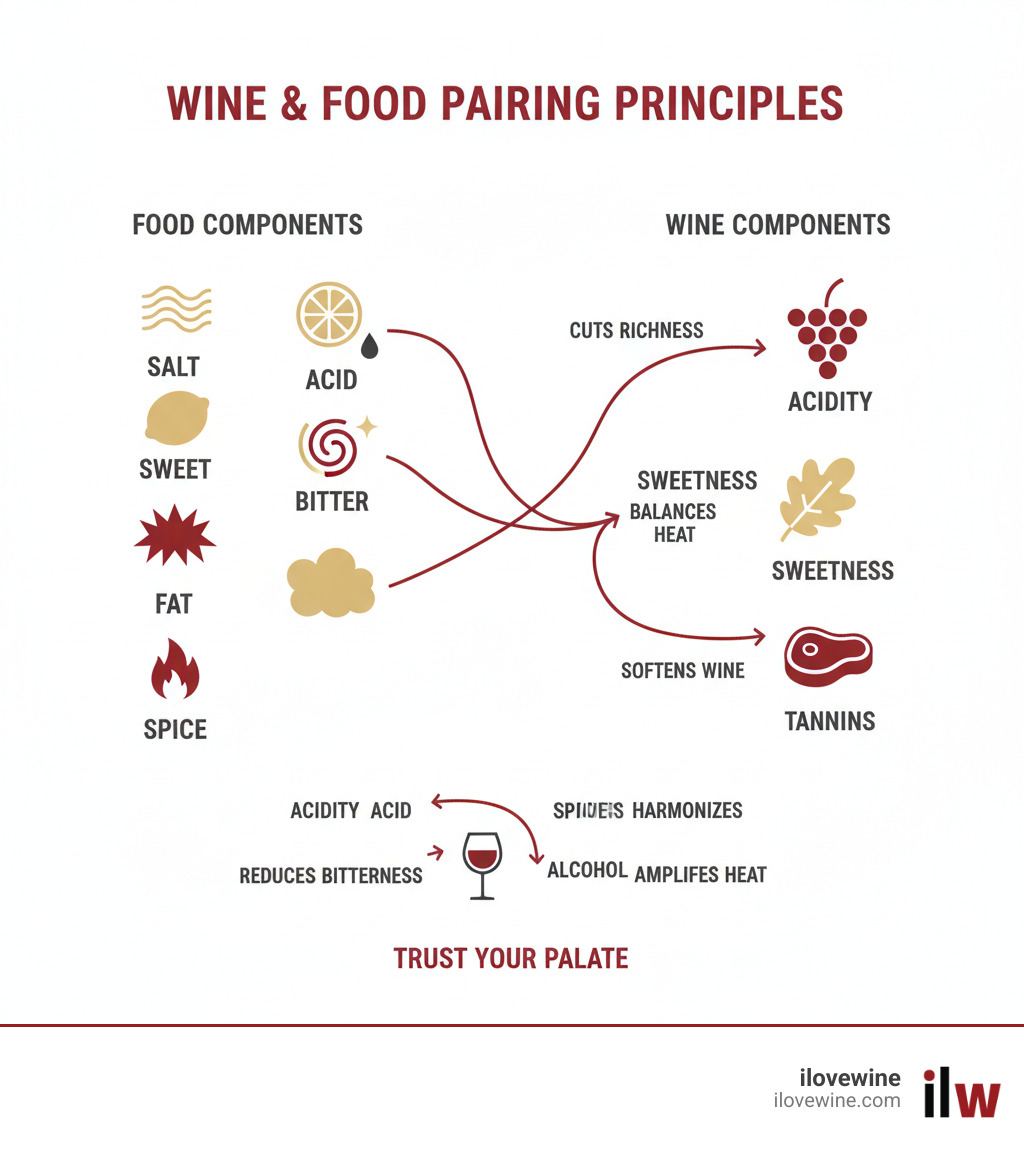
Food has six fundamental tastes: salt, acid, sweet, bitter, fat, and spice. Wine brings three main components: acidity, sweetness, and tannins (bitterness from reds). The magic happens when these elements interact.
-
Acid and Fat: High-acid wines like Sauvignon Blanc cut through fatty richness, cleansing the palate much like a squeeze of lemon over salmon. This makes them ideal for creamy pasta or buttery fish. Acidic foods, like a vinaigrette-dressed salad, also pair well with high-acid wines, creating harmony.
-
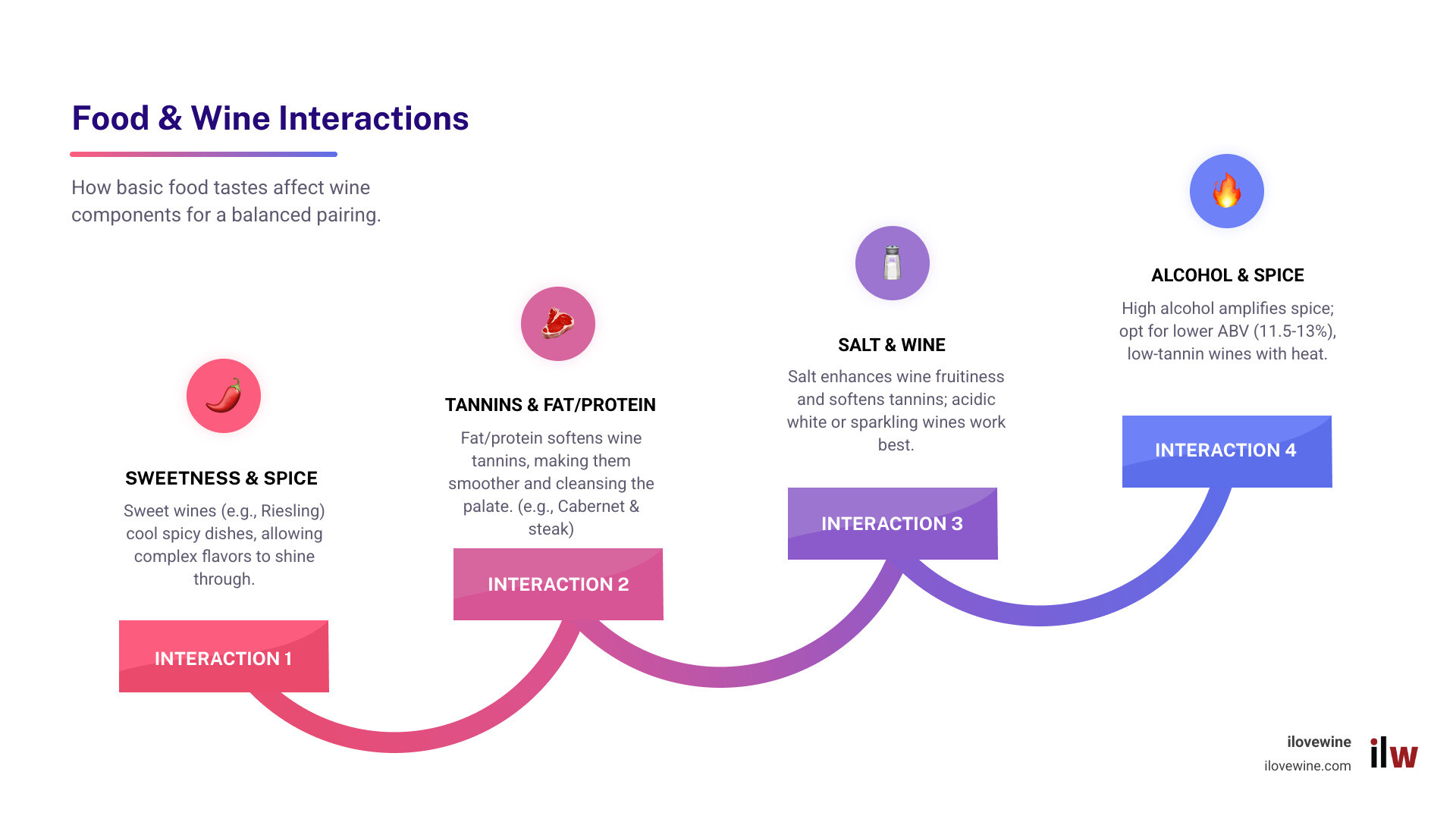
Sweetness and Spice: A wine’s sweetness can cool the heat from spicy foods. This is why off-dry Riesling or Gewürztraminer are often suggested with Thai curries or spicy tacos; the sweetness soothes the burn from chili peppers (driven primarily by capsaicin), allowing the dish’s complex flavors to shine.
-
Tannins and Protein: The bitter, mouth-drying tannins in red wines like Cabernet Sauvignon soften dramatically when they meet fatty proteins. The protein binds to the tannins, making the wine feel smoother, while the wine cuts through the meat’s richness. This symbiotic relationship is the foundation of the classic steak and Cabernet pairing.
-
Salt’s Influence: Salty foods can improve a wine’s fruitiness and soften its tannins. However, very salty dishes can make tannic wines taste harsh. This is why crisp whites and sparkling wines often work better with salty appetizers than big reds.
-
Alcohol Content: Higher-alcohol wines (above 14%) feel bolder and can amplify the heat in spicy dishes. For spicy foods, choose lower-alcohol wines (11.5% to 13%) that won’t intensify the burn, especially if they are fruit-forward with soft tannins.
Understanding these interactions transforms wine pairing from guesswork into an informed decision.
Congruent vs. Complementary: Two Paths to a Perfect Pairing
There are two fundamental approaches to wine pairing principles: creating harmony through shared characteristics or through contrast.
-
Congruent pairings amplify shared flavors. For example, the earthy notes in a Pinot Noir strengthen the earthiness of a mushroom risotto. A buttery Chardonnay with creamy lobster mac and cheese is another congruent pairing, where the wine’s richness improves the dish’s lusciousness.
-
Complementary pairings create balance through contrast. A crisp, acidic Sauvignon Blanc cuts through creamy goat cheese, with the wine’s bright acidity providing a counterpoint to the tangy cheese. Similarly, Champagne’s bubbles and acidity slice through the fat of fried chicken, refreshing the palate.
Neither approach is better; they simply create different experiences. Understanding both gives you the freedom to choose based on your mood and the meal.
Matching Weight and Intensity: The Foundation of Harmony
Matching weight to weight is a foundational principle for successful pairings. “Weight” or “body” refers to how a wine or food feels in your mouth—from light and delicate to rich and heavy.
The golden rule is to pair delicate wines with light dishes and bold wines with hearty meals so that neither element overpowers the other.
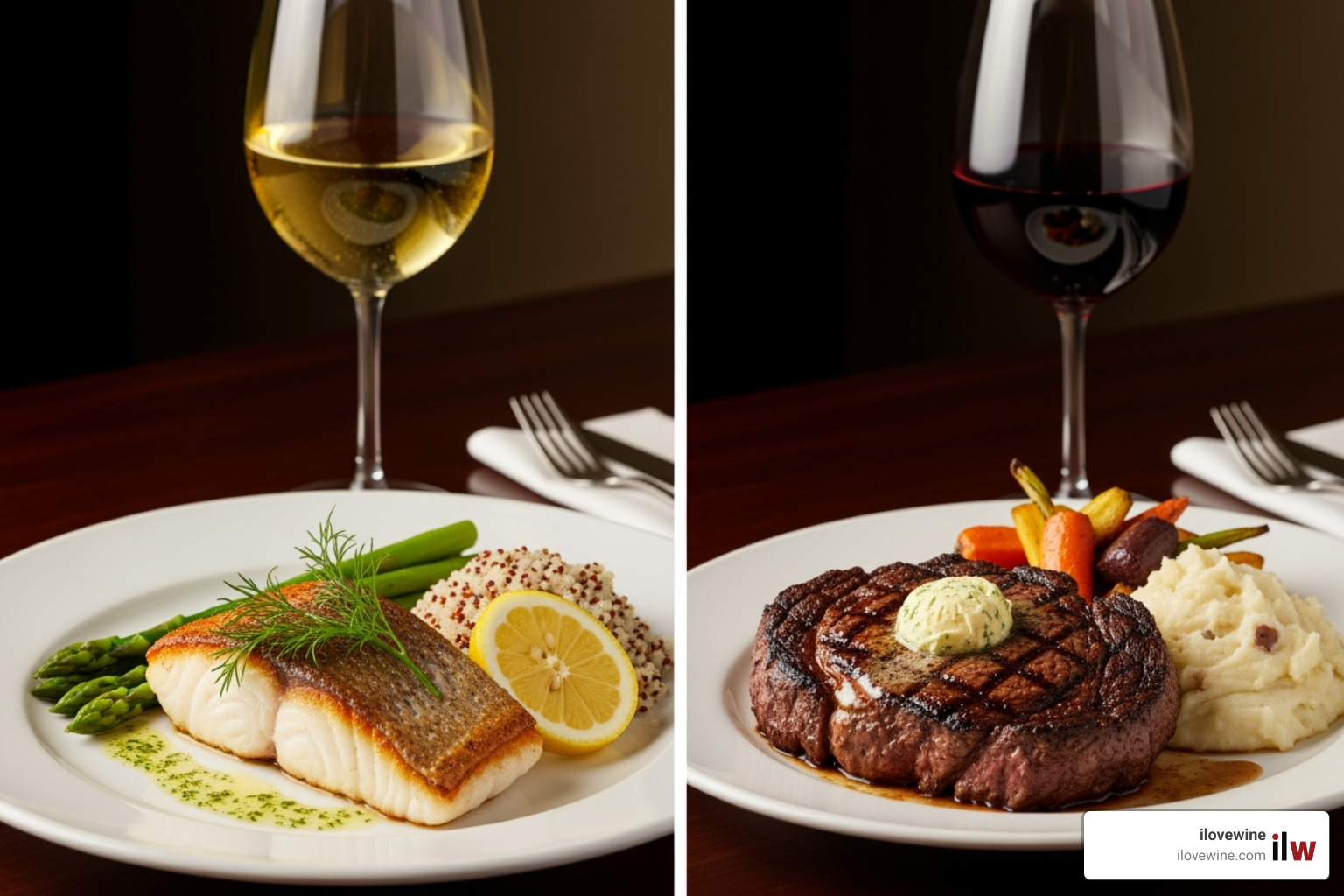
A subtly flavored poached white fish would be overwhelmed by a heavy Cabernet Sauvignon. Instead, a light-bodied Pinot Grigio would complement its delicate character. Conversely, a delicate white wine would vanish against a rich, grilled ribeye steak. Here, a full-bodied Cabernet Sauvignon is ideal. Its firm tannins cut through the fat, while the meat’s protein softens the tannins, creating a harmonious balance.
Flavor intensity is equally important. A heavily spiced curry requires a wine with pronounced flavors, like a Zinfandel, so it doesn’t get lost. A simply prepared chicken breast pairs better with a more subtle unoaked Chardonnay or dry Rosé. Getting this balance of weight and intensity right is the key to a great pairing.
Practical Application and Classic Pairings
Understanding wine pairing principles is one thing—putting them into practice is where the fun begins. Let’s explore how these concepts apply to challenging dishes, classic pairings, and personal experimentation.
Navigating Special Cases: The Advanced Wine Pairing Principles
Some dishes require more finesse. These advanced principles help steer tricky pairings like desserts and spicy cuisine.
The Sweetness Imperative for Desserts
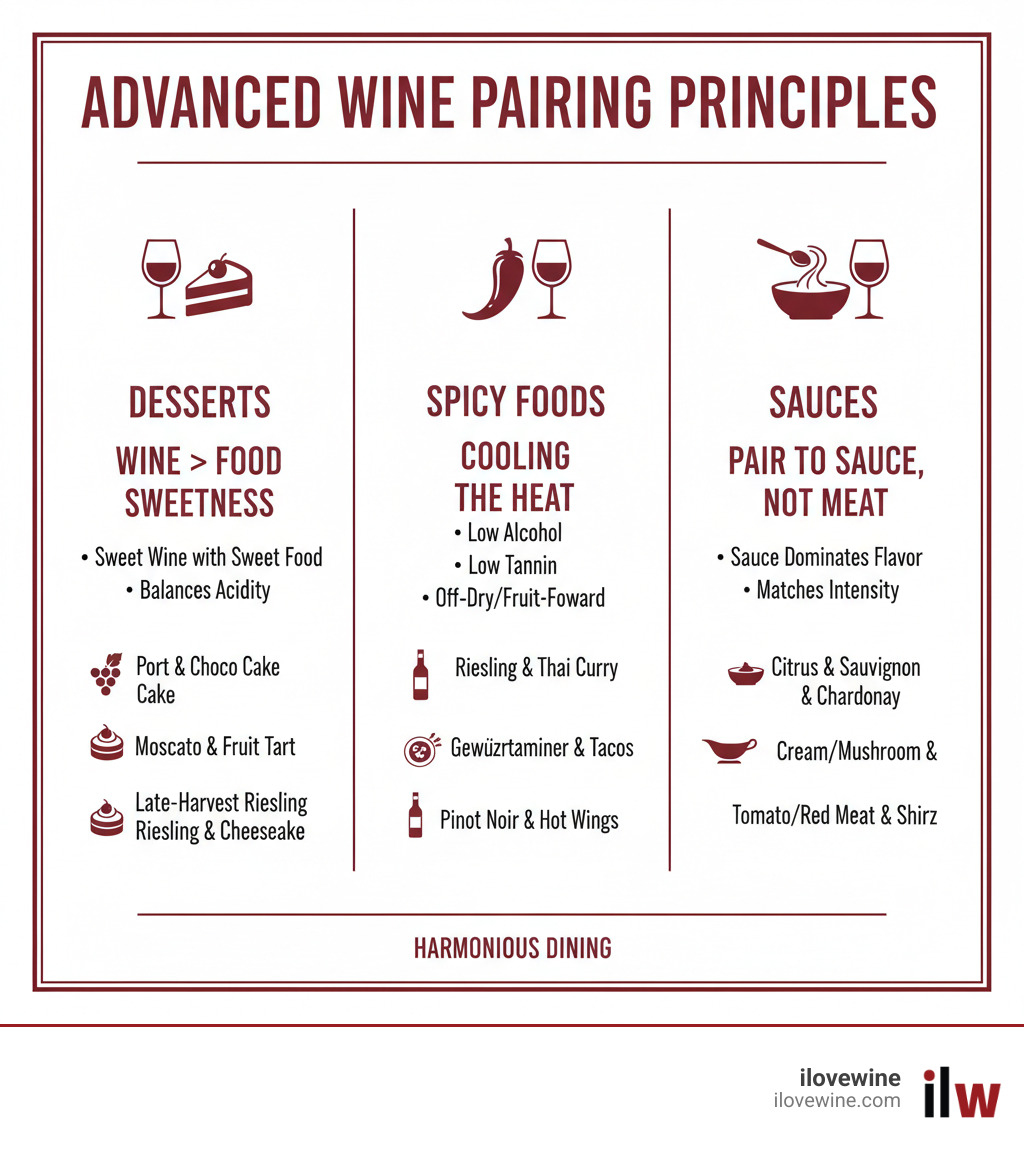
A critical rule for desserts is that your wine must be sweeter than your dessert. If the food is sweeter, the wine will taste bitter and flat as its perceived sweetness is stripped away. For a rich chocolate cake, a sweet Port is a classic choice. Fruit tarts pair well with a sparkling Moscato d’Asti, while a late-harvest Riesling can balance a creamy cheesecake. For vanilla ice cream, the treacle-like sweetness of Pedro Ximenez sherry creates a wonderful contrast.
Cooling the Heat: Pairing with Spicy Foods
For spicy dishes, avoid high-alcohol wines, which amplify the heat. Instead, look for wines that are low in alcohol, low in tannins, and fruit-forward, often with a hint of sweetness (off-dry). The sweetness acts as a soothing balm against the spice. Off-dry Riesling and Gewürztraminer are champions here, working well with everything from Thai curries to hot wings. Other aromatic whites like Grüner Veltliner or Vermentino also work. For reds, choose lighter options like Pinot Noir or Gamay that won’t exacerbate the heat.
The Sauce Rule: Where the Real Flavor Lives
It’s often more effective to pair your wine to the sauce, not just the protein, as the sauce dictates the dish’s dominant flavor. A chicken dish with a creamy mushroom sauce calls for a rich Chardonnay, while the same chicken in a tangy tomato sauce needs a high-acid red like Chianti Classico. Delicate citrus sauces pair well with crisp Sauvignon Blanc, while robust meat sauces need an intense Shiraz or Cabernet Sauvignon.


Beyond the Rules: Regionality, Experimentation, and Common Pitfalls
While principles provide a roadmap, tradition and personal taste are also part of the journey.
The Wisdom of “What Grows Together, Goes Together”
This old-world principle suggests pairing local wines with regional dishes. These combinations, developed over centuries, are often naturally harmonious. The earthy flavors of Tuscan cuisine, for example, pair beautifully with a local Chianti. Comté cheese and Jura wine are another classic regional pairing. This approach rarely disappoints.
Your Palate is the Ultimate Guide
At iLoveWine, we believe pairing is ultimately personal. Guidelines help, but your taste has the final say. If a combination brings you joy, it’s a success. Don’t be afraid to experiment—sometimes breaking the rules leads to memorable finds, like pairing a light-bodied Pinot Noir with salmon. The goal is to improve both the food and wine, increasing your overall pleasure.
Pitfalls Worth Avoiding
To avoid unpleasant experiences, keep these common mismatches in mind:
- Tannic reds and certain vegetables: Artichokes and raw asparagus can make tannic wines taste metallic.
- High-alcohol wines and spicy food: Alcohol amplifies the sensation of heat.
- Low-acid wine and high-acid food: The wine will taste flat and lifeless.
- Dry wine and sweet dessert: The wine will taste bitter and sour.
Beginner’s Guide to Classic Pairings and Versatile Wines
Starting with proven classics and adaptable wines is a great way to build confidence.
Classic Pairings
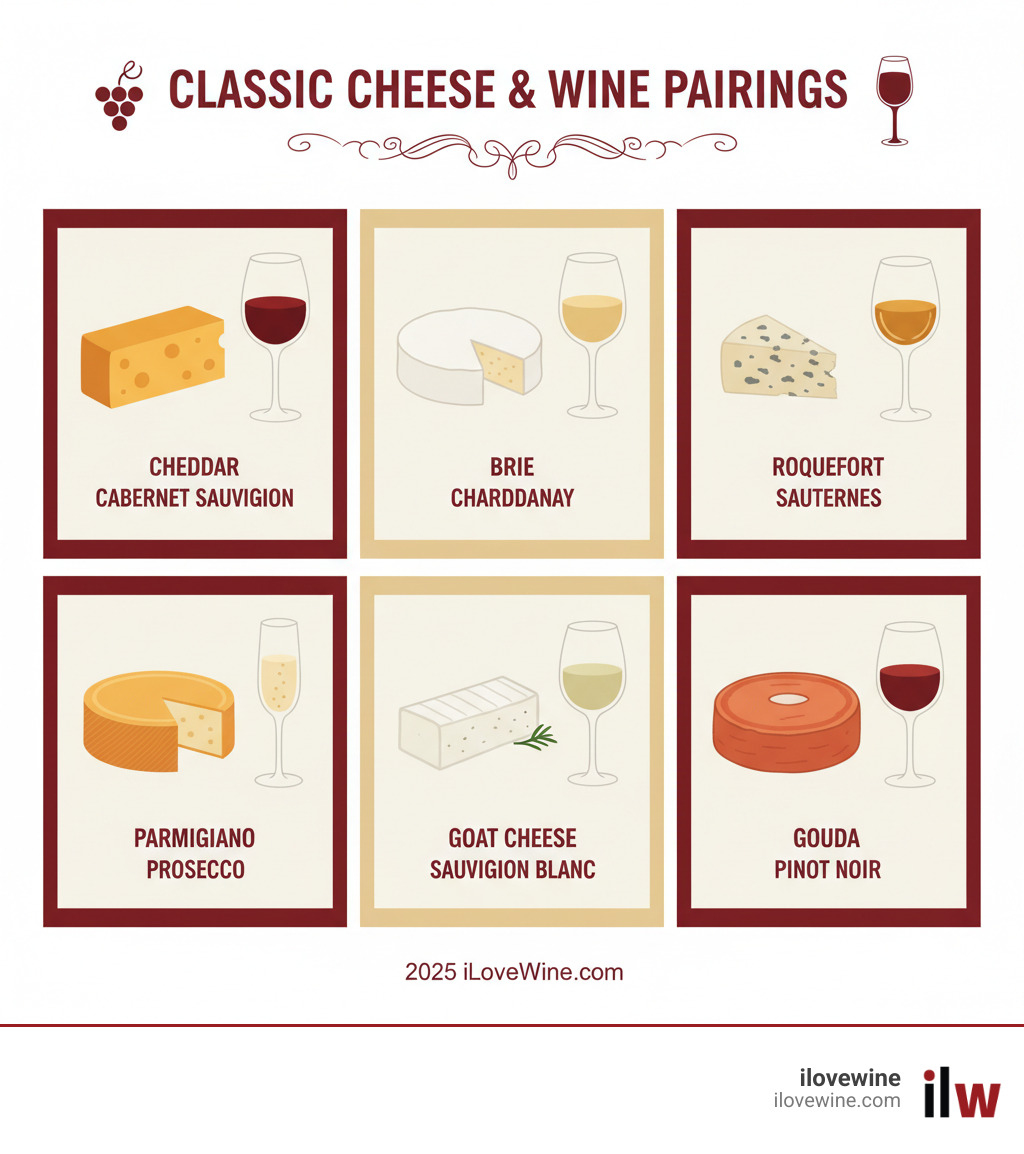
- Cabernet Sauvignon with red meat: A timeless pairing where tannins and protein balance each other.
- Sauvignon Blanc with goat cheese: The wine’s acidity complements the cheese’s tangy creaminess.
- Pinot Noir with earthy flavors: A natural match for mushrooms, lentils, and duck.
- Dry Rosé with charcuterie: Versatile enough for a wide range of cured meats and cheeses. Discover The Perfect Cheese Pairings for Your Next Wine Tasting.
- Chardonnay with fatty fish or creamy sauces: A silky Chardonnay can stand up to rich seafood dishes. Explore our detailed Chardonnay Food Pairings.
- Syrah with seasoned meats: Bold Syrah meets its match with heavily spiced dishes. Find more Syrah Food Pairing Recipes.
- Chianti with tomato sauces: A medium-bodied red like Chianti Classico is perfect for lasagna. Explore Best Wines for Lasagna and Pasta and Wine.
Wines That Work with Almost Everything
Some wines are exceptionally food-friendly. Dry Riesling is remarkably versatile, pairing with sushi, pork, and spicy Asian food. Pinot Noir is structured enough for chicken but refined enough for salmon. Dry Rosé works with everything from salads to grilled fish. Sparkling wine (Champagne, Cava, Prosecco) offers refreshing acidity that cuts through rich appetizers and mains.
At iLoveWine, we’re passionate about connecting wine enthusiasts and experts. Join our community, explore our content, and experiment with these wine pairing principles to find your own perfect matches. The best pairing is the one you enjoy most.
Ready to dive deeper and find even more incredible combinations?
Explore our complete Wine Pairing Guide.
What's Your Reaction?
