The Blind Truth: Unlocking Your Palate with Expert Wine Tasting Techniques


Why Blind Tasting Wine Changes Everything
Blind tasting wine is the practice of evaluating wine without knowing its identity—no label, no price tag, no reputation to sway your judgment. Here’s what you need to know:
What is Blind Tasting Wine?
- Definition: Tasting wine with the bottle concealed to ensure unbiased evaluation.
- Purpose: Removes preconceptions about price, producer, region, and reputation.
- Method: Bottles are wrapped in bags or foil, or wine is poured into neutral vessels.
- Focus: Pure sensory analysis—sight, smell, and taste only.
Key Benefits:
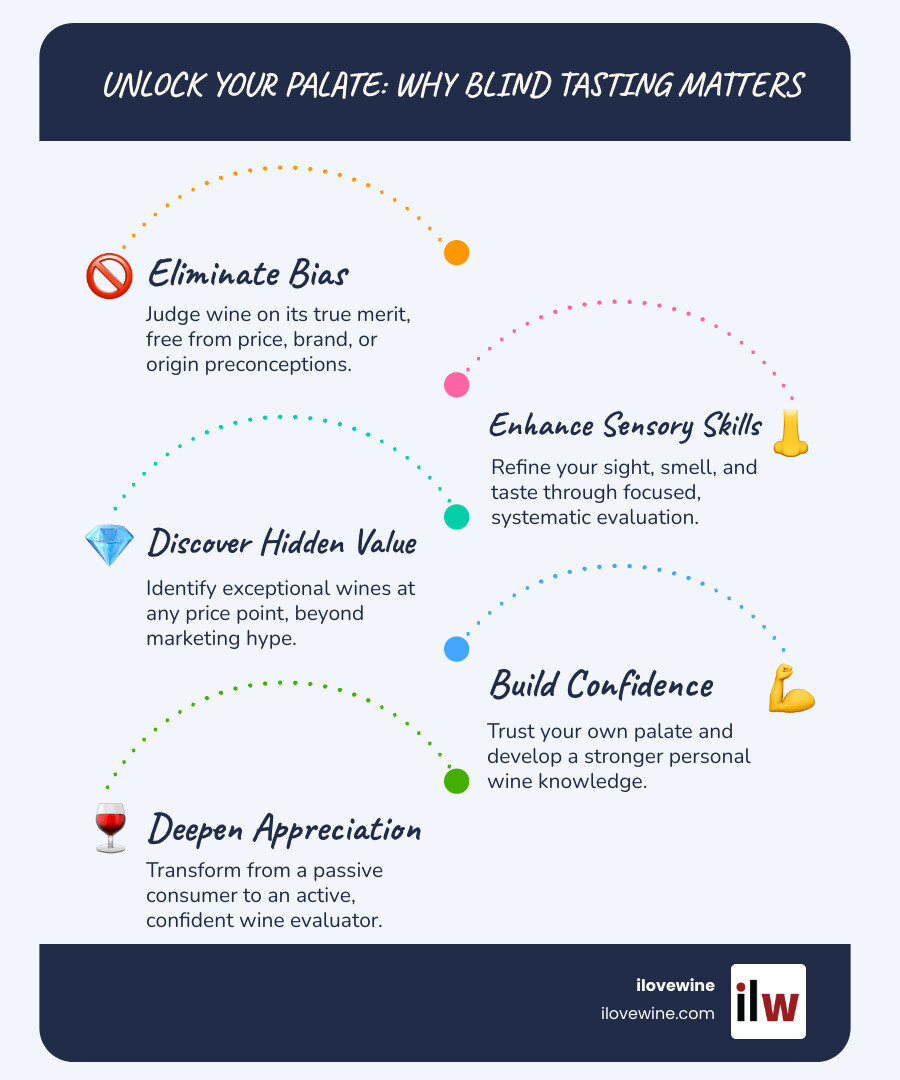
- Objective Assessment: Judge wine quality on merit alone, not marketing.
- Find Value: Find exceptional wines at any price point.
- Sharpen Your Senses: Build a more refined palate through focused practice.
- Confidence Building: Develop trust in your own taste preferences.
If you’ve ever wondered whether an expensive bottle truly tastes better, you’re not alone. Our perception is powerfully influenced by external cues. In a famous University of Bordeaux study, oenology students described a white wine with red dye using red wine terms like “spicy,” failing to recognize it as white wine. This shows how easily our eyes can trick our palate.
Blind tasting strips away these influences, leveling the playing field between a $15 bottle and a $150 one. It forces you to rely solely on what’s in the glass. Master sommeliers use this technique to continually calibrate their palates and avoid bias. For enthusiasts, it transforms you from a passive consumer into an active, confident evaluator, deepening your relationship with wine through honest, focused attention.
The Art and Science of Blind Tasting Wine
Blind tasting wine combines the art of interpretation with the science of systematic deduction. It’s a journey to uncover what’s truly in your glass, free from the power of suggestion.
Uncorking the Truth: Why Blind Tasting is Invaluable
The power of blind tasting is its ability to neutralize bias. Without a fancy label or a three-digit price tag, you can have an honest conversation with the wine.
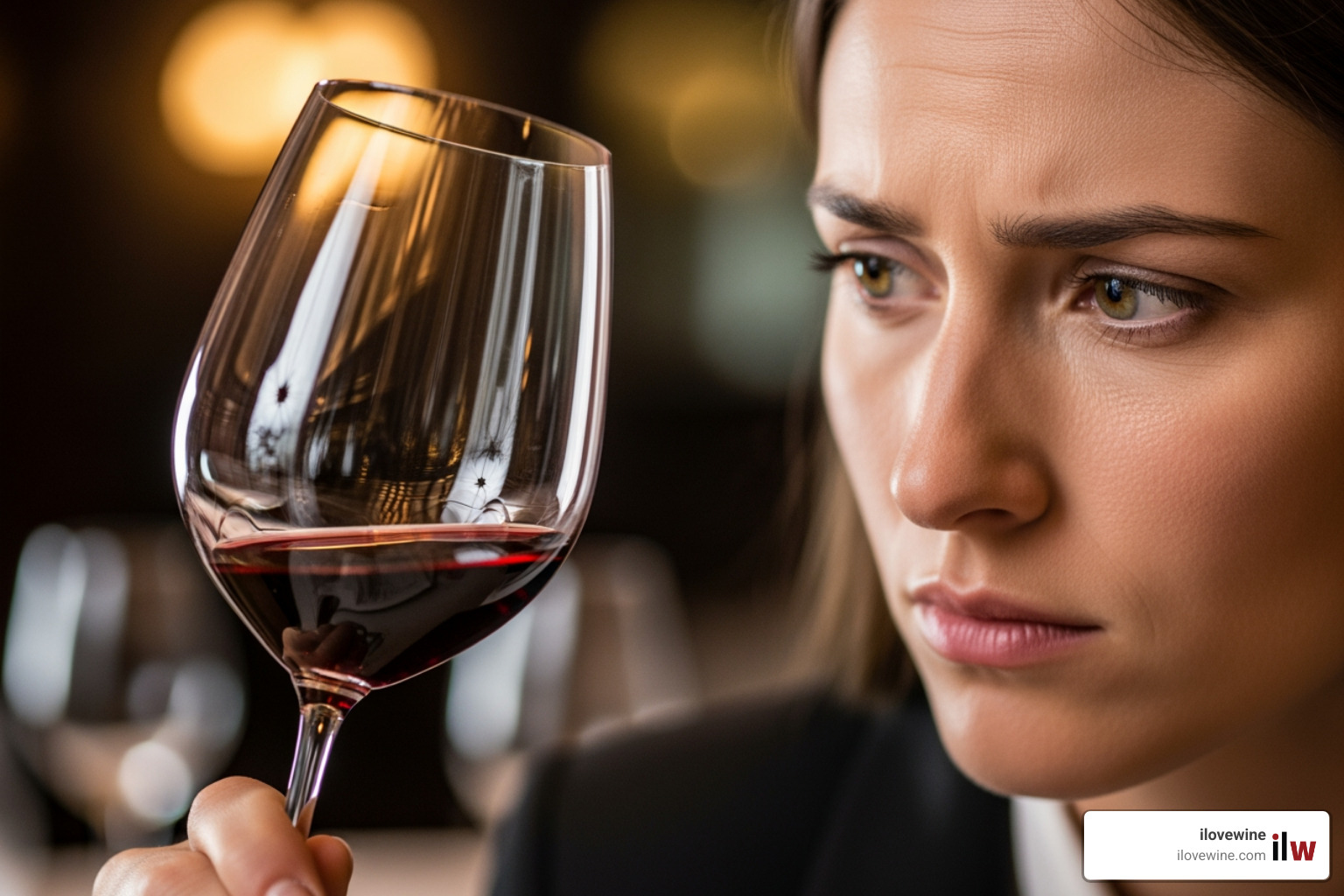
Our expectations are surprisingly fragile. Price bias is a key factor; studies show that when people are told a cheap wine is expensive, they consistently rate it as tasting better. Origin and reputation bias work similarly, priming us to find quality in wines from famous regions or producers, regardless of what our senses detect. Even color bias can overwhelm our palate, as proven by the infamous study where experts misidentified a dyed white wine as red.
Scientific research on wine perception has found that even professional tasters can be inconsistent, with one analysis showing medals at competitions were distributed almost randomly. This doesn’t invalidate tasting; it highlights the importance of a structured, unbiased approach. Blind tasting allows you to judge wine on its intrinsic merit, helping you find gems from any region or price point. For practical strategies, explore our guide on How to Recognize Quality Wine at a Cheap Price.
The Sommelier’s Secret: Using a Tasting Grid
Professionals use a structured “tasting grid” to evaluate wine systematically, a method exemplified by the Court of Master Sommeliers’ Deductive Tasting framework and WSET’s Systematic Approach to Tasting. This breaks the process into three parts:
- Sight: Look at the wine against a white background. Note its clarity, intensity, and color. The hue gives clues to age and grape type—whites deepen from lemon to gold with age, while reds fade from purple to garnet or brick. The viscosity, or “legs,” indicates alcohol and sugar levels, not quality.
- Nose: Swirl the glass and take a few short sniffs. Assess the aroma’s intensity. Identify primary aromas from the grape (fruit, floral, herbal), secondary notes from fermentation (yeast, butter), and the bouquet from aging (oak, leather, earth). Categorizing scents—like citrus vs. black fruit, or vanilla vs. wet stone—helps narrow down the possibilities.
- Palate: Take a sip and let it coat your mouth. Confirm the aromas as flavors and assess the wine’s structure. Is it dry or sweet? Does the acidity make your mouth water? Feel the tannin’s drying sensation—is it silky or coarse? Note the body (light, medium, or full) and the warmth from alcohol. Finally, evaluate the finish—how long do the pleasant flavors linger? A long finish is a hallmark of quality.
Using proper glassware can significantly improve this sensory experience. Learn more in our guide on The Art of Wine: Choosing the Perfect Glass for Every Variety.
Your First Blind Tasting Wine Session: A Step-by-Step Guide
Hosting a blind tasting is a fun, rewarding way to sharpen your skills. Here’s how to get started.
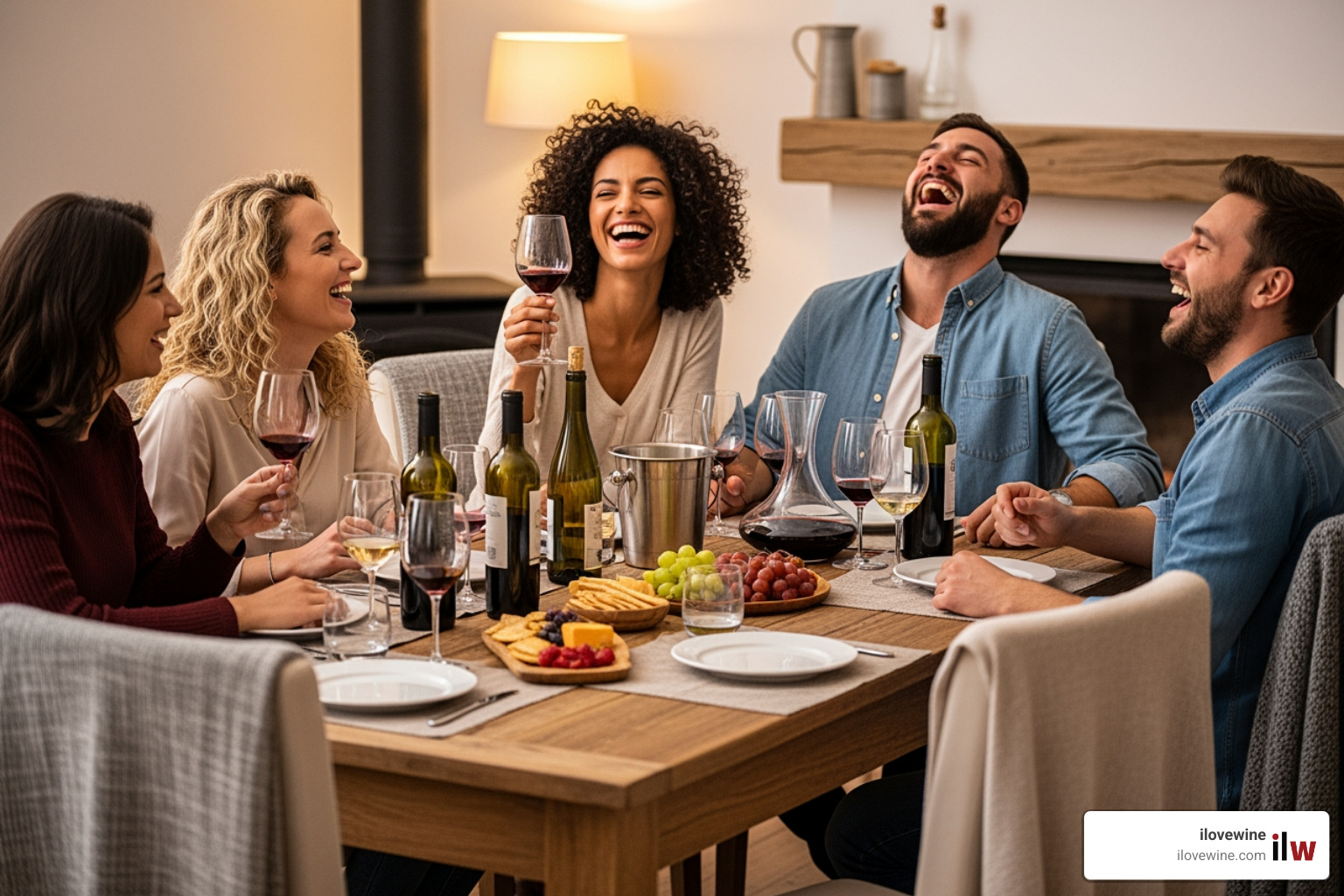
- Gather Supplies: You’ll need 3-4 wines, opaque bags or foil to cover them, identical glasses for each wine, spittoons (a simple cup will do), water and plain crackers for palate cleansing, and pens with notecards.
- Choose a Theme: A theme makes the tasting more educational. Try a varietal focus (e.g., Chardonnay from California vs. France), a regional comparison (e.g., Napa Cabernet vs. Paso Robles Cabernet), or a price point challenge to find the best value.
- Prepare and Serve: Wrap and number the bottles to hide their identities. Serve each wine at its optimal temperature (chilled for whites, slightly below room temp for most reds). Pour a three-ounce taste for each participant.
- Taste and Discuss: The most important rule is to evaluate silently first. Let everyone assess the wines using the sight, nose, and palate method without outside influence. After everyone has taken notes, open the floor for discussion. Compare observations and make educated guesses about each wine’s identity.
- The Reveal: Unveil the bottles one by one. This is where the learning happens. Discuss the surprises and finds—the “mistakes” are often the most valuable lessons. For more event ideas, see our Wine Tasting Tips for the Perfect Party at Home.
From Guesswork to Educated Deduction: How to Improve
Improving at blind tasting is a learnable skill built on practice and a systematic approach.
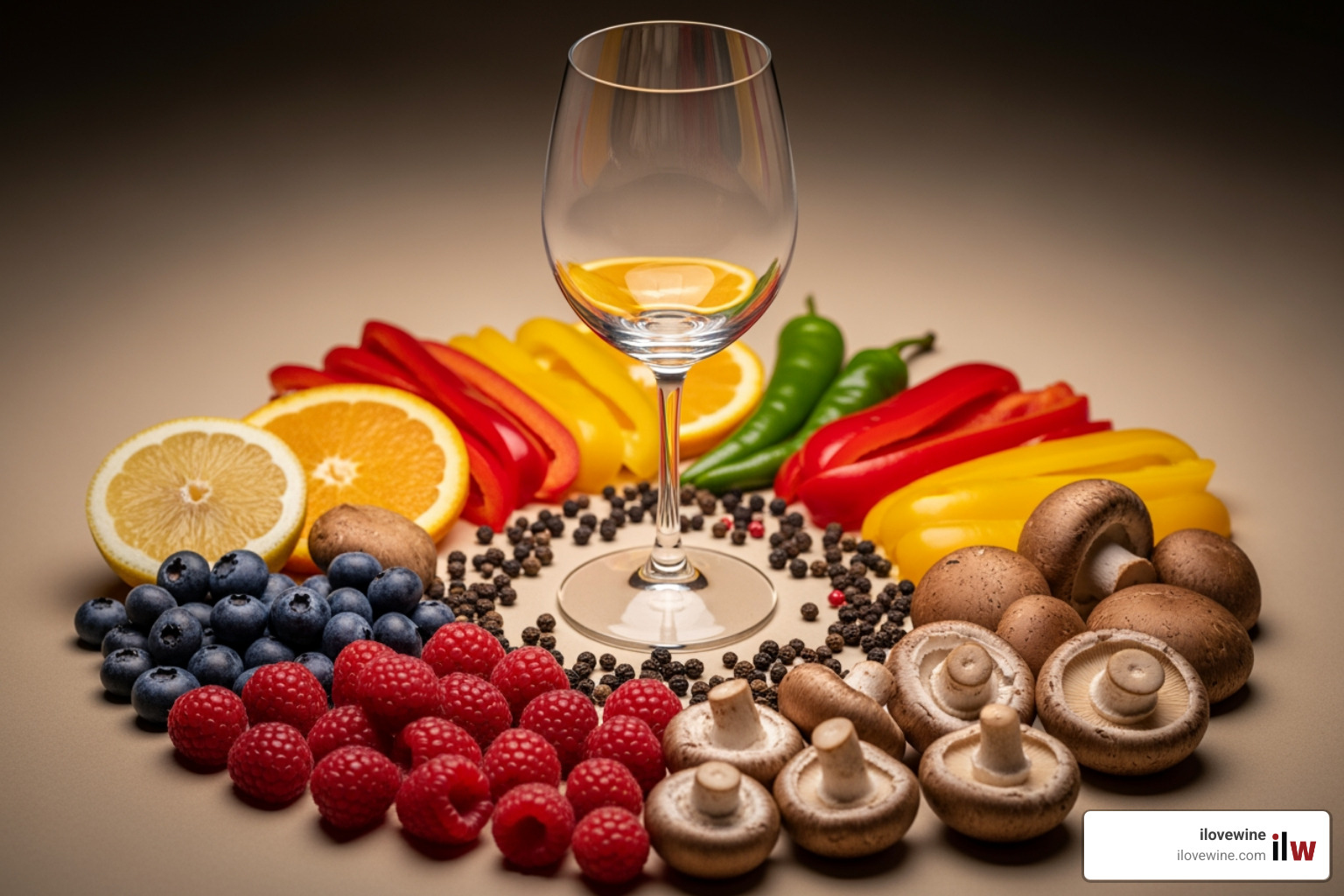


- Practice and Build a Memory Bank: The more you taste methodically, the more you build a mental library of wine profiles. Deliberately connect specific aromas and structural feelings to grape varieties, regions, and winemaking styles.
- Taste with Others: Discussing wine with a group is one of the fastest ways to calibrate your palate. Others will pick up on notes you missed, expanding your descriptive vocabulary and sensory awareness.
- Use Side-by-Side Comparisons: Tasting two similar wines together—like a California Pinot Noir next to one from Oregon—makes their differences in fruit, acidity, and structure immediately obvious.
- Focus on Classics and Varietal Markers: Start by learning the typical profiles of benchmark wines (e.g., Napa Cabernet, New Zealand Sauvignon Blanc). Learn to spot key markers: the green bell pepper note (pyrazines) in Cabernet Sauvignon, the black pepper note (rotundone) in Syrah, or the buttery, nutty character of oaked Chardonnay. Understanding how climate shapes these markers is key, a topic we explore in Old World vs. New World Wines: What Are Key Differences?.
Your Next Pour: Common Misconceptions and Mastering the Craft
As you begin your blind tasting journey, it’s important to accept the process, including its challenges. This practice is about growth and discovery, not perfection.
The biggest hurdle for many is the fear of being wrong. Even Master of Wine Jancis Robinson admits that professionals make fools of themselves in informal blind tastings. The secret is to reframe “mistakes” as learning opportunities. Each incorrect guess calibrates your palate and strengthens your sensory memory. The goal isn’t perfect identification every time, but to articulate what you experience in the glass.
Avoid the pitfall of over-relying on one sense. A deep color doesn’t always mean a full-bodied wine. Successful tasting requires integrating sight, nose, and palate into a complete picture. Also, accept that some wines defy expectations due to an unusual vintage, a rare grape, or poor storage. This variability is part of what makes wine fascinating.
Blind tasting wine is a journey of palate development. It’s a powerful tool that strips away bias, sharpens your sensory skills, helps you identify value, and builds genuine confidence in your own taste. Whether you’re studying for a certification, planning a trip to California wine country, or just want to enjoy wine more, this practice offers a direct path to deeper understanding.
The beauty lies in the surprises—when an affordable bottle outshines a famous label, or when you correctly identify a varietal marker you’ve been studying. These moments transform you from a passive consumer into an active, engaged wine lover.
Ready to continue your education? Explore The Basics of Wine Tasting: A Comprehensive Guide for more insights. The iLoveWine community is here to support your journey, so accept the challenge, enjoy the process, and trust your senses.
What's Your Reaction?