Mapping California’s Vineyards: A Guide to Its Diverse Wine Regions


Uncorking the Golden State: An Introduction to California Wine
A California wine regions map is your essential guide to the world’s fourth-largest wine producer. The state dominates American winemaking, producing roughly 90% of all U.S. wine across 550,000 vineyard acres. With 152 American Viticultural Areas (AVAs), the diversity is remarkable, from fog-cooled coastal valleys perfect for Pinot Noir to sun-drenched inland regions ideal for bold Zinfandels.
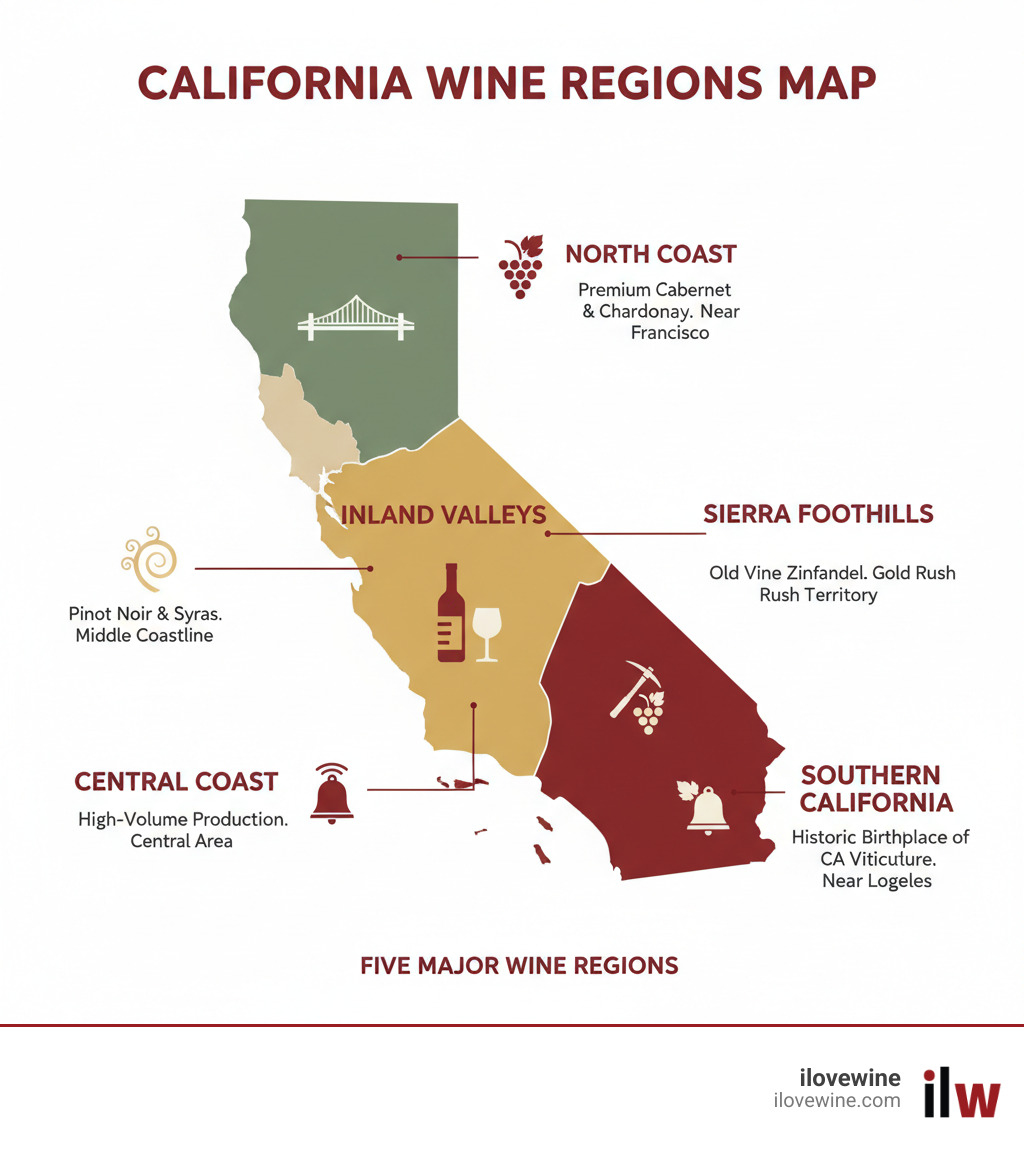
Quick Guide to California’s Five Major Wine Regions:
- North Coast: Napa, Sonoma, Mendocino, Lake Counties (Cabernet Sauvignon, Chardonnay, Pinot Noir)
- Central Coast: Paso Robles, Santa Barbara, Monterey (Pinot Noir, Syrah, Chardonnay)
- Inland Valleys: Lodi, Central Valley (Zinfandel, large-scale production)
- Sierra Foothills: Amador, El Dorado Counties (Old Vine Zinfandel)
- Southern California: Temecula Valley, Cucamonga Valley (historic birthplace of CA wine)
Today, California wine country stretches across 49 of the state’s 58 counties. Each region is shaped by unique geography, climate, and soil, with Pacific fog, mountain ranges, and ancient volcanic soils all contributing to the character of the wines. Understanding these regions is the key to finding your next favorite bottle or planning an unforgettable tasting adventure.
From Mission Grapes to Global Fame: A Brief History
California’s wine history began over 240 years ago with Franciscan missionaries planting “mission grapes” in San Diego. The modern era took root in 1831, when French immigrants Louis Bauchet and Jean-Louis Vignes established the state’s first commercial wineries in Los Angeles. The mid-19th century Gold Rush fueled expansion into Sonoma and Napa Valley. After a devastating setback from Prohibition (1920-1933), the industry’s turning point came with the 1976 “Judgment of Paris.” In a blind tasting, California wines bested their acclaimed French counterparts, catapulting Napa Valley to international prominence. This event proved California could produce world-class wines, a reputation it continues to build upon with innovation and sustainable practices. For more on this journey, explore our California Wine Country Ultimate Guide.
Decoding the Label: What is an American Viticultural Area (AVA)?
An American Viticultural Area (AVA) is a federally designated grape-growing region with distinct climate, geology, and elevation, giving its wines a unique “geographic pedigree.” California has 152 AVAs, and these appellations provide consumers with confidence in a wine’s origin.
Federal regulations mandate that for a wine to bear an AVA on its label, 85% or more of the grapes must be grown within that AVA’s boundaries. For a county designation (e.g., “Sonoma County”), the requirement is 75% or more of the grapes from that county. A wine labeled simply “California” must, by state law, be made with 100% grapes grown and finished within the state. These laws help you connect a wine’s flavor profile to its specific source, guiding you toward wines that match your preferences. For more on these regulations, see the Detailed requirements for appellation use..
A Cartographer’s Guide to the California Wine Regions Map
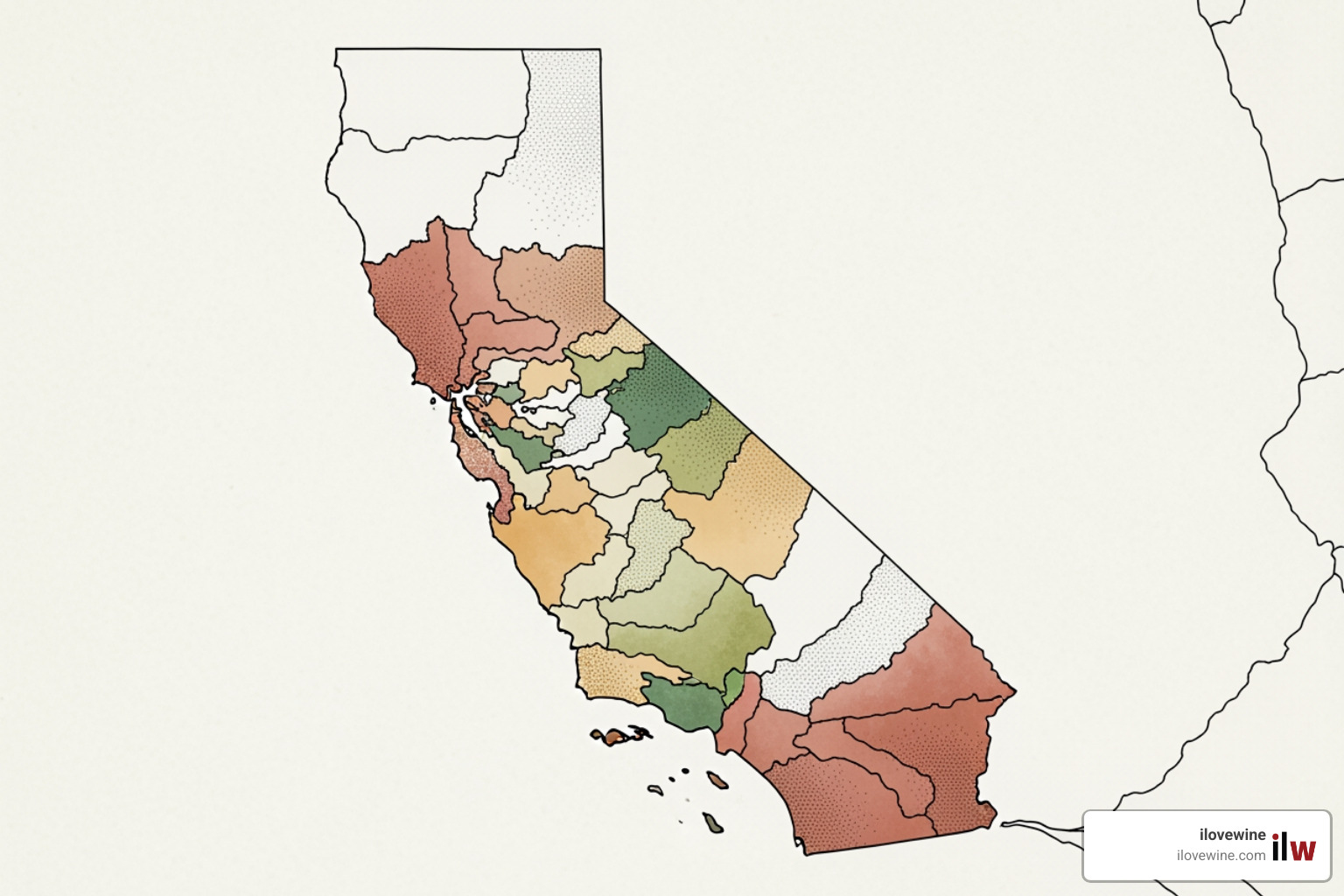
A California wine regions map reveals how geography shapes every bottle. The state’s Mediterranean climate (warm, dry summers; mild, wet winters) is ideal for viticulture, but the Pacific Ocean is the true star. Cooling fog and coastal breezes act as natural air conditioning, extending the growing season and allowing grapes like Chardonnay and Pinot Noir to develop complex flavors while retaining acidity. Mountain ranges like the Coast Ranges and Sierra Nevada create rain shadows and varied elevations, leading to dramatic day-to-night temperature swings that produce concentrated flavors. California’s diverse geology, from Napa’s volcanic soils to the Central Coast’s limestone deposits, adds another layer of character, influencing drainage, water retention, and minerality.
The North Coast: Exploring Napa & Sonoma
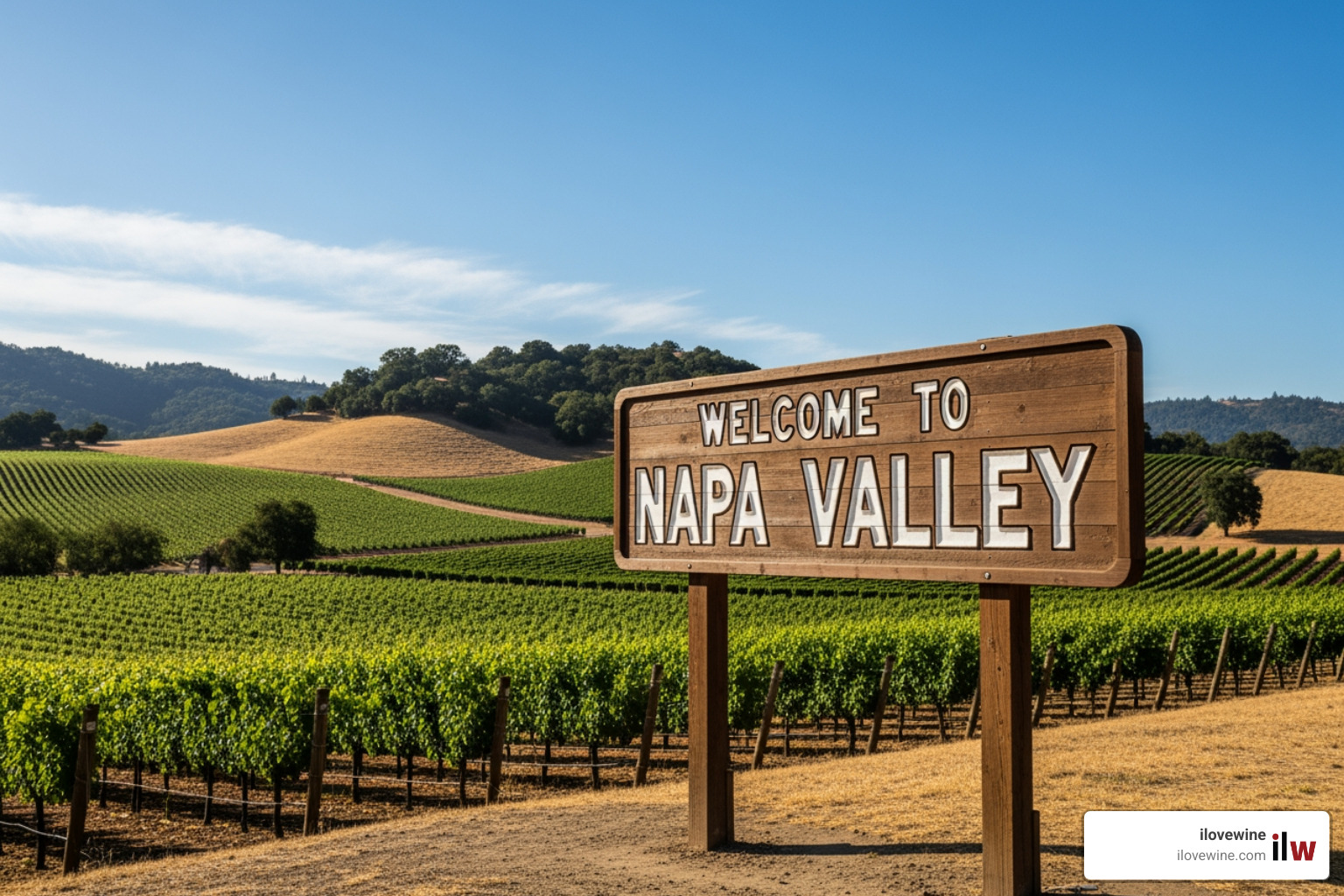
The North Coast, encompassing Napa, Sonoma, Mendocino, and Lake Counties, is California’s most prestigious wine region. Napa Valley, just 50 miles from San Francisco, is synonymous with world-class Cabernet Sauvignon, known for its lush black fruit and age-worthy structure. The valley’s diverse AVAs include the cool Los Carneros, ideal for Pinot Noir and Chardonnay, and the high-elevation Howell Mountain, which produces powerful, concentrated Cabernets.
Sonoma County offers incredible diversity across its 18 AVAs. The fog-shrouded Russian River Valley is acclaimed for elegant Pinot Noir and Chardonnay, while warmer inland areas excel with robust Zinfandel. To the north, Mendocino and Lake Counties provide exceptional wines, often with a focus on sustainable and organic practices, at more accessible prices. For a deeper comparison, see our guide to Napa and Sonoma on iLoveWine.
The Central Coast: A Diverse California Wine Regions Map
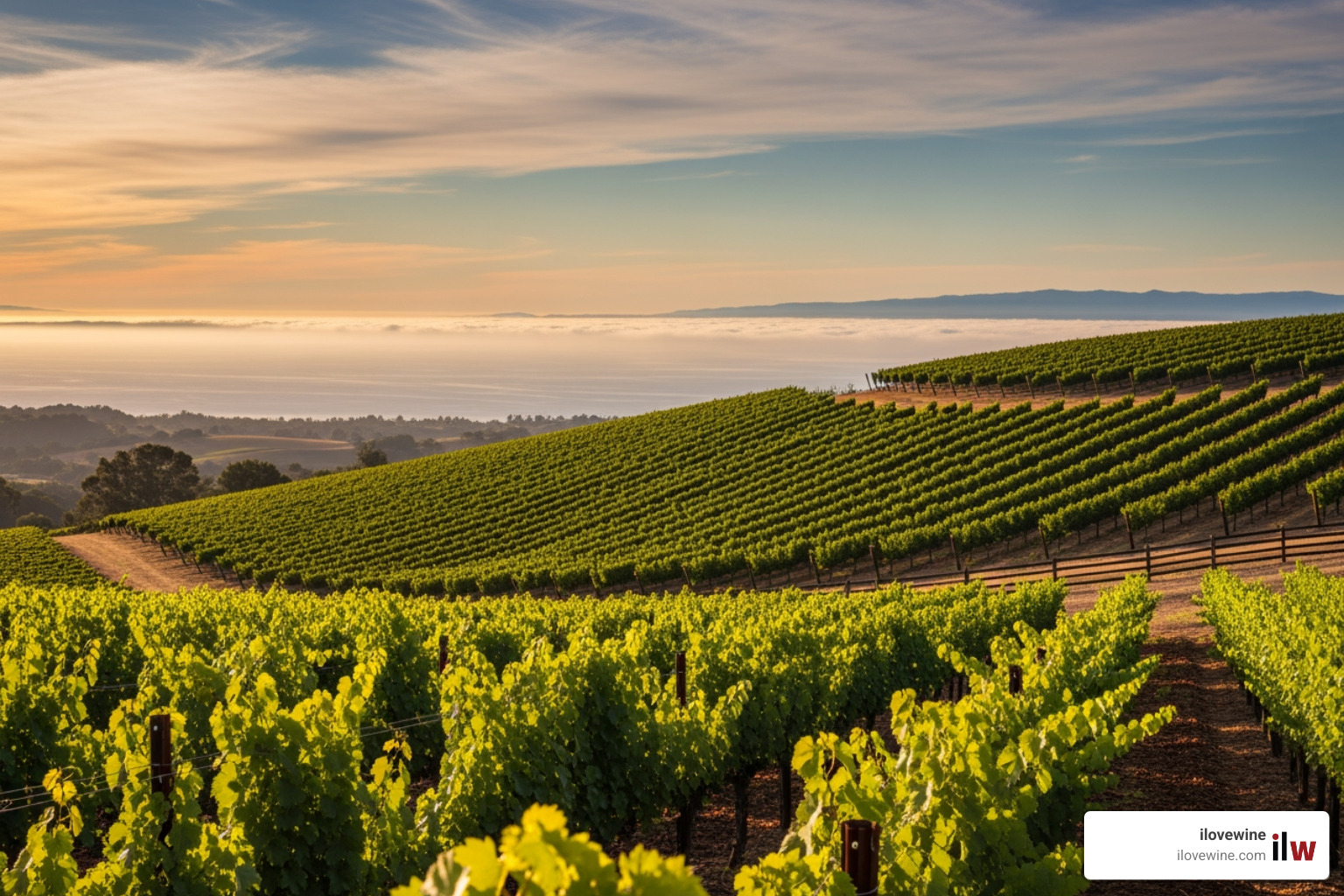
Stretching from San Francisco Bay to Santa Barbara, the Central Coast is a vast and varied region defined by the Pacific Ocean. Counties like Monterey, San Luis Obispo, Santa Barbara, and Paso Robles benefit from coastal fog and breezes that create a large diurnal shift, preserving acidity in the grapes. Monterey is perfect for crisp Chardonnay and Pinot Noir. Santa Barbara’s unique east-west valleys, especially the Sta. Rita Hills AVA, produce world-class Pinot Noir with remarkable complexity.
Paso Robles is the heart of California’s Rhône varietal movement, crafting exceptional Syrah, Grenache, and Mourvèdre that rival their French counterparts, alongside its famous robust Zinfandel. The region’s innovative spirit and more accessible prices make it a treasure trove for adventurous wine lovers. Plan your trip with our guide to Central Coast wineries on iLoveWine.
Beyond the Coast: Sierra Foothills, Inland Valleys & Southern California
A complete California wine regions map extends beyond the coast. The Sierra Foothills, in Gold Rush country, is famed for Old Vine Zinfandel. In counties like Amador and El Dorado, vines planted over a century ago produce concentrated, character-rich wines. The high elevation and granite soils also suit Rhône varietals like Syrah and Grenache.
The Inland Valleys, including the vast Central Valley, are the engine of California’s wine production. The region of Lodi has earned respect for its exceptional old vine Zinfandel and is a leader in producing Petite Sirah, crafting rich, inky wines.
Southern California is the historic birthplace of the state’s wine industry, with the first commercial wineries opening in Los Angeles in 1831. Today, regions like Temecula Valley and Cucamonga Valley continue this legacy, with Temecula’s unique microclimate supporting Mediterranean-style wines. Explore this historic area with our guide to Southern California wine destinations on iLoveWine.


Plan Your Perfect Wine Tour
A California wine regions map is your best tool for crafting an unforgettable trip. To make the most of it, follow a few key tips. First, slow down and visit just 2-3 wineries per day. This prevents palate fatigue and allows you to savor each experience. Dress in layers, as you may move from sunny patios to cool wine caves (around 55°F).
Most importantly, stay hydrated with water between tastings and hire a designated driver or book a tour. This ensures safety and often provides you with a local expert’s insider knowledge. Finally, many wineries, especially premium estates, now require advance reservations. A little planning ensures you won’t miss out on your must-visit tasting rooms.
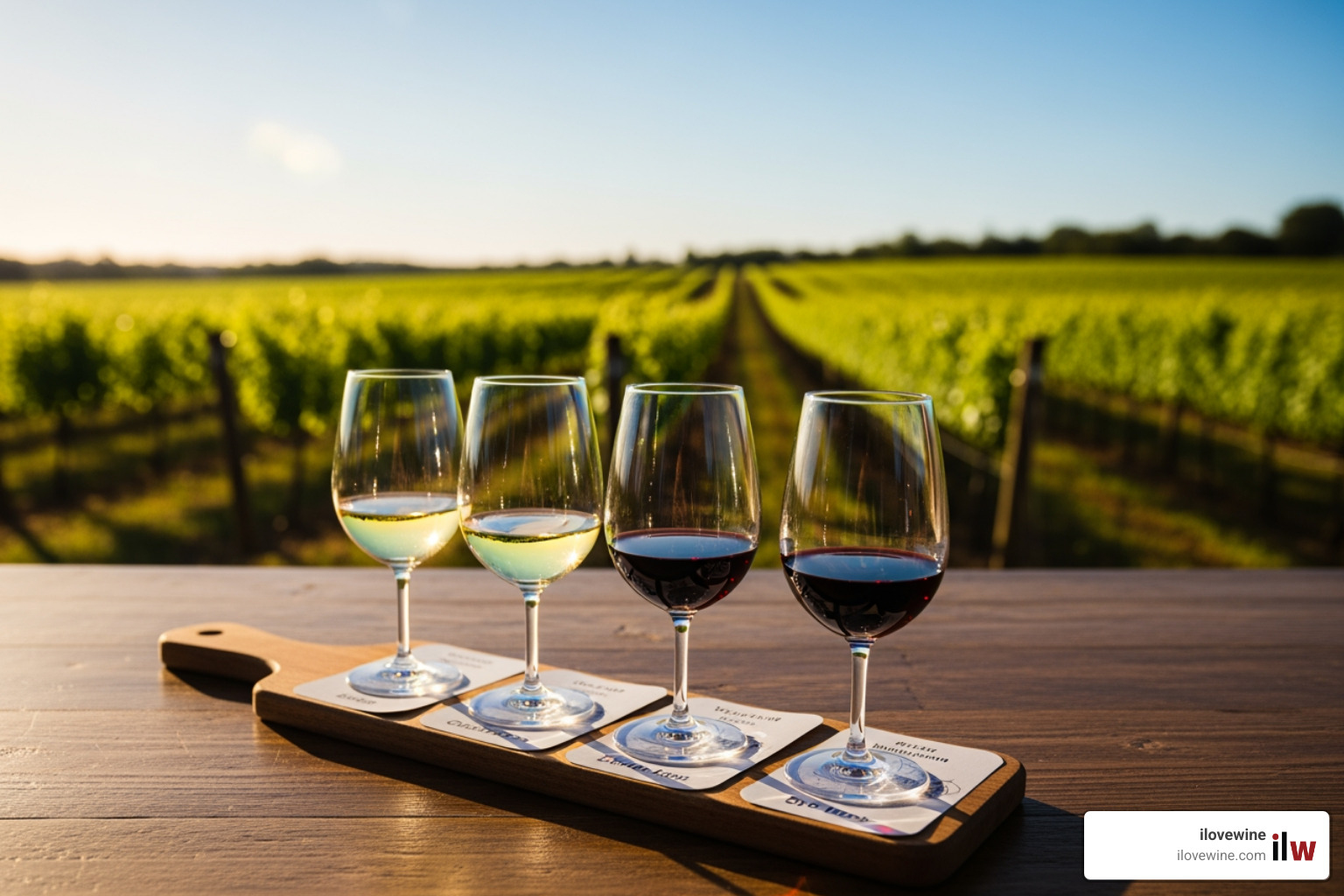
How a California Wine Regions Map Creates the Perfect Itinerary
A detailed California wine regions map makes planning effortless. Start by marking your must-visit wineries, then group visits by AVA to reduce drive time and experience a specific terroir. For example, spend a day on Rutherford’s Cabernets or a morning on Sta. Rita Hills’ Pinot Noirs.
Before you go, check each winery’s visitation policy—many now require reservations. Resources like the Napa Valley Wineries and Tasting Rooms map often include this information. Use your map to estimate travel times; the 58-mile drive from San Francisco to Napa can take 90 minutes with traffic. A map also helps you find lesser-known wineries for more intimate experiences and locate iconic photo spots or nearby restaurants.
Top Grape Varietals and Where to Find Them
California’s diverse climates allow dozens of grape varieties to thrive. Here’s where to find the top varietals:
- Cabernet Sauvignon: The undisputed king of Napa Valley, also found in parts of Sonoma County.
- Chardonnay: California’s most planted white grape. Find crisp styles in the Sonoma Coast and Carneros, and balanced, mineral-driven versions in the Central Coast (Monterey and Santa Barbara). For more, see our guide to California White Wine.
- Pinot Noir: This finicky grape excels in the cool climates of the Russian River Valley (Sonoma), Los Carneros, and Santa Barbara County (especially Sta. Rita Hills).
- Zinfandel: Find incredible old-vine examples in the Sierra Foothills (Amador County) and Lodi. Explore top California Zinfandel Producers.
- Rhône Varietals (Syrah, Grenache, Mourvèdre): The Central Coast, particularly Paso Robles and Santa Barbara, is the epicenter for these bold, savory wines.
- Petite Sirah: This grape loves the heat of the Inland Valleys, especially Lodi, producing inky, powerful wines.
Essential Resources for Your California Wine Journey
Planning your adventure is simple with the right tools. Start with the California Wine Institute’s directories and regional tourism board maps. For curated recommendations, iLoveWine’s regional guides offer insider perspectives you won’t find elsewhere, whether you’re exploring Central Coast wineries or historic Southern California wine destinations. Also, check wine festival calendars for events that let you taste from multiple producers at once. At iLoveWine, we connect enthusiasts with experts and experiences. To learn how we support the wine community, visit our advertising services page.
What's Your Reaction?
