How to Use Sherry Cooking Wine: 5 Methods that Guarantee Results


Why Sherry Cooking Wine Deserves a Place in Your Kitchen
Sherry cooking wine is a fortified wine that can transform your everyday dishes into restaurant-quality meals. Originating from the sun-drenched vineyards of the “Sherry Triangle” in Andalusia, Spain, sherry has a long and storied history rooted in bodegas that age wine through the traditional Solera system. While its fine drinking varieties are savored worldwide, its culinary counterpart is a secret weapon for chefs and savvy home cooks. Made from specially selected grapes and strengthened with brandy, this pantry staple offers a roasted, sweet flavor and distinctive nutty aroma that adds remarkable depth and complexity to sauces, soups, and marinades.
Quick Facts About Sherry Cooking Wine:
- Alcohol Content: Typically around 17% ABV (higher than regular wine’s 12%)
- Sodium Content: High, around 180-190mg per 2 tablespoons
- Flavor Profile: Nutty, savory, and slightly sweet with a distinct acidic tang
- Shelf Life: Excellent, extended due to added salt and preservatives
- Best Uses: Deglazing pans, enriching pan sauces, cream soups, hearty stews, and flavorful marinades
- Storage Tip: Keep tightly sealed in a cool, dark pantry; refrigeration is optional but can preserve freshness longer
- Seasoning Note: Because it is salty, add it first, then taste before adding more salt
Unlike its sophisticated cousin, drinking sherry, cooking sherry contains added salt and preservatives, such as potassium sorbate and potassium metabisulfite. These additions extend its shelf life indefinitely but make it unsuitable for sipping. This is by design. Its purpose is purely culinary, engineered to withstand heat and enhance the other ingredients in a dish. This fortified wine works particularly well for deglazing pans to lift flavorful browned bits, enriching cream-based soups, and creating complex marinades that tenderize meat while infusing it with a unique savory character.
In this comprehensive guide, we’ll explore five proven methods that guarantee delicious results every time you reach for that bottle of cooking sherry. Whether you’re whipping up a simple pan sauce for pork chops or layering complexity into a wild mushroom soup, these techniques will help you open up the full potential of this versatile and indispensable ingredient.
I’m Jonas Muthoni, and through my decade of exploring wine regions from Bordeaux to Sicily, I’ve learned that sherry cooking wine masterfully bridges the gap between everyday cooking and culinary excellence. My experience tasting authentic sherries in the cellars of Jerez de la Frontera taught me how the unique production process of this fortified wine—the famed solera system—creates the perfect cooking companion for home chefs looking to elevate their craft. For background on the region and style, see Sherry.
Here is a quick overview of the five essential methods covered later in this article, with simple starter ratios you can apply right away:
- Deglazing for pan sauces: After searing chicken, pork, or steak, pour in 1/4 cup cooking sherry to deglaze, scrape up browned bits, then add 1/2 cup stock and a knob of butter to finish.
- Depth for soups and stews: Add 2 to 4 tablespoons per quart of soup or stew near the end of simmering to brighten and round flavors without thinning the texture.
- Marinades and glazes: Combine 1/3 cup cooking sherry with 2 tablespoons soy sauce, 1 tablespoon honey, and aromatics for a fast marinade; reduce leftovers in a skillet for a glossy glaze.
- Lifted sautéed vegetables: Splash 1 to 2 tablespoons over sizzling mushrooms or onions to intensify caramelized notes and add a subtle nuttiness.
- Savory baking booster: Stir 1 to 2 tablespoons into pot pie fillings, meat pies, or savory tarts to add moisture and deep, layered flavor.
Pro tip: If you are pairing the finished dish with wine at the table, consult our Wine Pairing Guide so the flavors in your glass echo the nutty, savory accents the sherry brings to the plate.
Finally, cooking sherry is a seasoning as much as it is a liquid. Start with the lower end of the range, taste, and adjust upward as needed. This approach gives you the warm nuttiness and gentle sweetness sherry is known for, while keeping salt in check and the rest of your ingredients in balance.
Understanding Sherry Cooking Wine: A Chef’s Secret Weapon
Sherry cooking wine is truly a culinary game-changer that deserves more recognition in home kitchens. This fortified wine begins its journey as a base wine, typically made from Palomino grapes in Spain. It is then strengthened with brandy or other neutral spirits to boost its alcohol content and stabilize its flavor. This fortification process is what gives sherry its characteristic warmth and complexity.
What makes this ingredient unique for cooking is the addition of preservatives, such as potassium sorbate and potassium metabisulfite, along with a significant amount of salt. While these additions might sound unappetizing for a beverage, they serve a critical function in the kitchen: they give cooking sherry its exceptionally long shelf life and a concentrated, savory flavor profile that’s ready to improve your recipes.
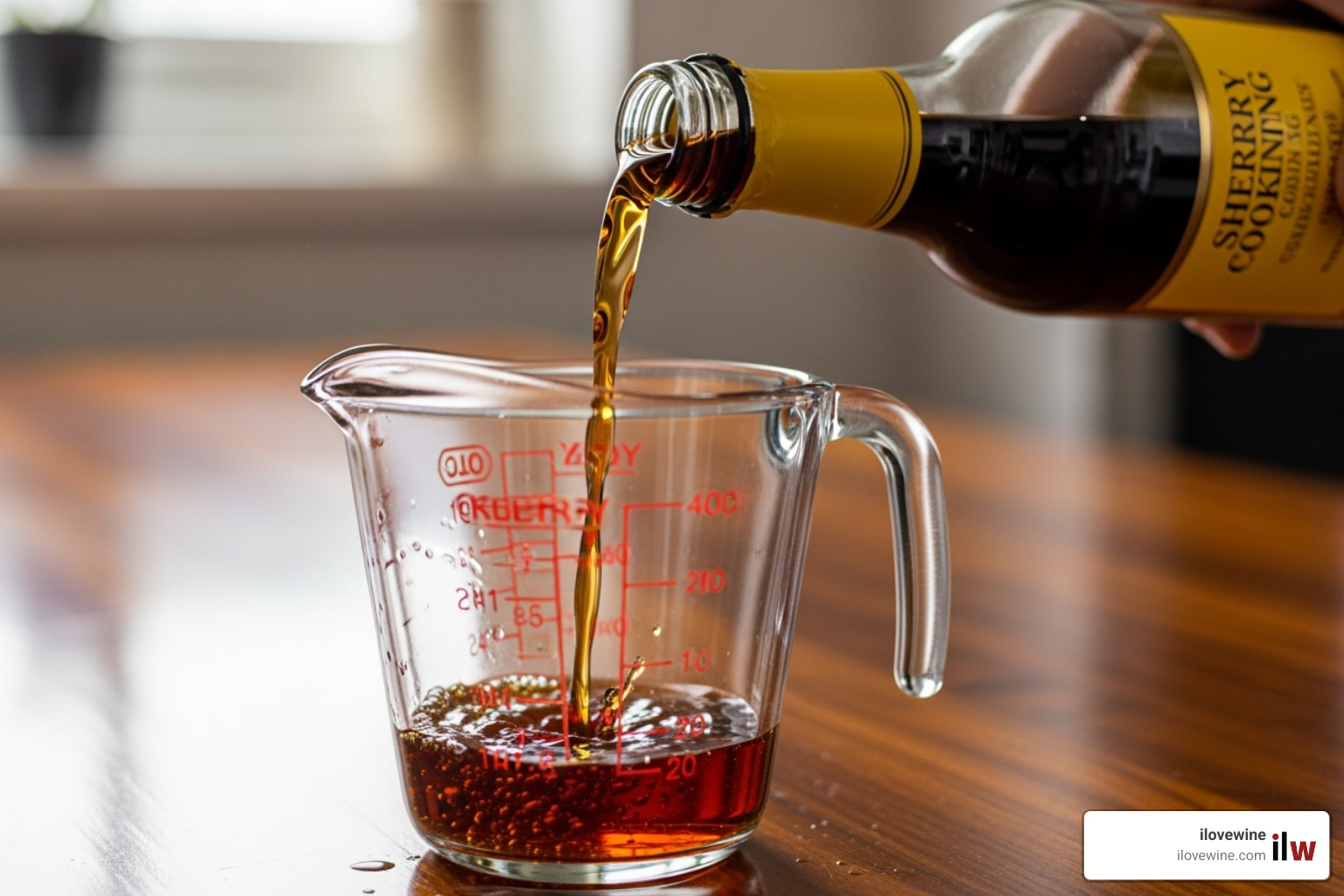
The result is a wine with a distinctive nutty flavor and a sweet aroma reminiscent of toasted almonds and caramel. This unique profile makes it perfect for deglazing pans, enriching soups, and creating marinades that make a noticeable difference. I love how sherry cooking wine brings both umami richness and a bright acidity to dishes. It’s that secret ingredient that makes guests ask, “What did you put in this?” For more insights on the fundamentals of cooking with different wines, check out our guide on How to Cook with Wine.
What Makes Sherry Cooking Wine Different from Drinking Sherry?
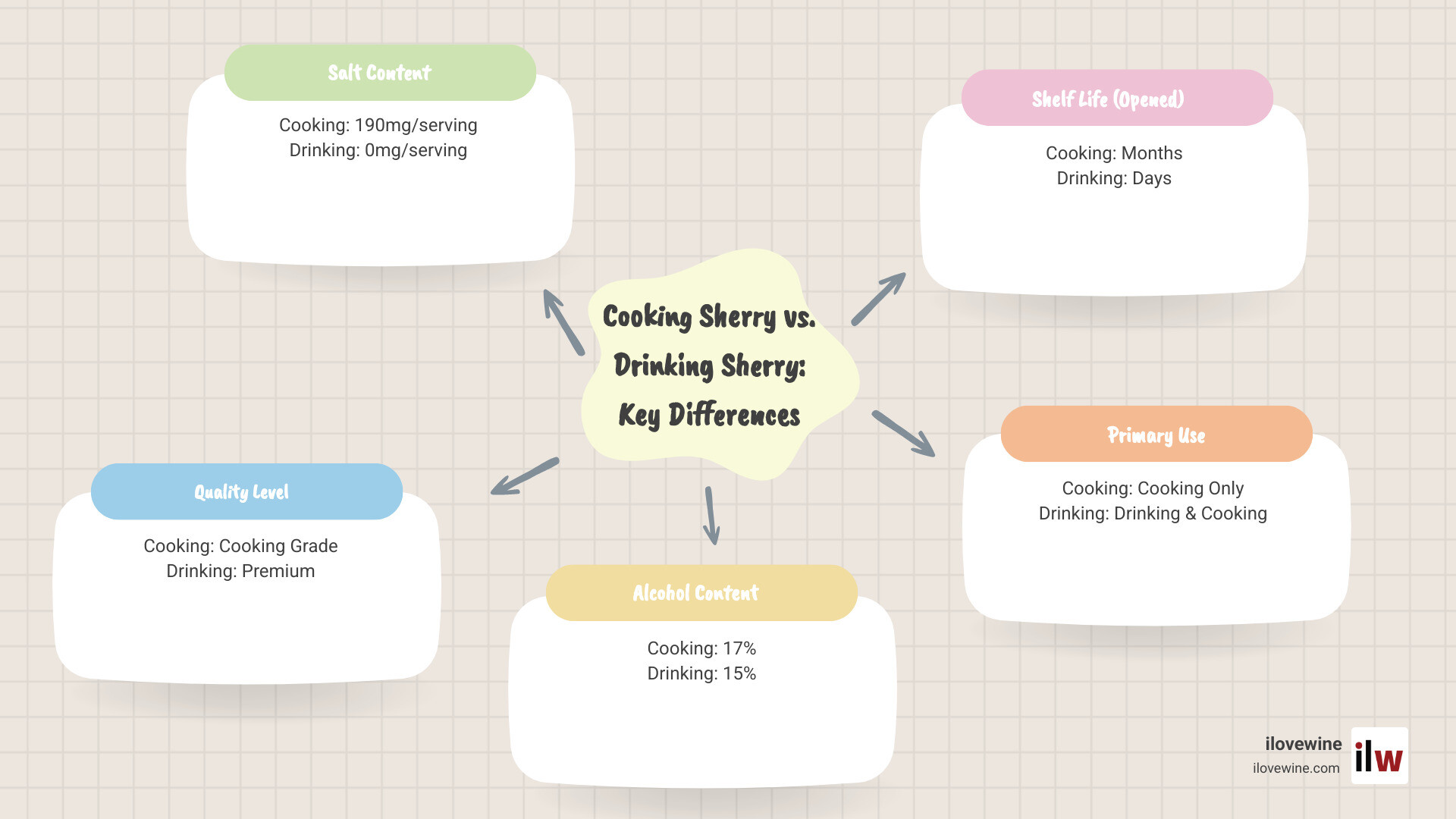
This is the most common question about cooking sherry, and understanding the distinction is key to using it effectively. The primary differences lie in quality, composition, and intended use. Drinking sherry is an artisanal product crafted for sipping, while sherry cooking wine is a utility ingredient explicitly formulated for the heat of the kitchen.


| Feature | Sherry Cooking Wine | Drinking Sherry (e.g., Fino, Amontillado) |
|---|---|---|
| Primary Use | Exclusively for cooking | Sipping and cooking |
| Salt Content | High (approx. 1.5g per 100ml) | None |
| Quality | Lower, culinary grade | High, beverage-grade |
| Flavor Profile | Salty, sharp, less complex | Nuanced, complex, delicate |
| Shelf Life | Very long (months to years) | Short after opening (days to weeks) |
| Cost | Inexpensive | Varies, generally more expensive |
Cooking sherry’s high salt content—around 180-190mg per two tablespoons—makes it unpalatable for drinking but perfect for seasoning dishes as they cook. The alcohol content in both is similar, around 15-17%, but the preservatives in cooking sherry give it a much longer shelf life after opening. The flavor profile is also intentionally different; cooking sherry has a more one-dimensional, salt-forward taste designed to improve other ingredients, whereas drinking sherry offers complex, delicate notes meant to be savored on their own. If you’re curious about how alcohol behaves in your food, our article Does Cooking Wine Have Alcohol? provides a thorough explanation.
The Impact of Salt and Preservatives in Sherry Cooking Wine
Let’s address the elephant in the room: the high sodium content. While it might seem like a drawback, this salt is a key feature, not a bug—if you know how to manage it. The primary rule is to make adjustments to the recipe. When you add cooking sherry, you are also adding a significant amount of salt. Therefore, you must reduce the added salt in your recipe. I always recommend adding the cooking sherry first, then tasting the dish before adding any extra salt. For example, if a recipe calls for 1 teaspoon of salt and you use 1/4 cup of cooking sherry, you might only need 1/4 teaspoon of additional salt, or perhaps none at all.
The preservatives, potassium sorbate and potassium metabisulfite, are what make cooking sherry shelf-stable. However, these additives are also responsible for what some chefs consider the main drawback of lower-quality wine: they can impart a slightly chemical or artificial aftertaste compared to the clean finish of a real drinking sherry. Despite this, don’t be discouraged. When used correctly—simmered in a sauce or cooked into a stew—these minor off-notes disappear, leaving behind only the rich, nutty depth that makes cooking sherry so valuable.
Practical Tips for Buying and Using Cooking Sherry
- Choose a small bottle if you cook infrequently. Even though it keeps well, smaller sizes minimize long-term oxidation once opened.
- If you are sodium-sensitive, consider swapping in an inexpensive dry drinking sherry (Fino or Amontillado) and then adding salt to taste. You’ll get a cleaner finish and full control over seasoning.
- The typical use range is 1 to 2 tablespoons per serving for sauces and sautés, and 2 to 4 tablespoons per quart for soups and stews. Start low, taste, and adjust.
- When deglazing, let the wine simmer for 60 to 90 seconds to soften sharp alcohol notes. This also helps dissolve the fond and integrate flavors.
- For a touch of sweetness without excess salt, pair cooking sherry with unsalted butter, cream, or a hint of honey in sauces and glazes.
Flavor Pairing Ideas
- Proteins: chicken, turkey, pork chops, ham, and flaky fish like cod or salmon benefit from sherry’s nutty sweetness.
- Vegetables: mushrooms, onions, leeks, asparagus, green beans, and roasted root vegetables all sing with a splash of sherry.
- Pantry aromatics: garlic, shallot, thyme, bay leaf, black pepper, and a small amount of soy sauce or Worcestershire amplify umami.
Handling and Storage
Keep the bottle tightly capped in a cool, dark pantry. Refrigeration is optional, but it can help the wine retain its freshness for longer once opened. If you transfer to a smaller container as the level drops, you’ll reduce headspace and slow oxidation. Cooking sherry already contains sulfites from winemaking and added preservatives; those sensitive to sulfites should use caution and may prefer a simple dry white wine instead. For background on sulfites, see Sulfite on Wikipedia.
Quick Technique: Deglazing Snapshot
- Sear protein in a skillet until browned; remove and tent with foil.
- Spoon out excess fat, leaving about 1 tablespoon and the browned bits.
- Add a minced shallot and sauté 30 seconds.
- Pour in 1/4 cup of cooking sherry; scrape up the fond as it simmers for 60 to 90 seconds.
- Add 1/2 to 3/4 cup stock; reduce by half.
- Whisk in 1 tablespoon cold butter to finish. Adjust seasoning only after tasting, as the sherry already adds salt.
Applied well, this simple ritual transforms pan drippings into a glossy sauce with depth that belies its short cooking time.
What's Your Reaction?
