Your Go-To Guide: Finding the Perfect Wine for Brunch, Dessert, and Mimosas


The Secret to the Perfect Mimosa
The best wine for mimosas begins with selecting the right sparkling wine that strikes a balance between quality, flavor, and affordability. The key is selecting a dry sparkling wine that complements your orange juice rather than competing with it, thereby enhancing the overall drink.
Quick Answer for the Best Wine for Mimosas:
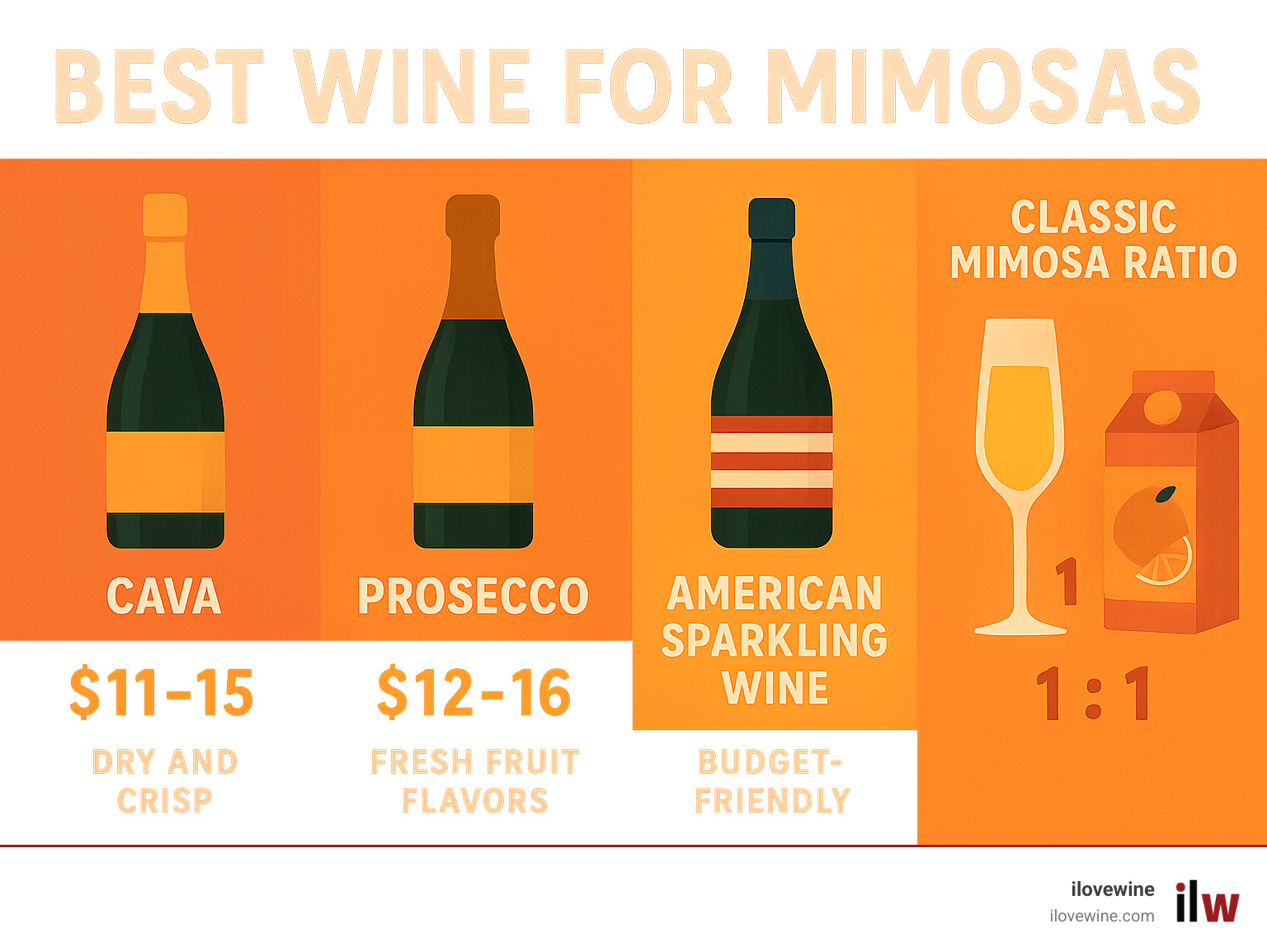
- Cava – Spanish sparkling wine, dry and crisp, $11-15 per bottle
- Prosecco – Italian sparkling wine with fresh fruit flavors, $12-16 per bottle
- Dry Prosecco – Look for “Brut” labels to avoid overly sweet mimosas
- American Sparkling Wine – Budget-friendly domestic options
- Avoid expensive Champagne – The orange juice masks the premium flavors
Why These Work Best:
- Dry sparkling wines balance the sweetness of orange juice
- Affordable options let you enjoy mimosas without breaking the bank
- Fresh, fruity profiles complement citrus flavors perfectly
- One bottle makes approximately 6-8 mimosas
The perfect mimosa isn’t just about bubbles and juice. It’s about understanding how different sparkling wine production methods affect flavor, why some bottles work better than others for cocktails, and how to create that ideal brunch experience.
Whether you’re hosting a weekend brunch or celebrating a special occasion, the right sparkling wine can transform a simple two-ingredient cocktail into something truly memorable.
I’m Jonas Muthoni, editor with ilovewine.com. After a decade of exploring vineyards from Bordeaux to Mount Etna, I’ve found that the best wine for mimosas often comes from understanding production methods rather than chasing expensive labels. Through countless brunch tastings and cellar door visits, I’ve learned which sparkling wines truly shine in cocktails and which are better saved for sipping solo.
What is the Best Wine for Mimosas? An Expert’s Guide
Finding the best wine for mimosas comes down to three simple factors: it needs to be affordable, taste great with orange juice, and be delicious enough to sip on its own. Here’s the thing that might surprise you – expensive Champagne isn’t always your best bet for brunch cocktails.
The secret lies in understanding how different sparkling wines are made and how they play with fruit flavors. Dry sparkling wines are your golden ticket here. Look for bottles labeled ‘Brut’ or ‘Extra Dry’ to avoid overly sweet combinations that can make your mimosa taste like candy.
When you understand production methods, choosing the right bottle becomes much easier. Some sparkling wines are crafted to showcase complex, yeasty flavors that work beautifully on their own but can clash with bright citrus notes. Others are designed to highlight fresh fruit notes that practically dance with orange juice.
Why Traditional Sparkling Wines are a Top Contender

The traditional method creates some of the world’s most celebrated sparkling wines through a fascinating process called Méthode Champenoise (the traditional method). This involves a second fermentation happening right inside each bottle, followed by aging on dead yeast cells (sur lie) that creates those signature notes of brioche, toast, and nuts.
True Champagne must come from France’s Champagne region and follow strict production standards. While absolutely exquisite, using expensive Champagne for mimosas is like wearing a designer dress under a winter coat—all those delicate flavors get lost in the mix.
This is exactly where Cava becomes a game-changer. This Spanish sparkling wine uses the same traditional method as Champagne, giving you those dry, crisp flavors and fine bubbles at a fraction of the cost. Most quality Cavas run around $11-15 per bottle, making them incredibly budget-friendly for brunch entertaining.
Cava delivers that classic Champagne-style profile without the premium price tag. The dry and crisp taste pairs beautifully with orange juice, creating a balanced mimosa that doesn’t taste overly sweet or compete with itself.
Spanish winemakers have perfected this traditional method over generations, creating sparkling wines that consistently deliver quality and flavor. The notable sparkling wine regions of Spain, particularly around Barcelona, produce Cavas that rival much more expensive bottles.
For more insights into this delightful Spanish sparkling wine, explore What is Sparkling Wine?.
Exploring Fruity and Fresh Sparkling Wine Styles
Italian Prosecco takes a completely different approach using the tank method (also called the Charmat method). Instead of fermenting in individual bottles, the second fermentation happens in large, pressurized tanks. This technique specifically preserves the fresh fruit flavors of the Glera grape.
The result? Sparkling wines bursting with apple, pear, and honeydew melon notes that complement orange juice beautifully. This lighter, less yeasty style means no competing flavors—just bright, clean fruit that improves your mimosa’s citrus character.
Prosecco’s fresh fruit flavors make it exceptionally compatible with juice-based cocktails. The lively acidity and clear fruit notes blend seamlessly, creating a harmonious taste that’s both refreshing and balanced.
Most quality Proseccos for mimosas fall in the $12-16 range, making them accessible for regular brunch entertaining. The key is choosing ‘Brut’ Proseccos if you prefer drier mimosas, though ‘Extra Dry’ options work well if you like a touch more sweetness.
The tank method produces sparkling wines with immediate appeal—they’re meant to be enjoyed young and fresh, capturing all those vibrant fruit characteristics. This makes them perfect for mixing, as those bright flavors actually improve rather than compete with orange juice.
Regional differences within Italy’s Prosecco zones result in subtle variations in flavor profiles, ranging from the prestigious Valdobbiadene area to the broader Veneto region. Each brings its own character to your mimosa glass.
To learn more about the nuances of this popular Italian bubbly, check out our Guide to Sparkling Wine Styles.
Beyond the Bubbles: Unique Sparkling Wine Options
Sparkling wine origins extend far beyond the famous regions, offering exciting alternatives for mimosa lovers. French Crémant wines, produced using the traditional method outside the Champagne region, offer similar quality at more approachable prices.
American sparkling wines, particularly from California’s exceptional vineyards, represent fantastic domestic options. California’s rich winemaking history has produced increasingly competitive sparkling wines that showcase regional character while maintaining excellent value for cocktails.
When to splurge on premium bottles rarely applies to mimosa-making. The orange juice masks those subtle complexities you’re paying extra for, making mid-range options the smart choice. Save your premium bottles for solo sipping, where you can appreciate every nuance.
Rosé sparkling wine adds visual appeal with its beautiful pink hue. Prosecco Rosé, officially recognized in 2021, combines Glera grapes with small amounts of Pinot Noir, creating lovely red berry notes that complement citrus beautifully.
Various sparkling wine regions around the world offer unique interpretations worth exploring. From Australia’s crisp styles to South Africa’s emerging producers, the global sparkling wine scene provides endless options for adventurous mimosa makers.
The sweet spot for best wine for mimosas remains in that $11-16 range where quality meets value. These wines deliver the flavor profiles and bubbles you want without the premium pricing that gets lost in cocktails.
Understanding wine sweetness levels helps you make better choices. For a deeper dive into this topic, our Dry Wine vs. Sweet Wine: A Complete Guide provides comprehensive insights into flavor profiles and production methods.
Mastering the Mimosa: Recipes, Ratios, and Variations
Finding the best wine for mimosas is just the beginning of your brunch journey. The real magic happens when you master the simple techniques that transform basic ingredients into something special. From the perfect pour to creative flavor twists, these details make all the difference between a good mimosa and an unforgettable one.
The beauty of mimosas lies in their simplicity, but even simple things benefit from proper technique. Getting your ratios right, using quality ingredients, and understanding the history behind this beloved cocktail will lift your brunch game completely.


The Perfect Pour: Getting the Mimosa Ratio Right
The classic mimosa follows a straightforward 1:1 ratio of sparkling wine to orange juice. This equal-parts approach creates that perfect balance we all love – not too boozy, not too sweet, just right for sipping through a leisurely brunch. However, if you prefer something a bit more sophisticated, try the Buck’s Fizz ratio of 2:1 (two parts wine to one part juice). This drier version lets your carefully chosen sparkling wine shine through more prominently.
Your choice of orange juice makes a bigger difference than you might think. Fresh, pulp-free orange juice delivers the brightest, most vibrant flavor. If you’re squeezing your own (which we highly recommend when possible), strain out any pulp to avoid that awkward floating situation. When buying store-bought, look for not-from-concentrate options that taste lighter and more refreshing than their concentrated counterparts.
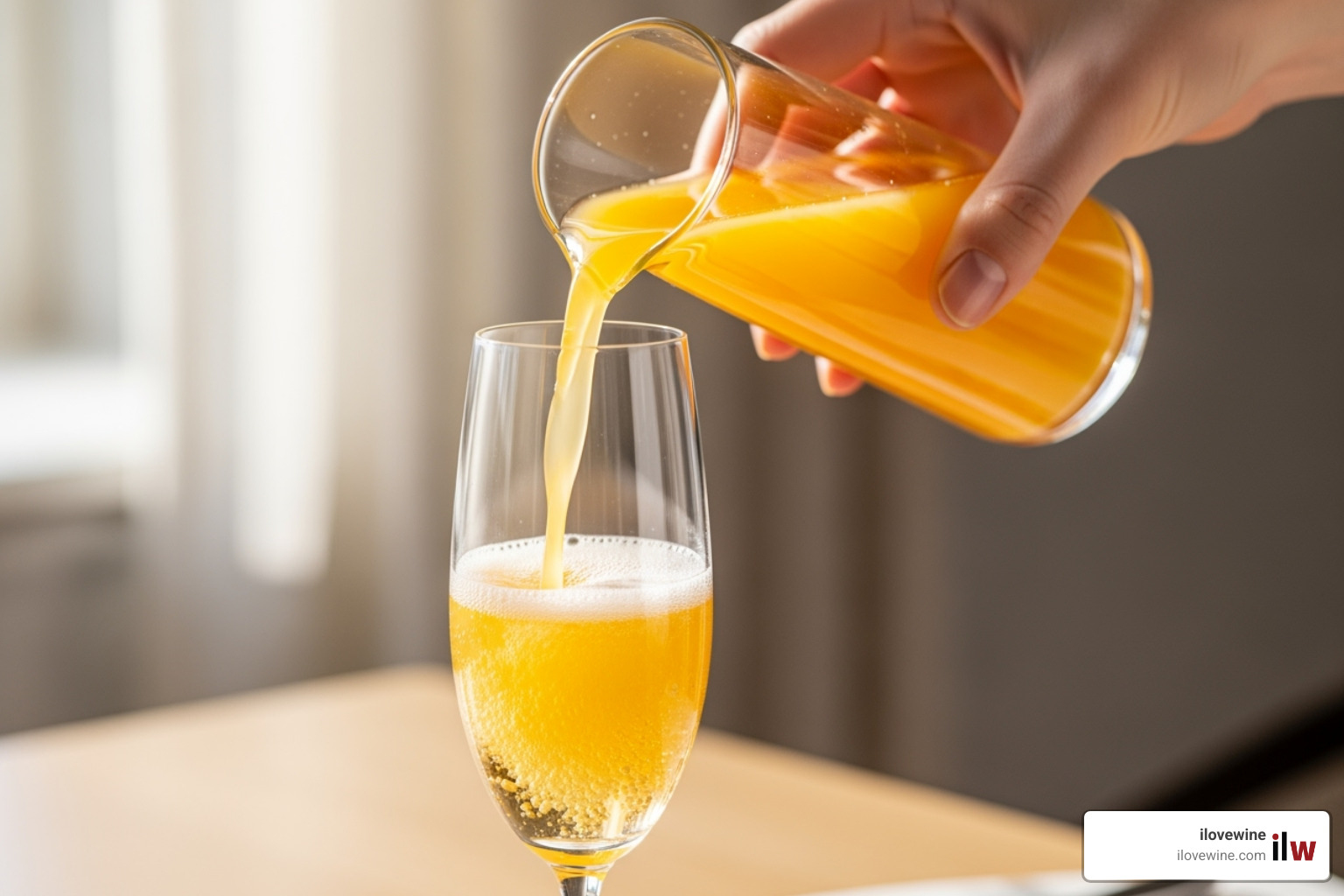
The pouring technique matters more than most people realize. Always pour the sparkling wine first, tilting your glass slightly like you would for beer. This gentle approach preserves those precious bubbles that make mimosas so delightful. Add the orange juice slowly, and here’s the crucial part – never stir! The natural carbonation will mix everything perfectly while keeping your drink properly fizzy.
One standard 750ml bottle of your chosen best wine for mimosas will make approximately eight servings using the classic 1:1 ratio. Following these professional tips ensures you get the proportions and technique just right for a perfect brunch cocktail.
The Ultimate Guide to the Best Wine for Mimosas and Fun Variations
Once you’ve mastered the classic orange mimosa with your perfect sparkling wine, a whole world of variations opens up. Cranberry juice creates a festive, tart twist that’s perfect for holidays, while grapefruit juice (creating what some call a “Pamplemosa”) offers a sophisticated, bitter-sweet profile that pairs beautifully with brunch dishes.
Pineapple juice brings tropical sunshine to any gathering, and peach purée transforms your mimosa into a proper Bellini – that neat Italian cousin that originated in Venice. For something uniquely American, apple cider mimosas capture the essence of fall flavors perfectly, while pomegranate juice adds both stunning color and a complex tartness.
Adding a splash of liqueur takes your mimosa to the next level. Orange liqueur like Grand Marnier or Cointreau intensifies the citrus notes and adds sophisticated depth. Elderflower liqueur brings delicate floral notes that complement the bubbles beautifully, while a touch of grenadine creates gorgeous color gradients and subtle sweetness.
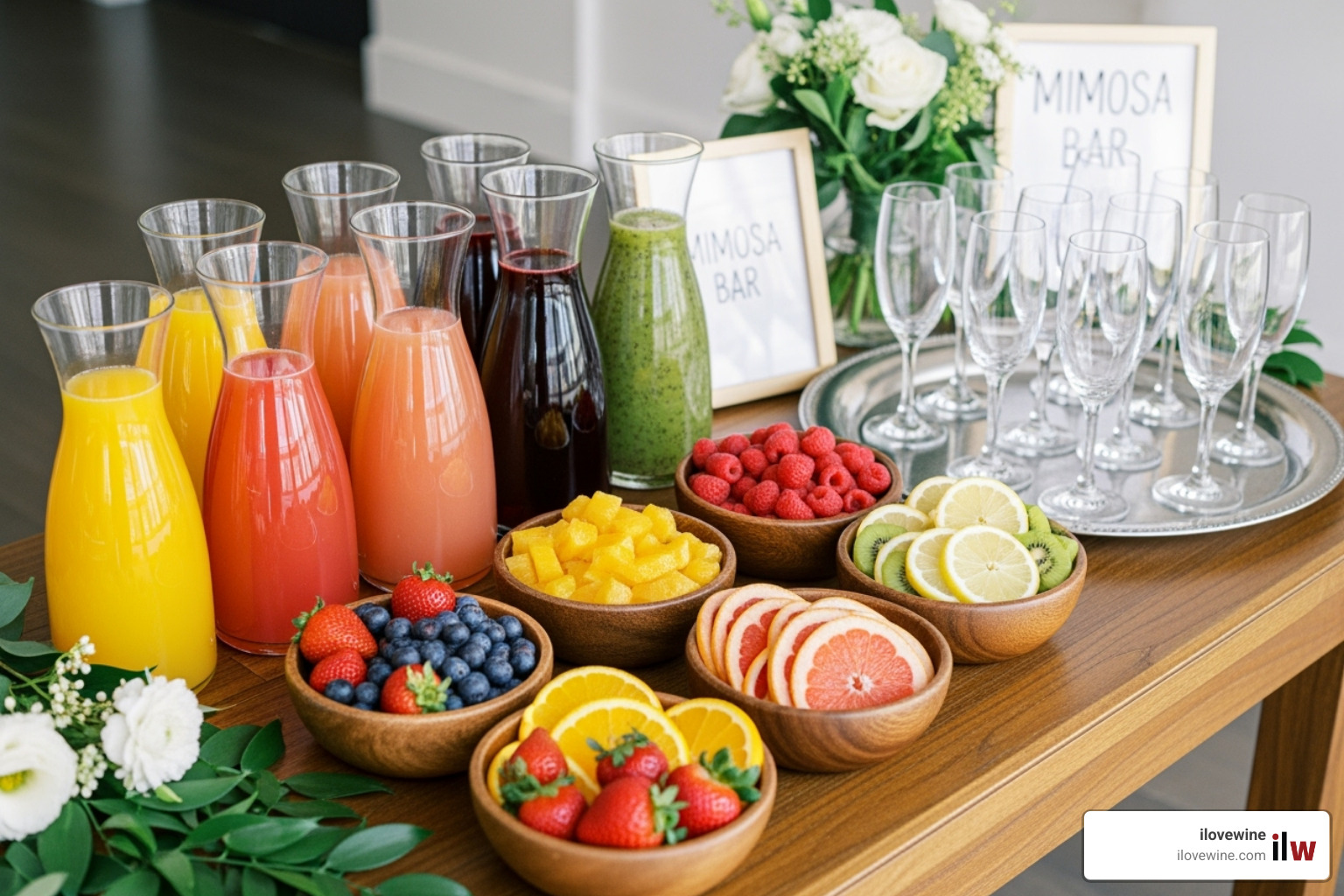
Creating a mimosa bar turns any brunch into an interactive experience. Set out your chosen best wine for mimosas alongside various chilled juices, optional liqueurs, and garnishes like fresh berries, citrus slices, or herb sprigs. Guests love customizing their own drinks, and you’ll be amazed at the creative combinations they find.
For more cocktail inspiration that pairs perfectly with your wine selection, explore our The Ultimate White Wine Sangria Recipe.
Mimosa Mocktails and Party Prep
Non-alcoholic mimosas deserve just as much attention as their boozy counterparts. Sparkling apple cider, flavored sparkling water, or non-alcoholic sparkling grape juice work wonderfully as wine substitutes. The same ratios and techniques apply, ensuring everyone can participate in the brunch celebration.
When hosting larger groups, efficiency becomes essential. Keep both your sparkling wine and juices thoroughly chilled – this cannot be overstated. For crowds, the pitcher method works well: combine one bottle of sparkling wine with about three cups of chilled orange juice just before serving. While you’ll lose some fizz compared to individual pours, you’ll save a significant amount of time and effort.
The mimosa’s history adds charm to any brunch conversation. The Buck’s Fizz appeared first in 1921 at London’s Buck’s Club, featuring that drier 2:1 ratio we mentioned earlier. The version we know today as a mimosa is credited to Frank Meier at Paris’s Ritz Hotel in 1925. This cocktail gained American popularity partly thanks to Alfred Hitchcock’s endorsement – not bad for a simple two-ingredient drink!
Setting up your mimosa station with clear labels helps guests serve themselves confidently. Include small cards explaining different juice options and suggested ratios. This approach encourages experimentation while reducing your workload as a host.
For even more creative brunch cocktail ideas and wine-based recipes that complement your mimosa spread, Explore more cocktail ideas and recipes in our extensive collection. At iLoveWine, we’re passionate about connecting wine enthusiasts through shared experiences and finding new ways to enjoy exceptional wines from California’s finest regions and beyond.
What's Your Reaction?
